Department of Cardiology, First Affiliated Hospital of Dalian Medical University, Dalian, Liaoning Province, China.
J Hypertens. 2020 Mar;38(3):426-433. doi: 10.1097/HJH.0000000000002277.
Recent studies have reported the prevalence of cardiovascular diseases (CVDs) among cancer patients following the use of the vascular endothelial growth factor (VEGF) signaling inhibitors. However, data for patients with a history of cancer before active cancer treatment are lacking. This study aims to investigate the distribution of CVD-related comorbidities before cancer treatment in potential VEGF antagonists candidates.
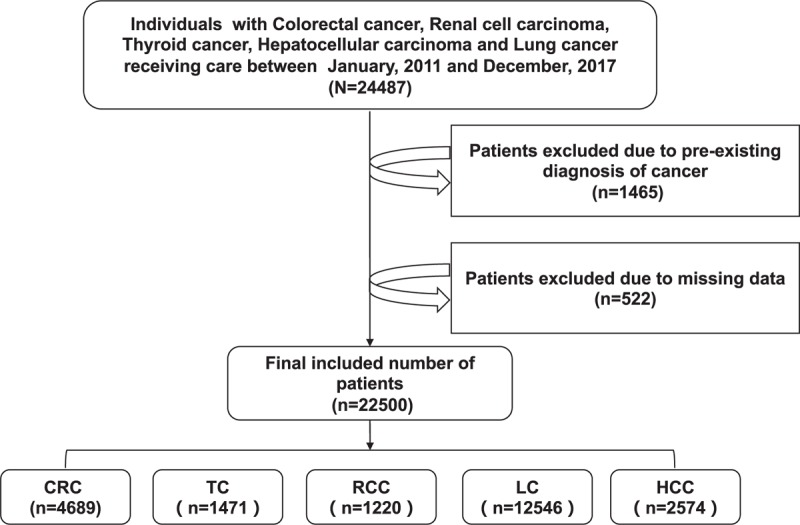
A total of 22 500 newly diagnosed cancer patients registered from 1 January 2011 to 31 December 2017 were included. Cancer patients with colorectal cancer (CRC), renal cell carcinoma (RCC), thyroid cancer, hepatocellular carcinoma (HCC), and lung cancer were selected.
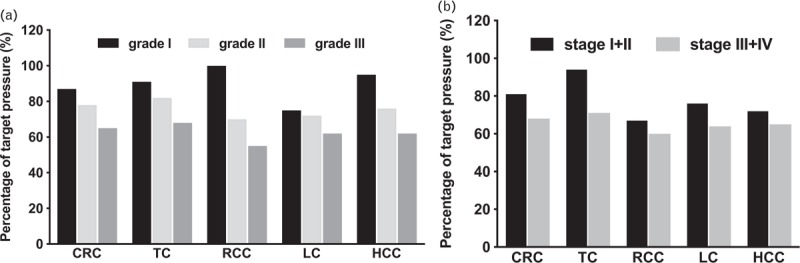
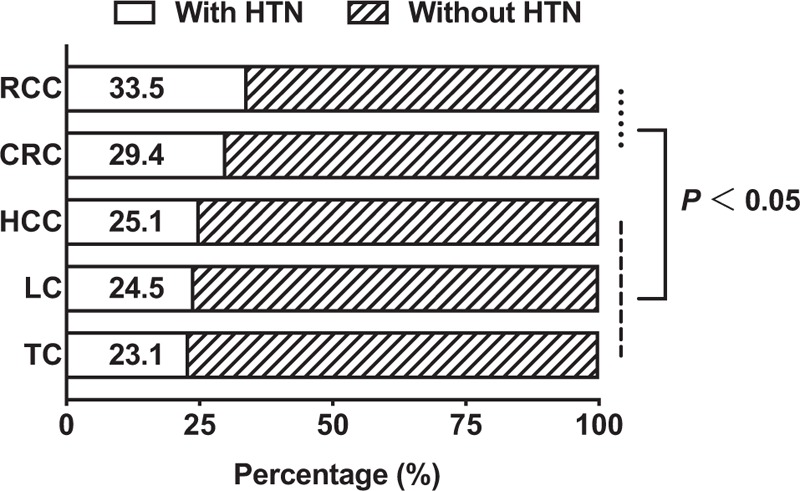
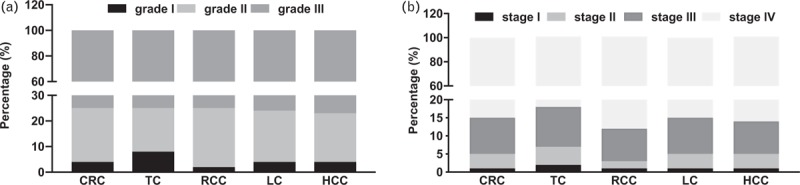
Hypertension (HTN), coronary heart diseases, atrial fibrillation, and heart failure were top CVD comorbidities among studied cancers. HTN was the most prevalent CVD (26.0%). The prevalence of HTN in RCC, CRC (33.5 and 29.4% respectively) was significantly higher than that in HCC, lung cancer, and thyroid cancer patients (25.1, 24.5, and 23.1%, respectively). Among cancer patients with HTN, the majority of cancer patients fall in grade III (75.7%) and very high cardiovascular risk level (85.4%). Out of the 5847 HTN patients, 26% were not in antihypertensive use, and 34.2% failed to achieve the target blood pressure.
Cancer patients carry a high burden of CVD-related comorbidities before the application of VEGF antagonists. HTN is the most prevalent comorbid condition, and cancer patients with HTN constitute substantial cardiovascular risks and a higher co-prevalence of other CVDs.
最近的研究报告称,在使用血管内皮生长因子(VEGF)信号抑制剂后,癌症患者中出现心血管疾病(CVD)的患病率有所上升。然而,在接受积极癌症治疗之前有癌症病史的患者的数据尚缺乏。本研究旨在调查潜在 VEGF 拮抗剂候选者在癌症治疗前 CVD 相关合并症的分布情况。
共纳入 22500 例 2011 年 1 月 1 日至 2017 年 12 月 31 日期间新诊断的癌症患者。选择患有结直肠癌(CRC)、肾细胞癌(RCC)、甲状腺癌、肝细胞癌(HCC)和肺癌的癌症患者。
高血压(HTN)、冠心病、心房颤动和心力衰竭是研究癌症中最常见的 CVD 合并症。HTN 是最常见的 CVD(26.0%)。RCC 和 CRC 中 HTN 的患病率(分别为 33.5%和 29.4%)明显高于 HCC、肺癌和甲状腺癌患者(分别为 25.1%、24.5%和 23.1%)。在患有 HTN 的癌症患者中,大多数癌症患者属于 3 级(75.7%)和极高心血管风险级别(85.4%)。在 5847 例 HTN 患者中,有 26%未接受抗高血压治疗,34.2%未达到目标血压。
在应用 VEGF 拮抗剂之前,癌症患者就已患有大量 CVD 相关合并症。HTN 是最常见的合并症,患有 HTN 的癌症患者构成了实质性的心血管风险,并且更常伴有其他 CVD。