Nutrients. 2019 Oct 5;11(10):2373. doi: 10.3390/nu11102373.
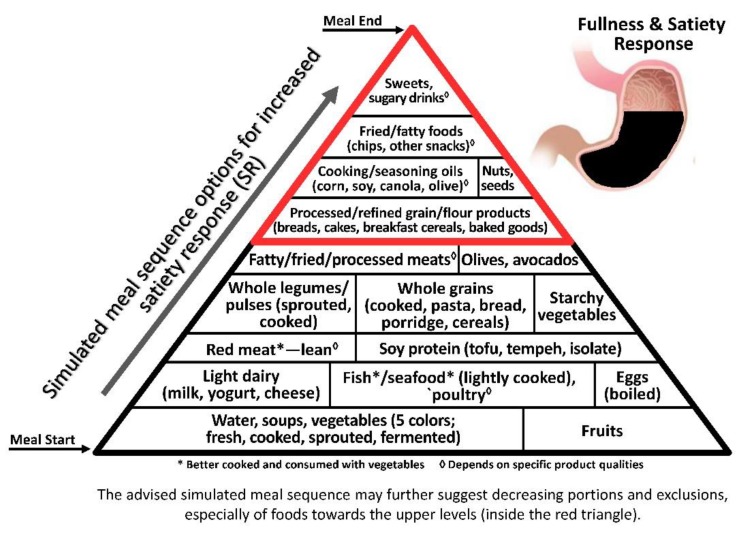
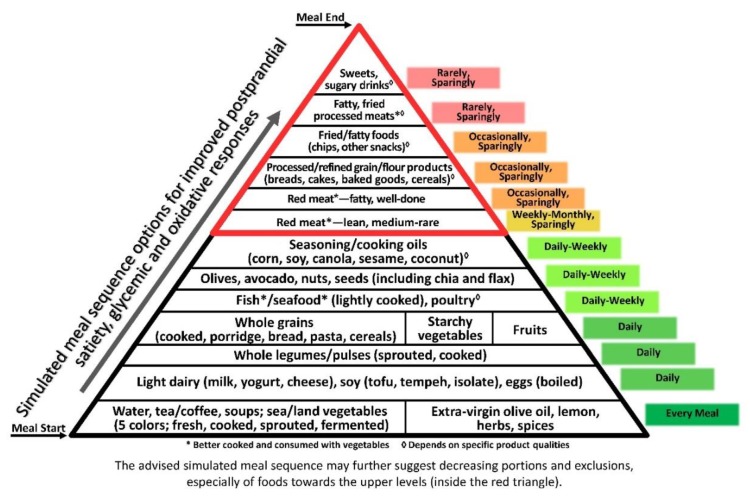
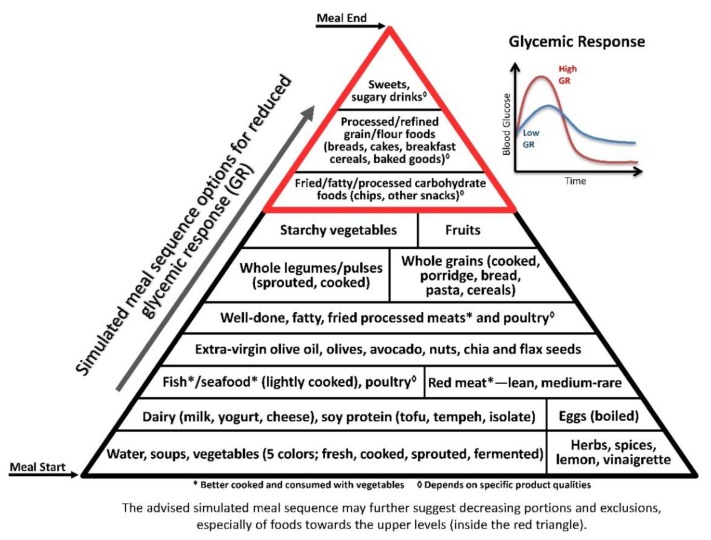
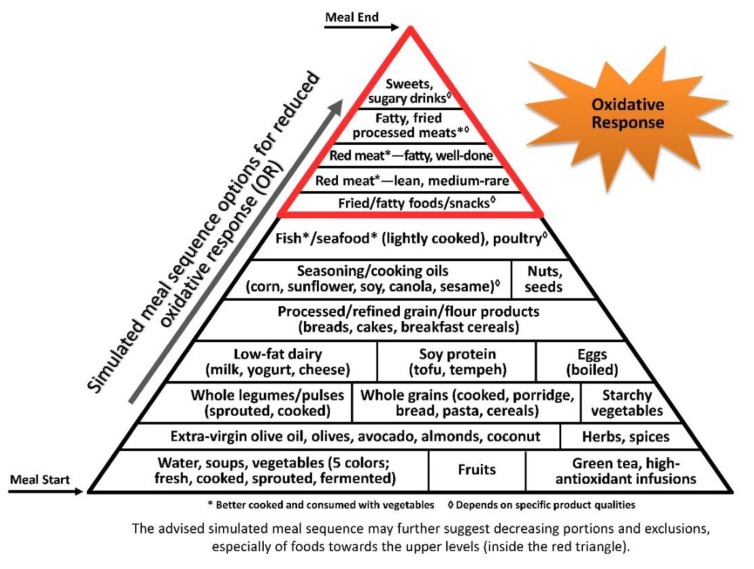
With increasing exposure to eating opportunities and postprandial conditions becoming dominant states, acute effects of meals are garnering interest. In this narrative review, meal components, combinations and course sequence were questioned vis-à-vis resultant postprandial responses, including satiety, glycemic, oxidative and inflammatory risks/outcomes vs. protective principles, with reference to the Mediterranean diet. Representative scientific literature was reviewed and explained, and corresponding recommendations discussed and illustrated. Starting meals with foods, courses and/or preloads high in innate/added/incorporated water and/or fibre, followed by protein-based courses, delaying carbohydrates and fatty foods and minimizing highly-processed/sweetened hedonic foods, would increase satiety-per-calorie vs. obesogenic passive overconsumption. Similarly, starting with high-water/fibre dishes, followed by high-protein foods, oils/fats, and delayed/reduced slowly-digested whole/complex carbohydrate sources, optionally closing with simpler carbohydrates/sugars, would reduce glycaemic response. Likewise, starting with foods high in innate/added/incorporated water/fibre/antioxidants, high monounsaturated fatty acid foods/oils, light proteins and whole/complex carbohydrate foods, with foods/oils low in n-6 polyunsaturated fatty acids (PUFA) and n-6:n-3 PUFA ratios, and minimal-to-no red meat and highly/ultra-processed foods/lipids, would reduce oxidative/inflammatory response. Pyramids illustrating representative meal sequences, from most-to-least protective foods, visually communicate similarities between axes, suggesting potential unification for optimal meal sequence, consistent with anti-inflammatory nutrition and Mediterranean diet/meal principles, warranting application and outcome evaluation.
随着人们越来越多地接触到各种饮食机会,以及餐后状态成为主要状态,餐食的急性效应引起了人们的兴趣。在这篇叙述性综述中,用餐的组成部分、组合和顺序都受到了质疑,因为这些因素会对餐后反应产生影响,包括饱腹感、血糖、氧化和炎症风险/结果与保护原则,同时还参考了地中海饮食。综述了代表性的科学文献,并进行了解释,讨论和说明了相应的建议。从富含天然/添加/掺入水和/或纤维的食物、课程和/或预加载开始用餐,然后是基于蛋白质的课程,延迟碳水化合物和脂肪类食物的摄入,并尽量减少高度加工/含糖的享乐性食物,可以增加每卡路里的饱腹感,与肥胖相关的被动过度摄入形成对比。同样,从高水分/纤维菜肴开始,然后是高蛋白食物、油/脂肪,以及延迟/减少缓慢消化的全/复杂碳水化合物来源,可选地以简单碳水化合物/糖结尾,会降低血糖反应。同样,从富含天然/添加/掺入水/纤维/抗氧化剂的食物、富含单不饱和脂肪酸的食物/油、清淡蛋白质和全/复杂碳水化合物食物开始,选择 n-6 多不饱和脂肪酸(PUFA)和 n-6:n-3 PUFA 比例低以及最少或没有红色肉类和高度/超加工食品/脂质的食物,可以降低氧化/炎症反应。从最具保护作用到最不具保护作用的食物金字塔,直观地展示了各个轴之间的相似性,提示了潜在的最佳用餐顺序的统一,这与抗炎营养和地中海饮食/用餐原则一致,值得应用和结果评估。