
尖嘴鱼胚胎的氧合作用、存活及发育:卵大小、雄性大小和温度的影响
Pipefish embryo oxygenation, survival, and development: egg size, male size, and temperature effects.
作者信息
Nygård Malin, Kvarnemo Charlotta, Ahnesjö Ingrid, Braga Goncalves Ines
机构信息
Department of Biological and Environmental Sciences, University of Gothenburg, Gothenburg, Sweden.
The Linnaeus Centre for Marine Evolutionary Biology, University of Gothenburg, Gothenburg, Sweden.
出版信息
Behav Ecol. 2019 Sep-Oct;30(5):1451-1460. doi: 10.1093/beheco/arz101. Epub 2019 Jun 29.
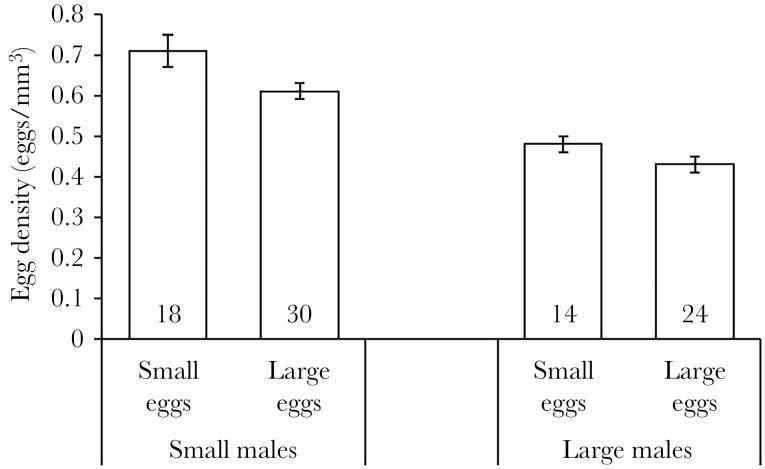
In animals with uniparental care, the quality of care provided by one sex can deeply impact the reproductive success of both sexes. Studying variation in parental care quality within a species and which factors may affect it can, therefore, shed important light on patterns of mate choice and other reproductive decisions observed in nature. Using , a pipefish species with extensive uniparental male care, with embryos developing inside a brood pouch during a lengthy pregnancy, we assessed how egg size (which correlates positively with female size), male size, and water temperature affect brooding traits that relate to male care quality, all measured on day 18, approximately 1/3, of the brooding period. We found that larger males brooded eggs at lower densities, and their embryos were heavier than those of small males independent of initial egg size. However, large males had lower embryo survival relative to small males. We found no effect of egg size or of paternal size on within-pouch oxygen levels, but oxygen levels were significantly higher in the bottom than the middle section of the pouch. Males that brooded at higher temperatures had lower pouch oxygen levels presumably because of higher embryo developmental rates, as more developed embryos consume more oxygen. Together, our results suggest that small and large males follow distinct paternal strategies: large males positively affect embryo size whereas small males favor embryo survival. As females prefer large mates, offspring size at independence may be more important to female fitness than offspring survival during development.
在单亲照料的动物中,一方提供照料的质量会深刻影响两性的繁殖成功率。因此,研究一个物种内亲代照料质量的差异以及哪些因素可能影响它,能够为自然界中观察到的配偶选择模式和其他繁殖决策提供重要线索。我们以一种有广泛单亲雄性照料的尖嘴鱼为研究对象,其胚胎在漫长孕期内在育儿袋中发育,我们评估了卵的大小(与雌性大小呈正相关)、雄性大小和水温如何影响与雄性照料质量相关的育雏特征,所有这些都是在育雏期第18天(约为育雏期的1/3)测量的。我们发现,体型较大的雄性育雏时卵的密度较低,且其胚胎比体型较小的雄性的胚胎更重,与初始卵的大小无关。然而,相对于体型较小的雄性,体型较大的雄性胚胎存活率较低。我们发现卵的大小或父本大小对育儿袋内的氧气水平没有影响,但育儿袋底部的氧气水平明显高于中部。在较高温度下育雏的雄性育儿袋内氧气水平较低,推测是因为胚胎发育速度较快,因为发育更成熟的胚胎消耗更多氧气。总之,我们的结果表明,体型小的和体型大的雄性遵循不同的父本策略:体型大的雄性对胚胎大小有积极影响,而体型小的雄性更有利于胚胎存活。由于雌性更喜欢体型大的配偶,后代独立时的大小对雌性适应性可能比对发育期间后代的存活更为重要。


 Zotero 插件