Loosen Sven H, Schulze-Hagen Maximilian, Bruners Philipp, Tacke Frank, Trautwein Christian, Kuhl Christiane, Luedde Tom, Roderburg Christoph
Department of Medicine III, University Hospital RWTH Aachen, Pauwelsstrasse 30, 52074 Aachen, Germany.
Department of Diagnostic and Interventional Radiology, University Hospital RWTH Aachen, Pauwelsstraße 30, 52074 Aachen, Germany.
Cancers (Basel). 2019 Oct 8;11(10):1503. doi: 10.3390/cancers11101503.
Background and Aims: While transarterial chemoembolization (TACE) represents a standard of therapy for intermediate-stage hepatocellular carcinoma (HCC) and is also routinely performed in patients with liver metastases, it is still debated which patients represent the ideal candidates for TACE therapy in terms of overall survival. Sarcopenia, the degenerative loss of skeletal muscle mass and strength, has been associated with an adverse outcome for various malignancies, but its role in the context of TACE has largely remained unknown. Here, we evaluated the role of sarcopenia on the outcome of patients undergoing TACE for primary and secondary liver cancer.
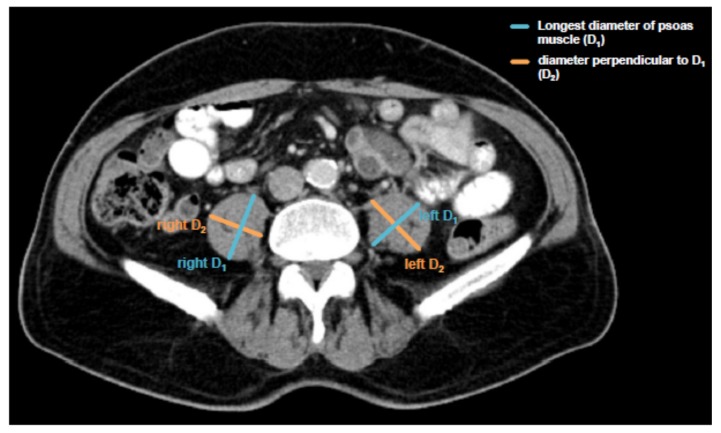
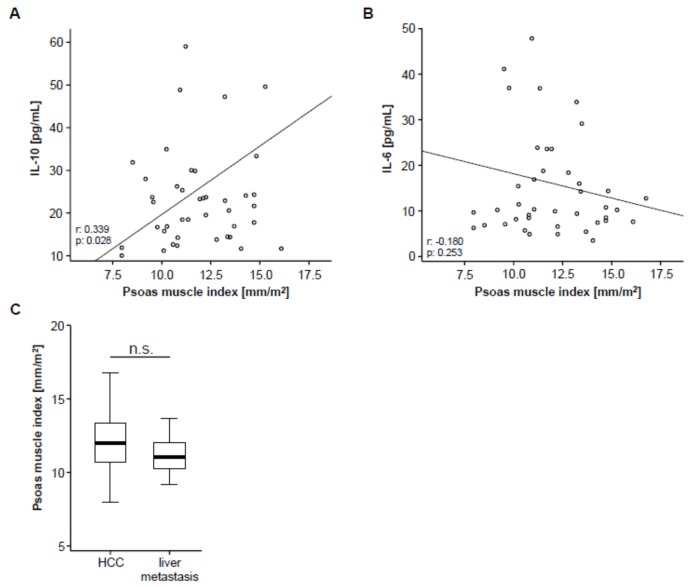
The patients' psoas muscle size was measured on axial computed tomography (CT) scans and normalized for the patients' height squared. This value was referred to as the psoas muscle index (PMI). The PMI was correlated with clinical and laboratory markers.
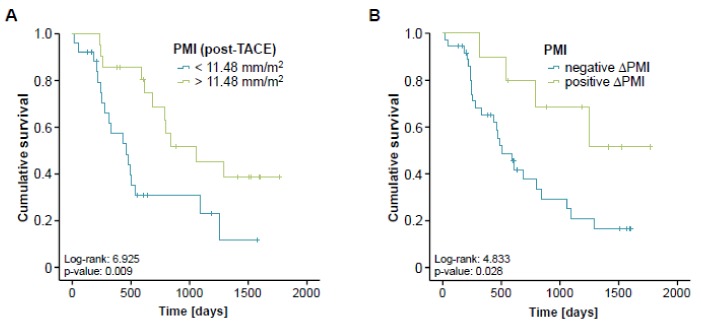
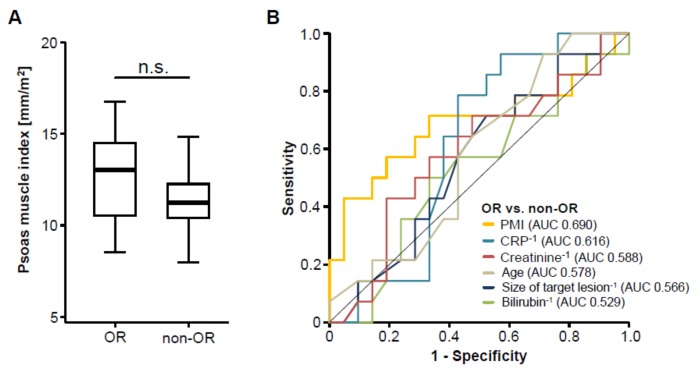
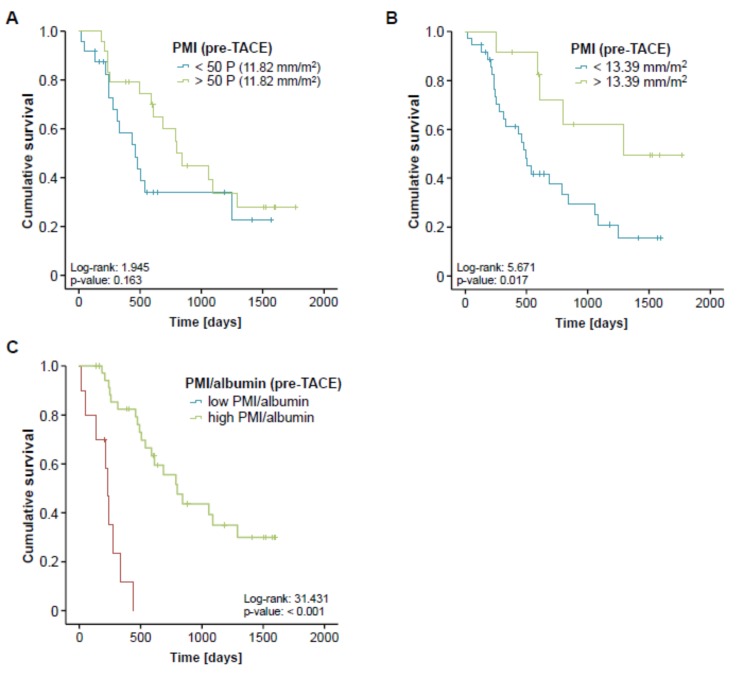
While pre-interventional sarcopenia had no impact on the direct tumor response to TACE, sarcopenic patients with a pre-interventional PMI below our ideal cut-off value of 13.39 mm/m had a significantly impaired long-term outcome with a median overall survival of 491 days compared to 1291 days for patients with a high PMI. This finding was confirmed by uni- and multivariate Cox-regression analyses. Moreover, a progressive rapid decline in muscle mass after TACE was a predictor for an unfavorable prognosis.
Our data suggest that sarcopenia represents a previously unrecognized prognostic factor for patients undergoing TACE therapy which might yield important information on the patients' post-interventional outcome and should therefore be implemented into clinical stratification algorithms.
背景与目的:虽然经动脉化疗栓塞术(TACE)是中期肝细胞癌(HCC)的标准治疗方法,并且也常用于肝转移患者,但就总生存期而言,哪些患者是TACE治疗的理想候选者仍存在争议。肌肉减少症,即骨骼肌质量和力量的退行性丧失,与多种恶性肿瘤的不良预后相关,但其在TACE背景下的作用在很大程度上仍不清楚。在此,我们评估了肌肉减少症对原发性和继发性肝癌接受TACE治疗患者预后的影响。
在轴向计算机断层扫描(CT)上测量患者的腰大肌大小,并根据患者身高的平方进行标准化。该值称为腰大肌指数(PMI)。PMI与临床和实验室指标相关。
虽然介入前的肌肉减少症对TACE的直接肿瘤反应没有影响,但介入前PMI低于我们理想临界值13.39mm/m²的肌肉减少症患者长期预后明显受损,中位总生存期为491天,而高PMI患者为1291天。单因素和多因素Cox回归分析证实了这一发现。此外,TACE后肌肉质量的快速渐进性下降是预后不良的预测指标。
我们的数据表明,肌肉减少症是接受TACE治疗患者先前未被认识的预后因素,这可能会提供有关患者介入后预后的重要信息,因此应纳入临床分层算法。