Department of Physiology and Pathophysiology, School of Basic Medical Sciences, Peking University Health Science Center, Key Laboratory of Molecular Cardiovascular Science, Ministry of Education, Beijing, 100191, China.
State Key Laboratory of Bioactive Substances and Function of Natural Medicine, Institute of Materia Medica, Peking Union Medical College, Chinese Academy of Medical Sciences, Beijing, 100050, China.
Acta Pharmacol Sin. 2020 Jan;41(1):47-55. doi: 10.1038/s41401-019-0308-7. Epub 2019 Oct 13.
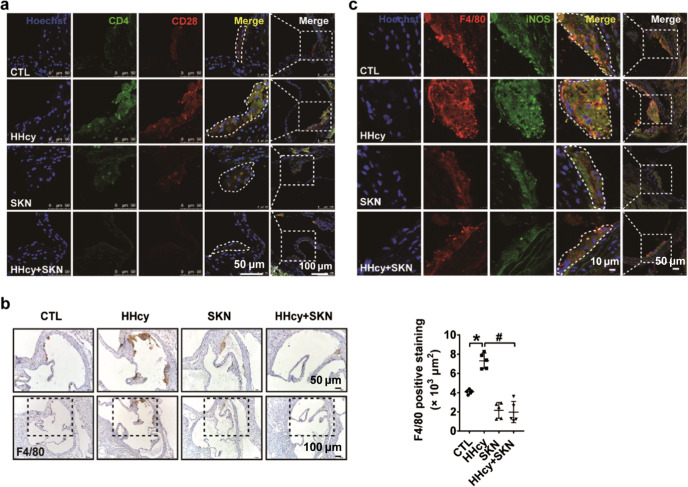
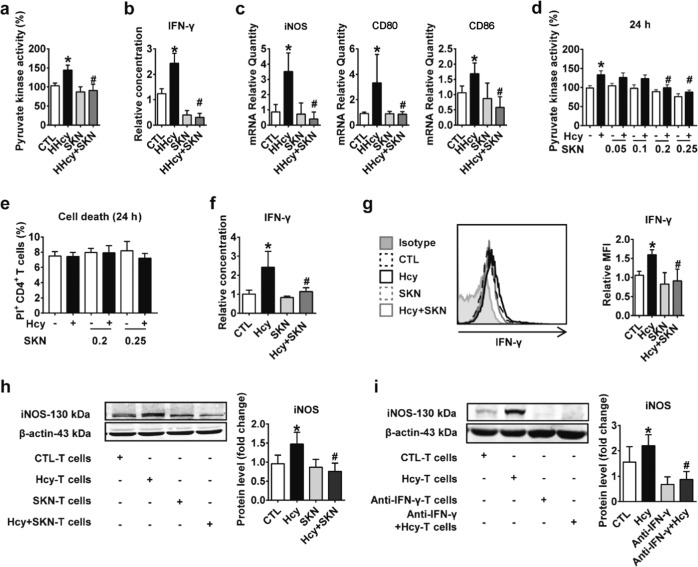
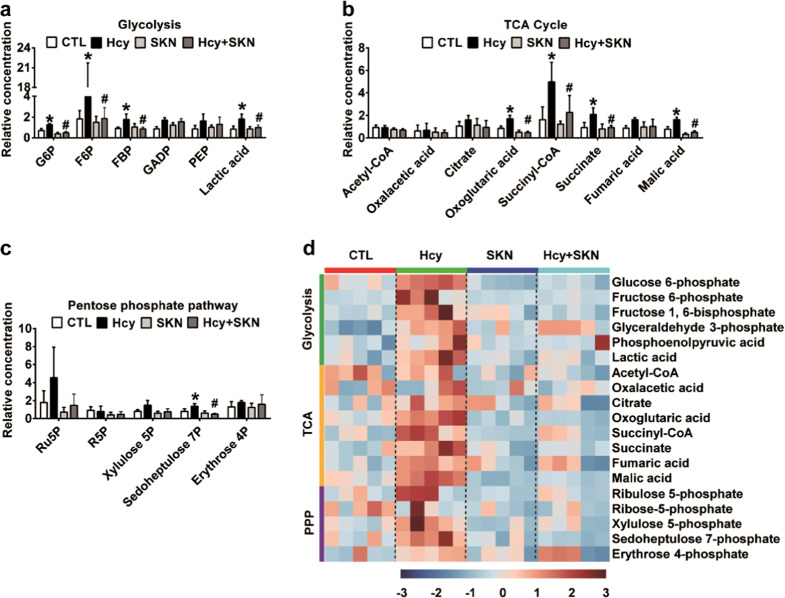
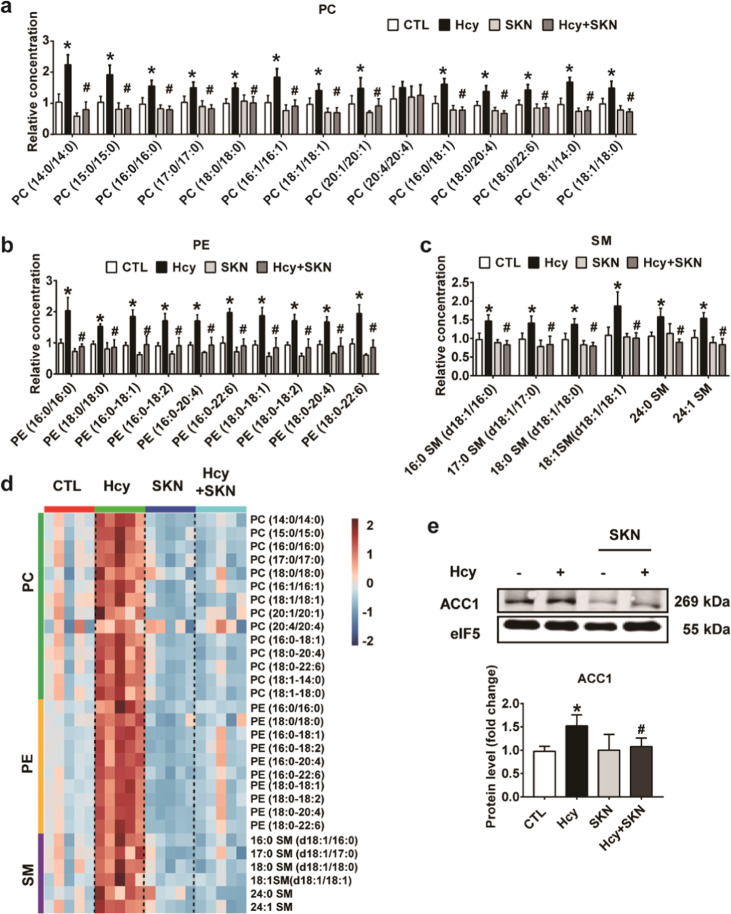
T cell metabolic activation plays a crucial role in inflammation of atherosclerosis. Shikonin (SKN), a natural naphthoquinone with anti-inflammatory activity, has shown to exert cardioprotective effects, but the effect of SKN on atherosclerosis is unclear. In addition, SKN was found to inhibit glycolysis via targeting pyruvate kinase muscle isozyme 2 (PKM2). In the present study, we investigated the effects of SKN on hyperhomocysteinemia (HHcy)-accelerated atherosclerosis and T cell inflammatory activation in ApoE mice and the metabolic mechanisms in this process. Drinking water supplemented with Hcy (1.8 g/L) was administered to ApoE mice for 2 weeks and the mice were injected with SKN (1.2 mg/kg, i.p.) or vehicle every 3 days. We showed that SKN treatment markedly attenuated HHcy-accelerated atherosclerosis in ApoE mice and significantly decreased inflammatory activated CD4 T cells and proinflammatory macrophages in plaques. In splenic CD4 T cells isolated from HHcy-ApoE mice, SKN treatment significantly inhibited HHcy-stimulated PKM2 activity, interferon-γ secretion and the capacity of these T cells to promote macrophage proinflammatory polarization. SKN treatment significantly inhibited HHcy-stimulated CD4 T cell glycolysis and oxidative phosphorylation. Metabolic profiling analysis of CD4 T cells revealed that Hcy administration significantly increased various glucose metabolites as well as lipids and acetyl-CoA carboxylase 1, which were reversed by SKN treatment. In conclusion, our results suggest that SKN is effective to ameliorate atherosclerosis in HHcy-ApoE mice and this is at least partly associated with the inhibition of SKN on CD4 T cell inflammatory activation via PKM2-dependent metabolic suppression.
T 细胞代谢激活在动脉粥样硬化炎症中起着至关重要的作用。紫草素(SKN)是一种具有抗炎活性的天然萘醌,已显示出发挥心脏保护作用,但 SKN 对动脉粥样硬化的影响尚不清楚。此外,发现 SKN 通过靶向丙酮酸激酶肌肉同工酶 2(PKM2)抑制糖酵解。在本研究中,我们研究了 SKN 对高同型半胱氨酸血症(HHcy)加速动脉粥样硬化和 ApoE 小鼠 T 细胞炎症激活的影响及其在该过程中的代谢机制。用含有 Hcy(1.8 g/L)的饮用水给 ApoE 小鼠喂食 2 周,并每 3 天给小鼠注射 SKN(1.2 mg/kg,腹腔注射)或载体。我们表明,SKN 治疗显著减轻了 ApoE 小鼠中 HHcy 加速的动脉粥样硬化,并显著减少了斑块中炎症激活的 CD4 T 细胞和促炎巨噬细胞。在从 HHcy-ApoE 小鼠分离的脾 CD4 T 细胞中,SKN 治疗显著抑制 HHcy 刺激的 PKM2 活性、干扰素-γ 分泌以及这些 T 细胞促进巨噬细胞促炎极化的能力。SKN 治疗显著抑制 HHcy 刺激的 CD4 T 细胞糖酵解和氧化磷酸化。CD4 T 细胞代谢谱分析显示,Hcy 给药显著增加了各种葡萄糖代谢物以及脂质和乙酰辅酶 A 羧化酶 1,SKN 处理可逆转这些变化。总之,我们的结果表明,SKN 有效改善了 HHcy-ApoE 小鼠的动脉粥样硬化,这至少部分与 SKN 通过 PKM2 依赖性代谢抑制抑制 CD4 T 细胞炎症激活有关。