Demina Irina V, Maity Pooja Jha, Nagchowdhury Anurupa, Ng Jason L P, van der Graaff Eric, Demchenko Kirill N, Roitsch Thomas, Mathesius Ulrike, Pawlowski Katharina
Department of Ecology, Environment and Plant Sciences, Stockholm University, Stockholm, Sweden.
Division of Plant Science, Research School of Biology, Australian National University, Canberra, ACT, Australia.
Front Plant Sci. 2019 Sep 24;10:1085. doi: 10.3389/fpls.2019.01085. eCollection 2019.
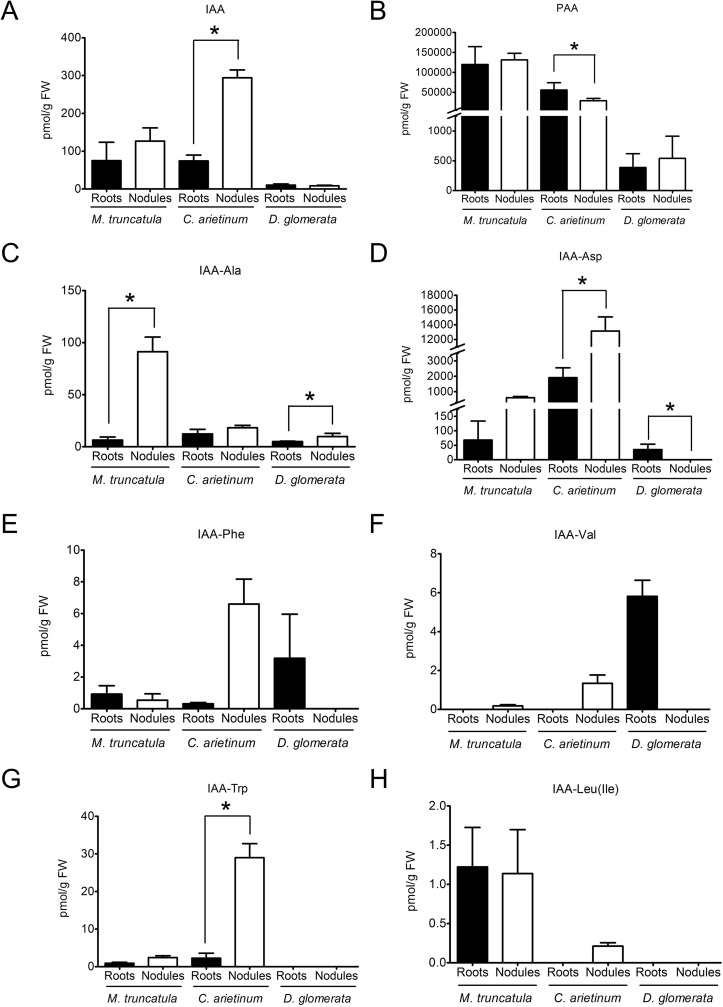
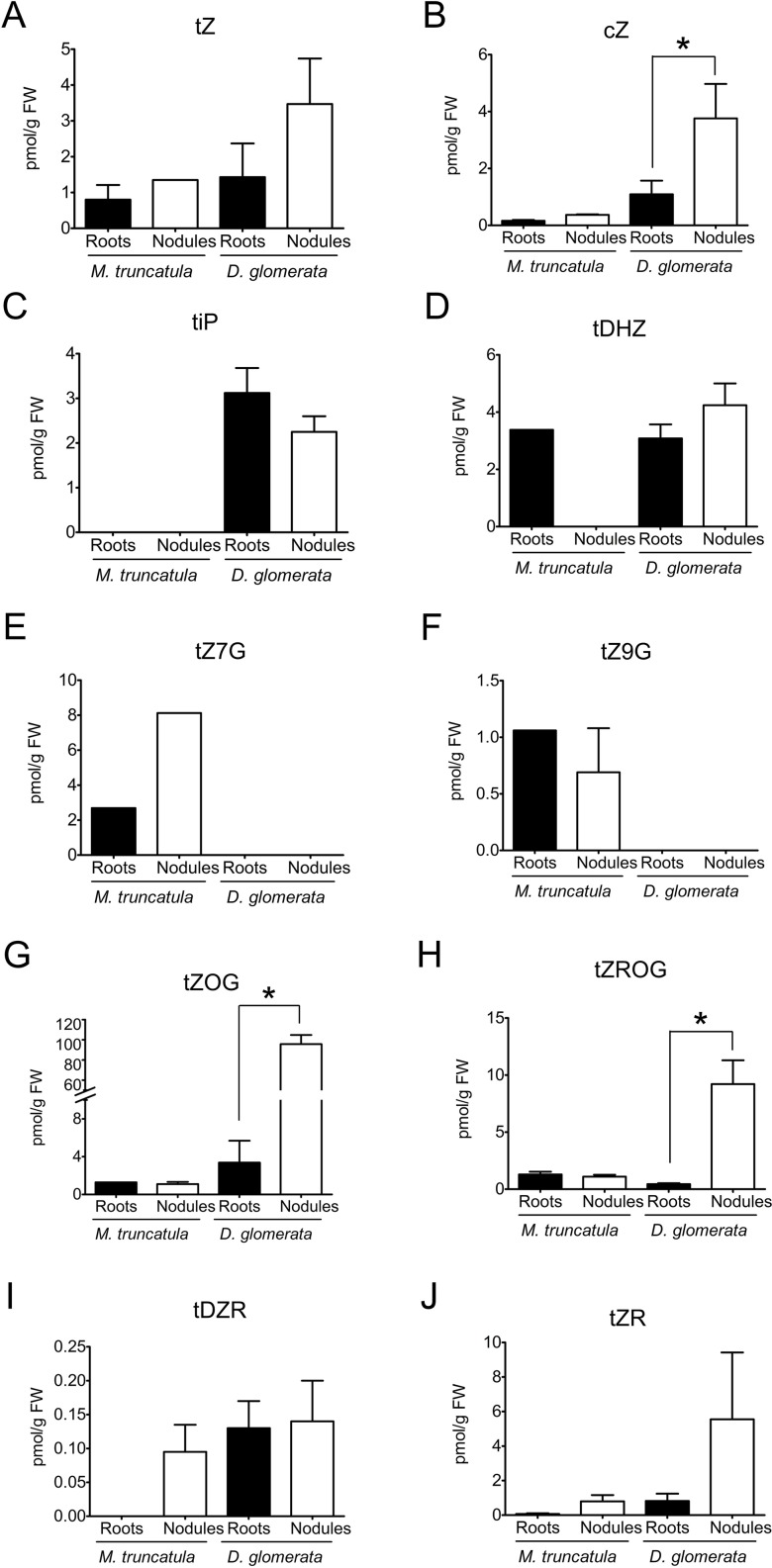
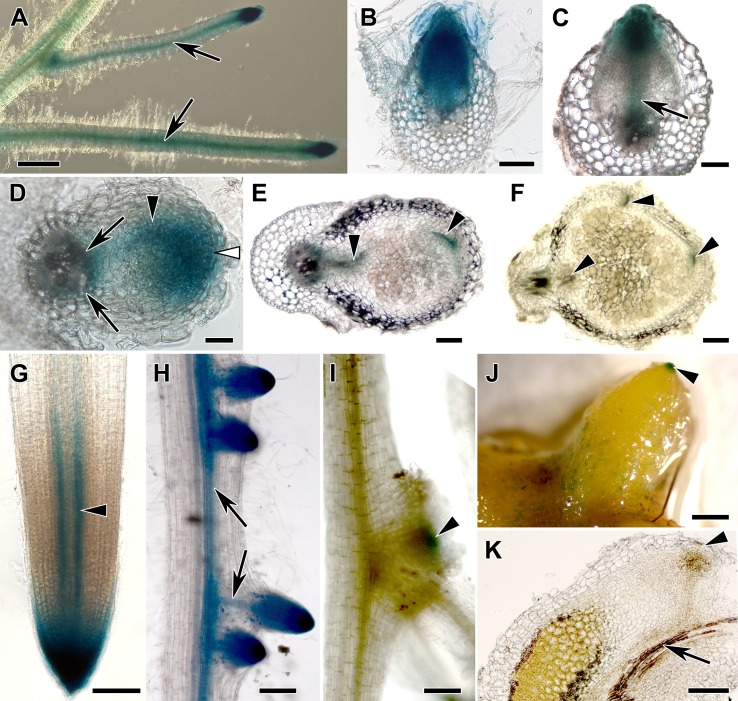
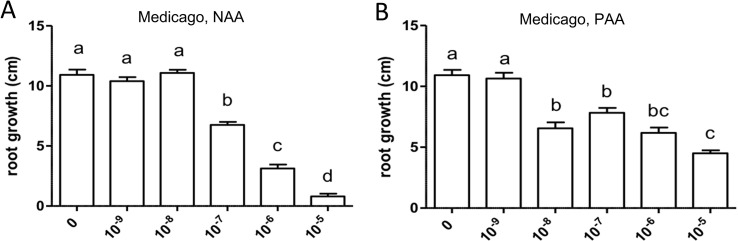
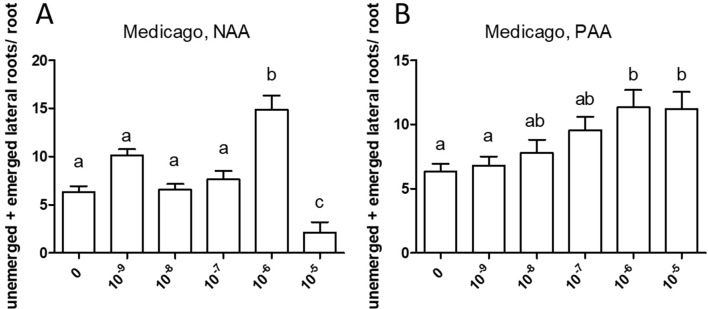
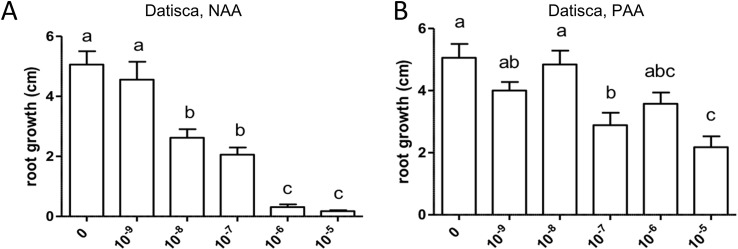
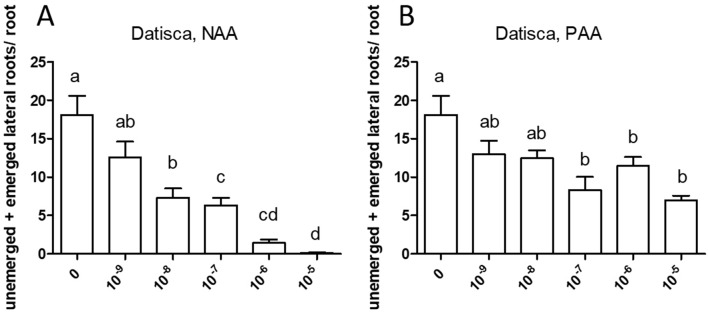
Actinorhizal nodules are structurally different from legume nodules and show a greater similarity to lateral roots. Because of the important role of auxins in lateral root and nodule formation, auxin profiles were examined in roots and nodules of the actinorhizal species and the model legume . The auxin response in roots and nodules of both species was analyzed in transgenic root systems expressing a beta-glucuronidase gene under control of the synthetic auxin-responsive promoter . The effects of two different auxin on root development were compared for both species. The auxin present in nodules at the highest levels was phenylacetic acid (PAA). No differences were found between the concentrations of active auxins of roots nodules, while levels of the auxin conjugate indole-3-acetic acid-alanine were increased in nodules compared to roots of both species. Because auxins typically act in concert with cytokinins, cytokinins were also quantified. Concentrations of -zeatin and some glycosylated cytokinins were dramatically increased in nodules compared to roots of , but not of . The ratio of active auxins to cytokinins remained similar in nodules compared to roots in both species. The auxin response, as shown by the activation of the promoter, seemed significantly reduced in nodules compared to roots of both species, suggesting the accumulation of auxins in cell types that do not express the signal transduction pathway leading to activation. Effects on root development were analyzed for the synthetic auxin naphthaleneacetic acid (NAA) and PAA, the dominant auxin in nodules. Both auxins had similar effects, except that the sensitivity of roots to PAA was lower than to NAA. However, while the effects of both auxins on primary root growth were similar for both species, effects on root branching were different: both auxins had the classical positive effect on root branching in , but a negative effect in . Such a negative effect of exogenous auxin on root branching has previously been found for a cucurbit that forms lateral root primordia in the meristem of the parental root; however, root branching in does not follow that pattern.
放线菌根瘤在结构上与豆科植物根瘤不同,与侧根更为相似。由于生长素在侧根和根瘤形成中发挥重要作用,因此研究了放线菌根瘤植物和模式豆科植物的根和根瘤中的生长素分布情况。在由合成生长素响应启动子控制下表达β-葡萄糖醛酸酶基因的转基因根系中,分析了这两种植物根和根瘤中的生长素响应。比较了两种不同生长素对这两种植物根系发育的影响。根瘤中含量最高的生长素是苯乙酸(PAA)。两种植物根和根瘤中活性生长素的浓度没有差异,但与根相比,两种植物根瘤中生长素共轭物吲哚-3-乙酸-丙氨酸的水平有所增加。由于生长素通常与细胞分裂素协同作用,因此也对细胞分裂素进行了定量分析。与 的根相比, 根瘤中玉米素和一些糖基化细胞分裂素的浓度显著增加,但 并非如此。两种植物根瘤中活性生长素与细胞分裂素的比例与根相比保持相似。与两种植物的根相比,根瘤中由启动子激活所显示的生长素响应似乎显著降低,这表明生长素在不表达导致 激活的信号转导途径的细胞类型中积累。分析了合成生长素萘乙酸(NAA)和根瘤中主要的生长素PAA对根系发育的影响。两种生长素具有相似的作用,但根对PAA的敏感性低于对NAA的敏感性。然而,虽然两种生长素对两种植物初生根生长的影响相似,但对根系分支的影响却不同:两种生长素对 的根系分支具有经典的正向作用,但对 具有负向作用。先前在一种在亲代根分生组织中形成侧根原基的葫芦科植物中发现了外源生长素对根系分支的这种负向作用;然而, 的根系分支并不遵循这种模式。