Department of Research, Epicentre-France, 8 Rue Saint Sabin 75011 Paris, France.
Epicentre-Niger: Quartier Plateau, Boulevard Mali Bero Issa Beri (IB) Rue 31, Porte N 93, BP 13 330, Niamey, Niger.
Trans R Soc Trop Med Hyg. 2019 Dec 1;113(12):749-756. doi: 10.1093/trstmh/trz070.
Healthcare-associated infections pose a major, yet often preventable risk to patient safety. Poor hand hygiene among healthcare personnel and unsanitary hospital environments may contribute to this risk in low-income settings. We aimed to describe hand hygiene behaviour and environmental contamination by season in a rural, sub-Saharan African hospital setting.
We conducted a concurrent triangulation mixed-methods study combining three types of data at a hospital in Madarounfa, Niger. Hand hygiene observations among healthcare personnel during two seasons contributed quantitative data describing hand hygiene frequency and its variability in relation to seasonal changes in caseload. Semistructured interviews with healthcare personnel contributed qualitative data on knowledge, attitudes and barriers to hand hygiene. Biweekly environmental samples evaluated microbial contamination from October 2016 to December 2017. Triangulation identified convergences, complements and contradictions across results.
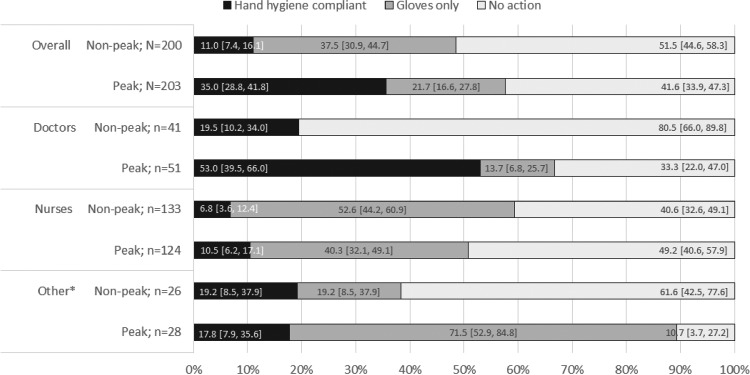
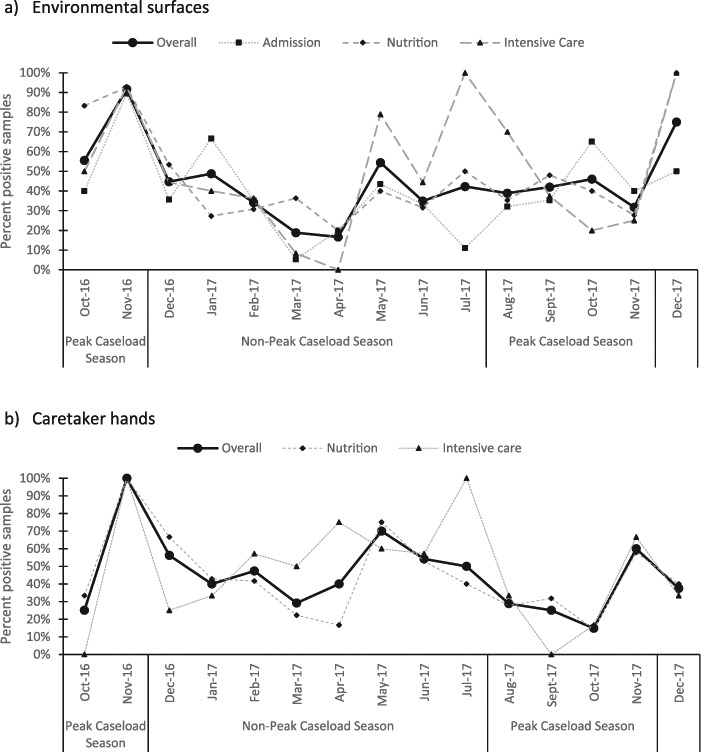
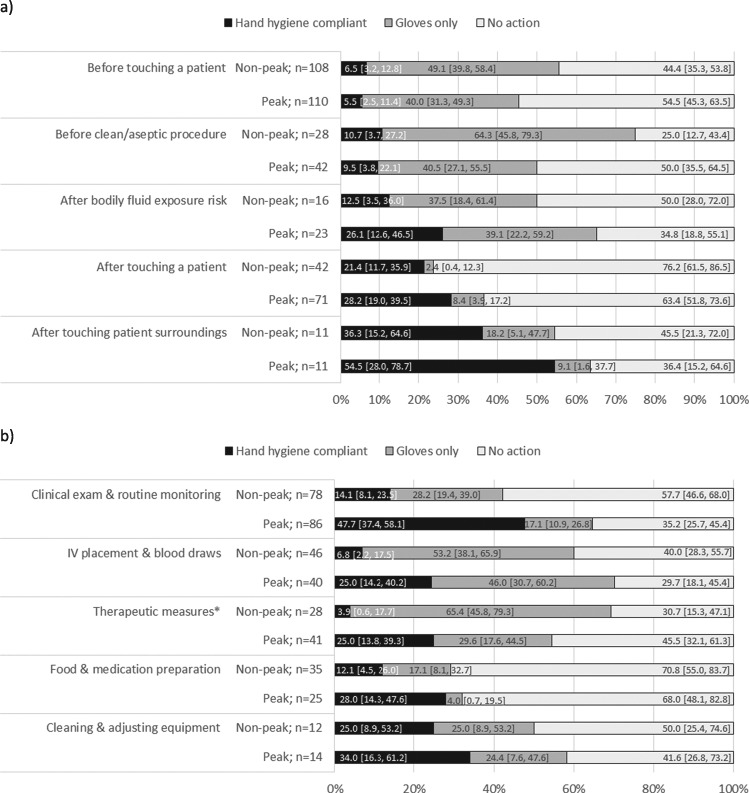
Hand hygiene compliance, or the proportion of actions (handrubbing or handwashing) performed out of all actions required, was low (11% during non-peak and 36% during peak caseload seasons). Interviews with healthcare personnel suggesting good general knowledge of hand hygiene contradicted the low hand hygiene compliance. However, compliance by healthcare activity was convergent with poor knowledge of precise hand hygiene steps and the motivation to prevent personal acquisition of infection identified during interviews. Contamination of environmental samples with gram-negative bacilli was high (45%), with the highest rates of contamination observed during the peak caseload season.
Low hand hygiene compliance coupled with high contamination rates of hospital environments may increase the risk of hospital-acquired infections in sub-Saharan African settings.
医疗保健相关感染对患者安全构成重大但往往可预防的威胁。在低收入环境中,医护人员手部卫生状况不佳和医院环境不卫生可能导致这种风险增加。我们旨在描述撒哈拉以南非洲农村医院环境中季节性的手部卫生行为和环境污染情况。
我们在尼日尔马德拉农法医院进行了一项同时进行的三角交叉混合方法研究,该研究结合了三种类型的数据。在两个季节期间对医护人员进行手部卫生观察,提供了定量数据,描述了与病例量季节性变化相关的手部卫生频率及其可变性。对医护人员进行半结构式访谈,提供了有关手部卫生知识、态度和障碍的定性数据。从 2016 年 10 月至 2017 年 12 月,每两周进行一次环境样本评估,以评估微生物污染情况。三角交叉分析确定了结果之间的趋同、互补和矛盾。
手部卫生依从性(即执行的操作数量(手揉搓或洗手)与所需操作数量的比例)较低(非高峰期为 11%,高峰期为 36%)。医护人员的访谈表明他们对手部卫生有良好的一般认识,但这与低水平的手部卫生依从性相矛盾。然而,医护人员的手部卫生依从性与访谈中发现的对具体手部卫生步骤的了解不足以及预防个人感染的动机是一致的。环境样本中革兰氏阴性杆菌的污染率很高(45%),高峰期的污染率最高。
低水平的手部卫生依从性加上医院环境中高污染率可能会增加撒哈拉以南非洲地区医院获得性感染的风险。