School of Pharmacy, University of Wisconsin-Madison, Madison, WI, 53705, USA.
Department of Chemistry, University of Wisconsin-Madison, Madison, WI, 53705, USA.
Nat Commun. 2019 Oct 16;10(1):4697. doi: 10.1038/s41467-019-12548-0.
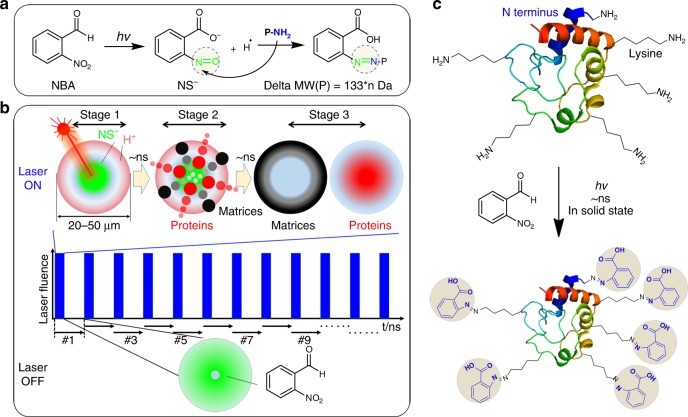
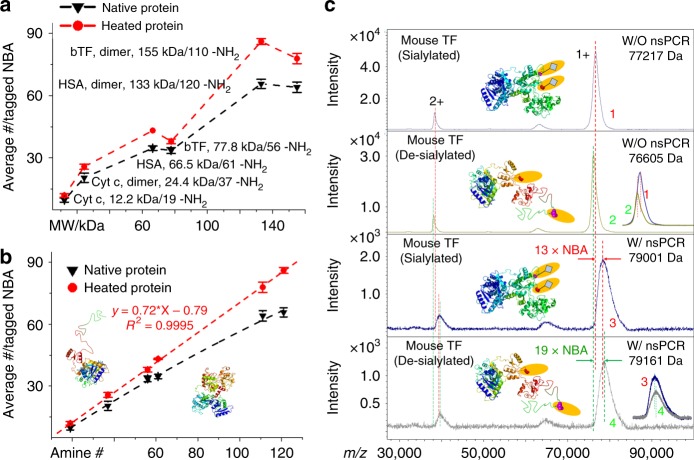
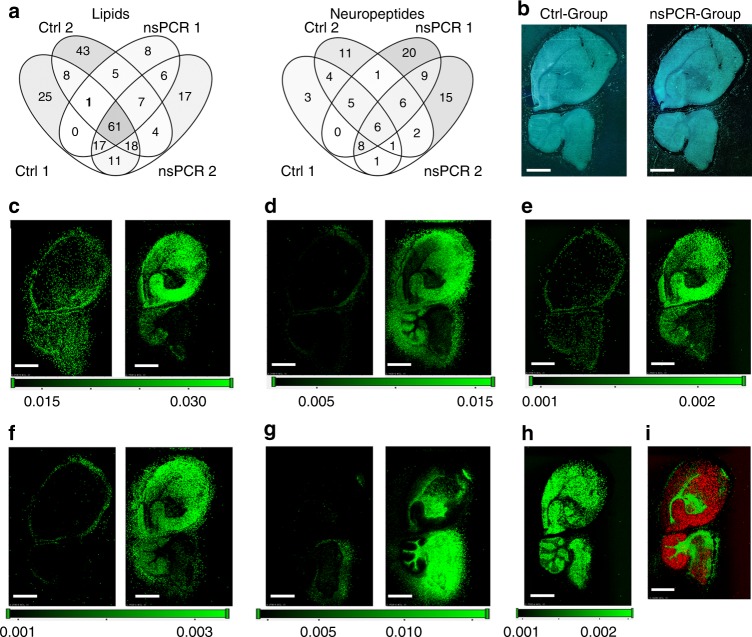
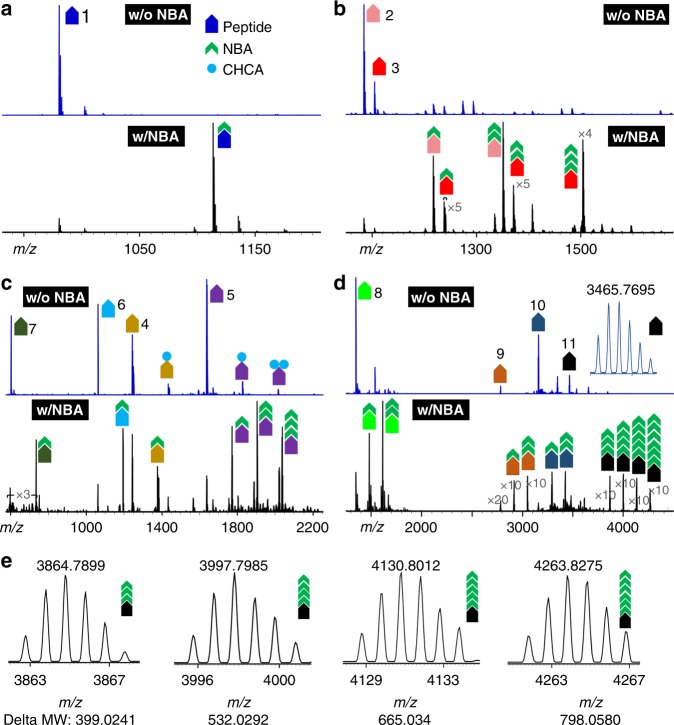
Comprehensive protein identification and concomitant structural probing of proteins are of great biological significance. However, this is challenging to accomplish simultaneously in one confined space. Here, we develop a nanosecond photochemical reaction (nsPCR)-based click chemistry, capable of structural probing of proteins and enhancing their identifications through on-demand removal of surrounding matrices within nanoseconds. The nsPCR is initiated using a photoactive compound, 2-nitrobenzaldehyde (NBA), and is examined by matrix-assisted laser desorption/ionization-mass spectrometry (MALDI-MS). Benefiting from the on-demand matrix-removal effect, this nsPCR strategy enables enhanced neuropeptide identification and visualization from complex tissue samples such as mouse brain tissue. The design shows great promise for structural probing of proteins up to 155 kDa due to the exclusive accessibility of nsPCR to primary amine groups, as demonstrated by its general applicability using a series of proteins with various lysine residues from multiple sample sources, with accumulated labeling efficiencies greater than 90%.
全面鉴定蛋白质并同时对其结构进行探测具有重要的生物学意义。然而,在一个有限的空间内同时完成这两项任务具有挑战性。在这里,我们开发了一种纳秒光化学反应(nsPCR)为基础的点击化学方法,能够对蛋白质进行结构探测,并通过在纳秒内按需去除周围基质来增强它们的鉴定。nsPCR 是使用光活性化合物 2-硝基苯甲醛(NBA)引发的,并通过基质辅助激光解吸/电离质谱(MALDI-MS)进行检测。得益于按需基质去除效应,这种 nsPCR 策略能够增强从复杂组织样品(如小鼠脑组织)中鉴定和可视化神经肽。该设计由于 nsPCR 对伯胺基团的独特可及性,有望用于探测高达 155 kDa 的蛋白质,这一点通过使用来自多个样品来源的具有各种赖氨酸残基的一系列蛋白质得到了证明,累积标记效率大于 90%。