Moran Dominic
Global Academy of Agriculture and Food Security, The Royal (Dick) School of Veterinary Studies and The Roslin Institute, The University of Edinburgh, Edinburgh, UK.
BMJ Glob Health. 2019 Sep 18;4(5):e001807. doi: 10.1136/bmjgh-2019-001807. eCollection 2019.
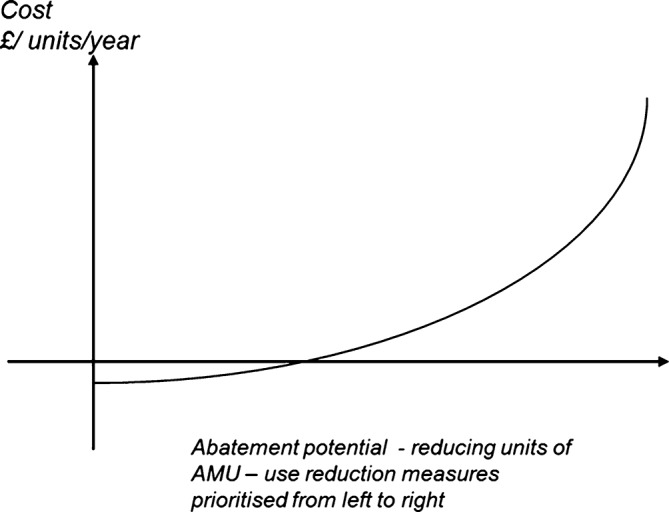
There is a need to develop an evaluation framework to identify intervention priorities to reduce antimicrobial use (AMU) across clinical, agricultural and environmental settings. Antimicrobial resistance (AMR) can be conceptualised and therefore potentially managed in the same way as an environmental pollution problem. That is, over-use of antimicrobial medicines as inputs to human and animal health leads to unintended leakage of resistance genes that further combine with natural or intrinsic resistance in the environment. The diffuse nature of this leakage means that the private use decision is typically neither cognisant, nor made responsible for the wider social cost, which is the depletion of wider antibiotic effectiveness, a common pool resource or public good. To address this so-called market failure, some authors have suggested a potential to learn from similar management challenges encountered in the sphere of global climate change, specifically, capping use of medically important drugs analogous to limits set on greenhouse gas emissions. Drawing on experience of the economics of greenhouse gas mitigation, this paper explores a potential framework to develop AMU budgets based on a systematic comparative appraisal of the technical, economic, behavioural and policy feasibility of AMU reduction interventions across the One Health domains. The suggested framework responds to a call for global efforts to develop multi-dimensional metrics and a transparent focus to motivate research and policy, and ultimately to inform national and global AMR governance.
有必要制定一个评估框架,以确定干预重点,从而在临床、农业和环境领域减少抗菌药物使用(AMU)。抗菌药物耐药性(AMR)可以被概念化,因此有可能以与环境污染问题相同的方式进行管理。也就是说,将抗菌药物作为人类和动物健康的投入物过度使用,会导致耐药基因意外泄漏,这些基因会进一步与环境中的天然或固有耐药性相结合。这种泄漏的扩散性意味着,私人使用决策通常既没有意识到,也不对更广泛的社会成本负责,而这种社会成本就是更广泛的抗生素有效性的消耗,这是一种公共资源或公共物品。为了解决这种所谓的市场失灵问题,一些作者建议有可能借鉴全球气候变化领域遇到的类似管理挑战,具体而言,限制使用与温室气体排放限制类似的重要医用药物。借鉴温室气体减排经济学的经验,本文探讨了一个潜在的框架,该框架基于对“同一个健康”(One Health)领域抗菌药物使用减少干预措施的技术、经济、行为和政策可行性进行系统的比较评估,来制定抗菌药物使用预算。所建议的框架回应了全球努力制定多维指标和进行透明关注以推动研究和政策制定,并最终为国家和全球抗菌药物耐药性治理提供信息的呼吁。