Department of Civil and Environmental Engineering, Colorado State University, Fort Collins, Colorado, United States of America.
PLoS One. 2019 Oct 23;14(10):e0223307. doi: 10.1371/journal.pone.0223307. eCollection 2019.
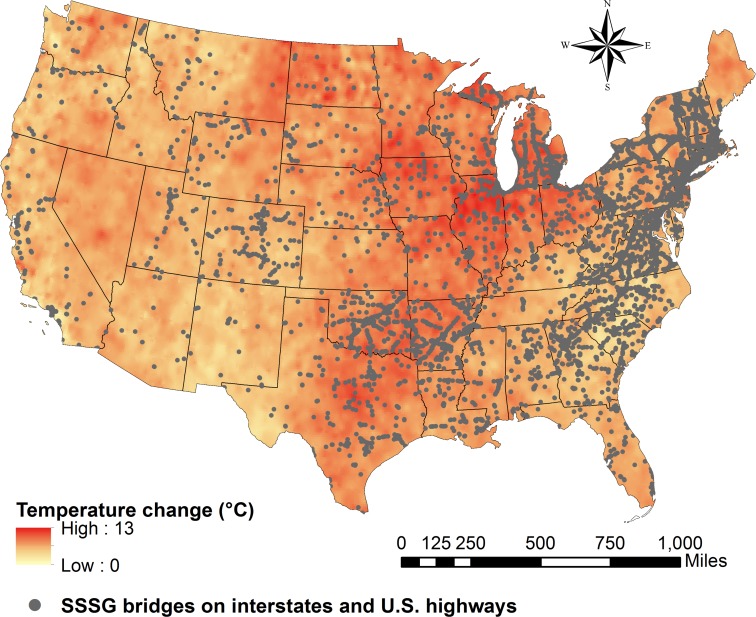
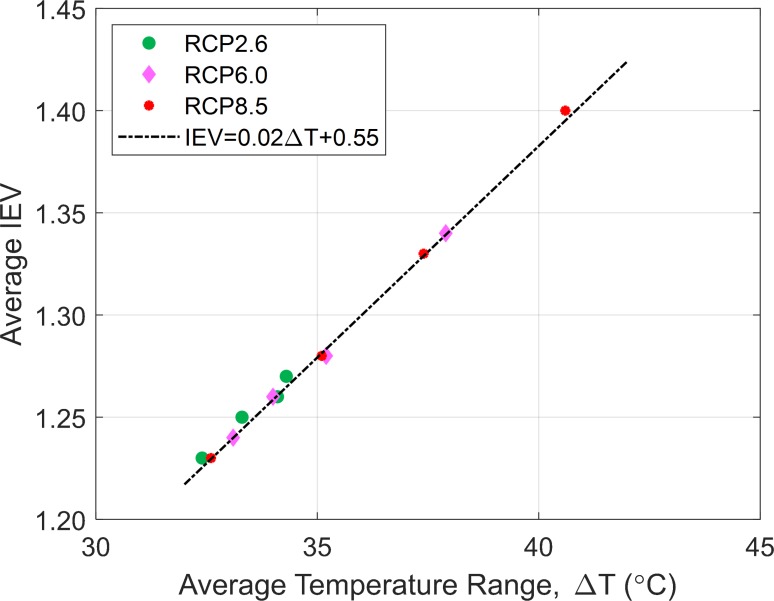
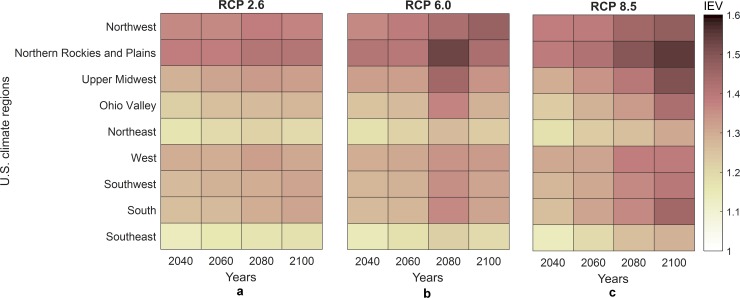
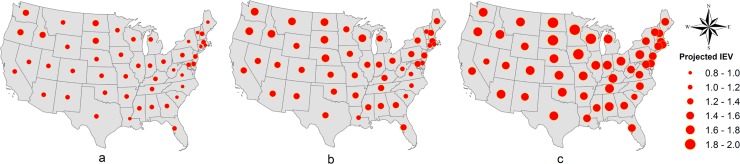
Bridges in America are aging and deteriorating, causing substantial financial strain on federal resources and tax payers' money. Of the various deterioration issues in bridges, one of the most common and costly is malfunctioning of expansion joints, connecting two bridge spans, due to accumulation of debris and dirt in the joint. Although expansion joints are small components of bridges' superstructure, their malfunction can result in major structural problems and when coupled with thermal stresses, the demand on the structural elements could be further amplified. Intuitively, these additional demands are expected to even worsen if one considers potential future temperature rise due to climate change. Indeed, it has been speculated that climate change is likely to have negative effect on bridges worldwide. However, to date there has been no serious attempts to quantify this effect on a larger spatial scale with no studies pertaining to the integrity of the main load carrying girders. In this study, we attempt to quantify the effect of clogged joints and climate change on failure of the superstructure of a class of steel bridges around the U.S. We surprisingly find that potentially most of the main load carrying girders, in the analyzed bridges, could reach their ultimate capacity when subjected to service load and future climate changes. We further discover that out of nine U.S. regions, the most vulnerable bridges, in a descending order, are those located in the Northern Rockies & Plains, Northwest and Upper Midwest. Ultimately, this study proposes an approach to establish a priority order of bridge maintenance and repair to manage limited funding among a vast inventory in an era of climate change.
美国的桥梁正在老化和恶化,给联邦资源和纳税人的资金带来了巨大的财政压力。在桥梁的各种恶化问题中,最常见和最昂贵的问题之一是连接两个桥跨的伸缩缝故障,由于接头内的碎屑和污垢堆积,导致伸缩缝故障。虽然伸缩缝是桥梁上部结构的小部件,但它们的故障会导致重大的结构问题,并且如果与热应力结合,对结构元件的需求可能会进一步放大。直观地说,如果考虑到由于气候变化导致的未来潜在温度升高,这些额外的需求预计会更加恶化。事实上,有人推测气候变化可能会对世界范围内的桥梁产生负面影响。然而,迄今为止,还没有人试图在更大的空间尺度上量化这种影响,也没有研究涉及主要承重梁的完整性。在这项研究中,我们试图量化堵塞接头和气候变化对美国各地一类钢桥上部结构失效的影响。我们惊讶地发现,在分析的桥梁中,潜在的大部分主要承重梁在承受使用荷载和未来气候变化时可能达到其极限容量。我们进一步发现,在美国的九个地区中,按降序排列,最脆弱的桥梁是位于落基山脉和大平原、西北部和上中西部的那些桥梁。最终,这项研究提出了一种方法,以便在气候变化时代,在庞大的桥梁库存中,根据有限的资金,建立桥梁维护和修复的优先级顺序。