NHL-BFM Study Center, Department of Pediatric Hematology and Oncology, Giessen, Germany
NHL-BFM Study Center, Department of Pediatric Hematology and Oncology, Giessen, Germany.
Haematologica. 2020 Aug;105(8):2141-2149. doi: 10.3324/haematol.2019.232314. Epub 2019 Oct 24.
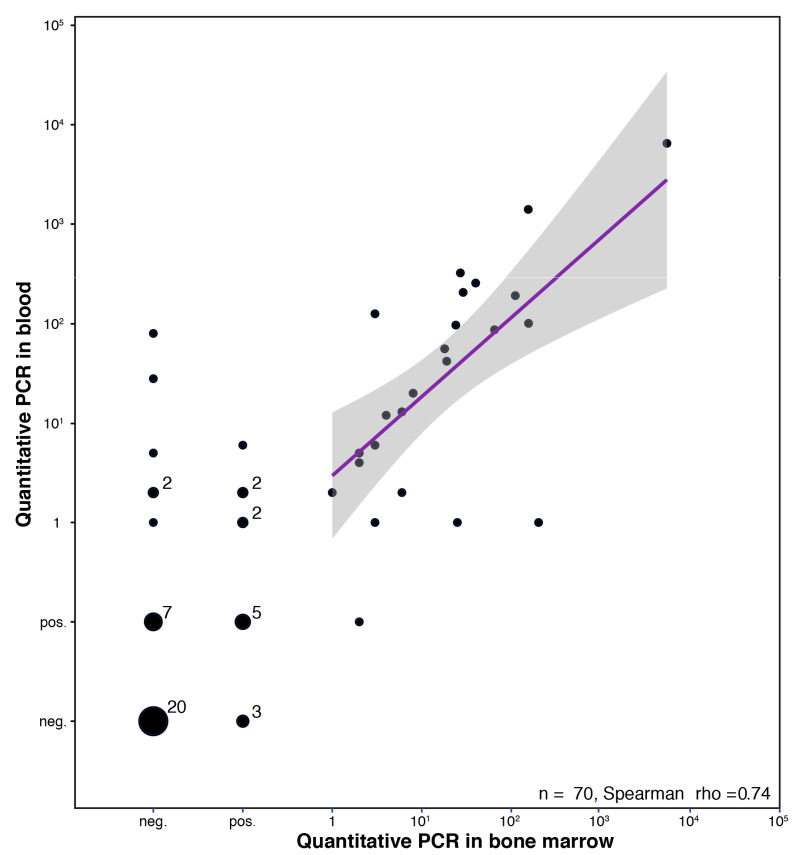
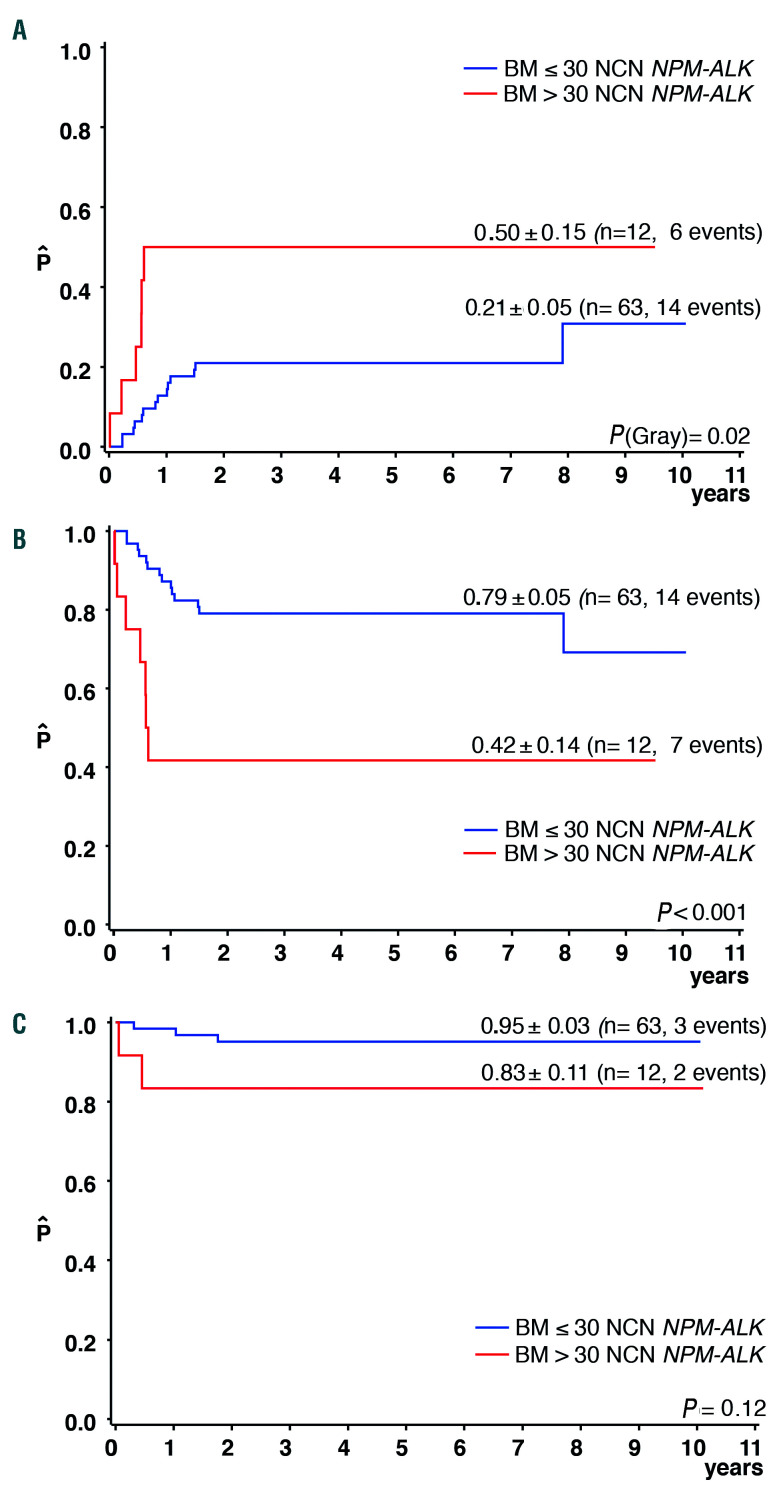
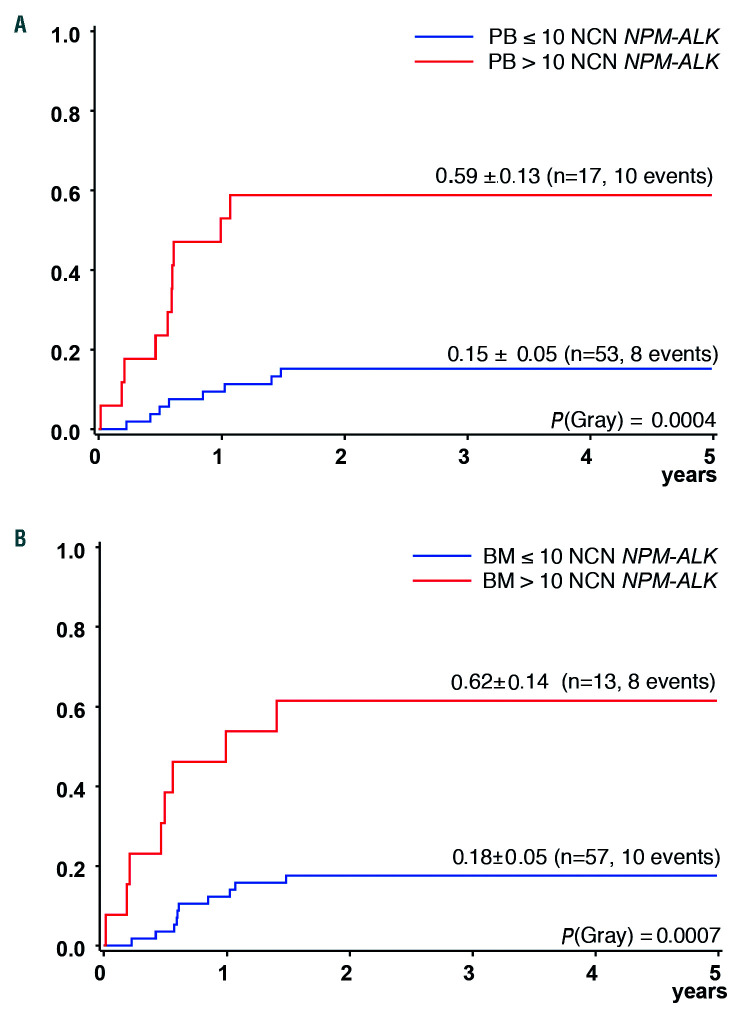
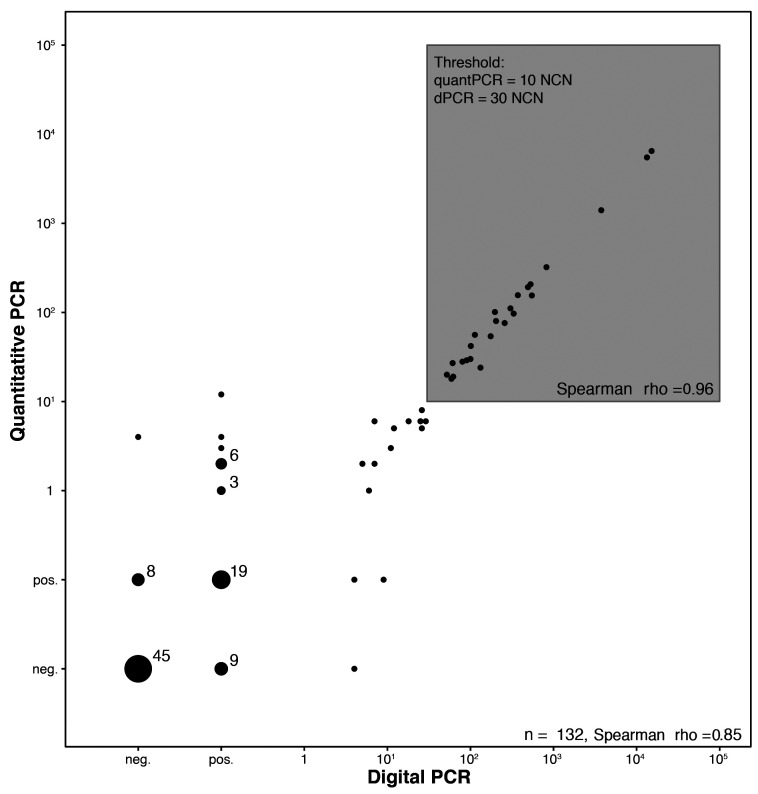
Detection of minimal disseminated disease is a validated prognostic factor in ALK-positive anaplastic large cell lymphoma. We previously reported that quantification of minimal disease by quantitative real-time polymerase chain reaction (RQ-PCR) in bone marrow applying a cut-off of 10 copies 10 copies of identifies very high-risk patients. In the present study, we aimed to confirm the prognostic value of quantitative minimal disseminated disease evaluation and to validate digital polymerase chain reaction (dPCR) as an alternative method. Among 91 patients whose bone marrow was analyzed by RQ-PCR, more than 10 normalized copy-numbers correlated with stage III/IV disease, mediastinal and visceral organ involvement and low anti-ALK antibody titers. The cumulative incidence of relapses of 18 patients with more than 10 normalized copy-numbers of was 61±12% compared to 21±5% for the remaining 73 patients (=0.0002). Results in blood correlated with those in bone marrow (r=0.74) in 70 patients for whom both materials could be tested. Transcripts were quantified by RQ-PCR and dPCR in 75 bone marrow and 57 blood samples. Copy number estimates using dPCR and RQ-PCR correlated in 132 samples (r=0.85). Applying a cut-off of 30 copies /10 copies for quantification by dPCR, almost identical groups of patients were separated as those separated by RQ-PCR. In summary, the prognostic impact of quantification of minimal disseminated disease in bone marrow could be confirmed for patients with anaplastic large cell lymphoma. Blood can substitute for bone marrow. Quantification of minimal disease by dPCR provides a promising tool to facilitate harmonization of minimal disease measurement between laboratories and for clinical studies.
微小播散病灶的检测是间变性大细胞淋巴瘤 ALK 阳性患者的一个已被证实的预后因素。我们之前报道过,应用骨髓实时定量聚合酶链反应(RQ-PCR)检测微小疾病,以 10 拷贝/10 拷贝的截断值来定量,可以识别出极高风险的患者。在本研究中,我们旨在确认定量微小播散病灶评估的预后价值,并验证数字聚合酶链反应(dPCR)作为替代方法的可行性。在通过 RQ-PCR 分析的 91 例患者中,超过 10 个归一化拷贝数与 III/IV 期疾病、纵隔和内脏器官受累以及低抗 ALK 抗体滴度相关。在 18 例归一化拷贝数超过 10 的患者中,复发的累积发生率为 61±12%,而其余 73 例患者为 21±5%(=0.0002)。在可同时检测骨髓和血液的 70 例患者中,血液中的结果与骨髓中的结果相关(r=0.74)。在 75 例骨髓和 57 例血液样本中,通过 RQ-PCR 和 dPCR 对转录本进行定量。在 132 个样本中,dPCR 和 RQ-PCR 的拷贝数估计值具有相关性(r=0.85)。在应用 dPCR 定量时,截断值为 30 拷贝/10 拷贝,几乎可以将患者分为与 RQ-PCR 相同的两组。总之,间变性大细胞淋巴瘤患者骨髓微小播散病灶定量的预后影响可以得到确认。血液可以替代骨髓。dPCR 对微小疾病的定量提供了一个有前途的工具,可以促进实验室之间微小疾病测量的标准化,并用于临床研究。