Fang Yu-Lian, Zhang Rui-Ping, Wang Yi-Zheng, Cao Li-Rong, Zhang Yu-Qin, Cai Chun-Quan
Institute of Pediatrics, Tianjin Children's Hospital, Tianjin 300134, P.R. China.
Graduate College of Tianjin Medical University, Tianjin 300070, P.R. China.
Exp Ther Med. 2019 Nov;18(5):3737-3740. doi: 10.3892/etm.2019.8059. Epub 2019 Sep 27.
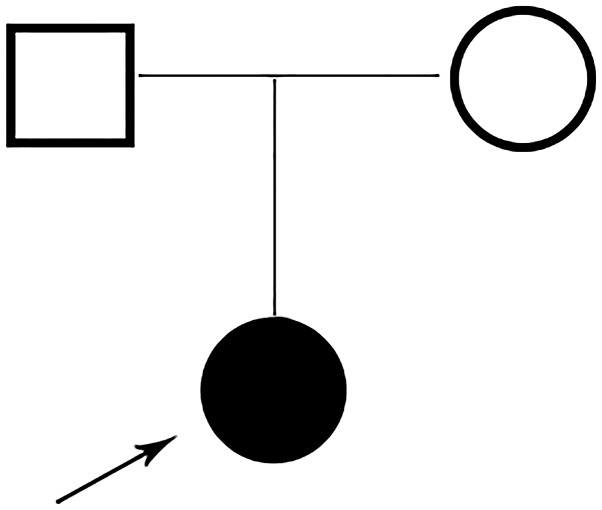
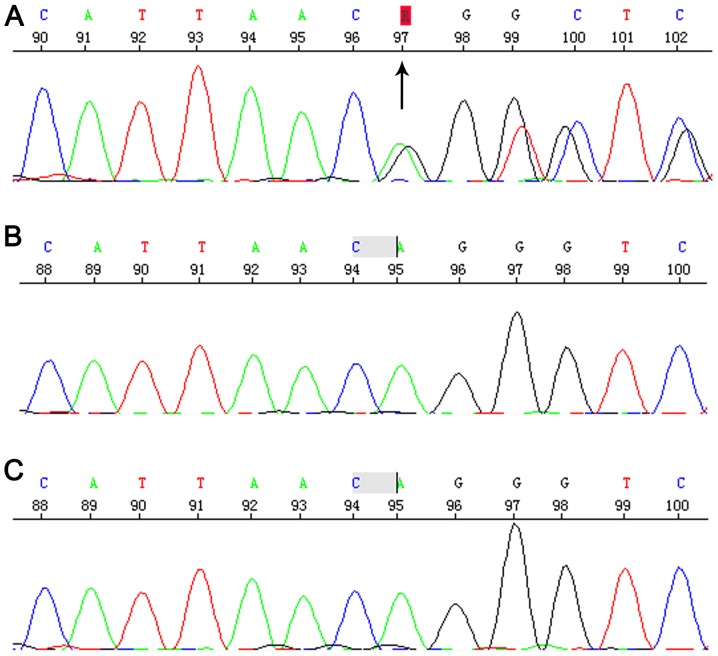
Intellectual disability (ID) is a non-specific phenotype present in a genetically heterogeneous group of disorders. The genetic cause of ID remains elusive in the majority of patients due to this extreme heterogeneity. Whole exome sequencing technology has been applied to identify pathogenic gene variants responsible for ID. The present report described a 1.7-year-old female patient who had severe ID with the specific features of delayed motor development, language disorders and abnormal facial features. Exome analysis identified a novel pathogenic variant of the gene [c.2025_2026delAG (p.Gly676Valfs*2)]. The variant was a frameshift mutation, causing termination of the protein in advance. These findings indicated that this mutation of the gene may be a genetic cause for ID. The present study aimed to provide a meaningful exploration of ID and the identification of clinical core genetic pedigrees.
智力障碍(ID)是一组遗传异质性疾病中存在的非特异性表型。由于这种极端的异质性,大多数患者的ID遗传原因仍然难以捉摸。全外显子测序技术已被应用于识别导致ID的致病基因变异。本报告描述了一名1.7岁女性患者,她患有严重的ID,具有运动发育迟缓、语言障碍和面部特征异常等特定特征。外显子分析鉴定出该基因的一种新型致病变异[c.2025_2026delAG(p.Gly676Valfs*2)]。该变异是一种移码突变,导致蛋白质提前终止。这些发现表明该基因的这种突变可能是ID的遗传原因。本研究旨在对ID进行有意义的探索并识别临床核心遗传谱系。