School of Pharmacy, Jiangxi University of Traditional Chinese Medicine, Nanchang 330004, China.
Jilin Ginseng Academy, Changchun University of Chinese Medicine, Changchun 130117, China.
Molecules. 2019 Oct 30;24(21):3920. doi: 10.3390/molecules24213920.
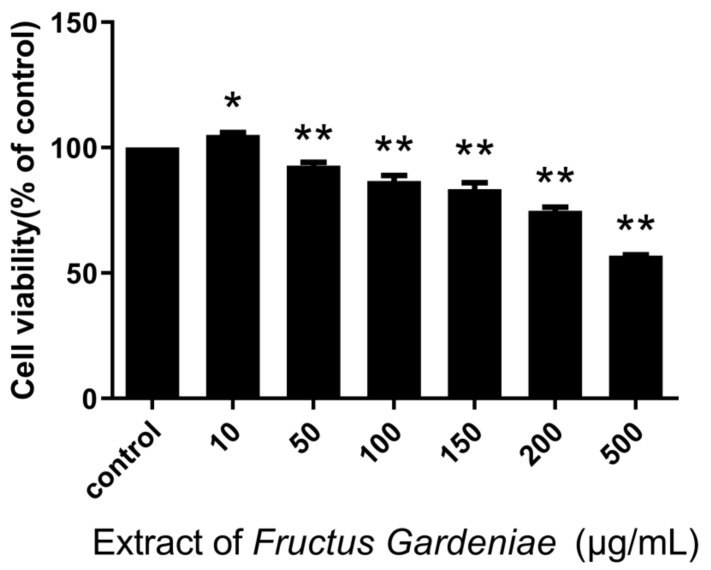
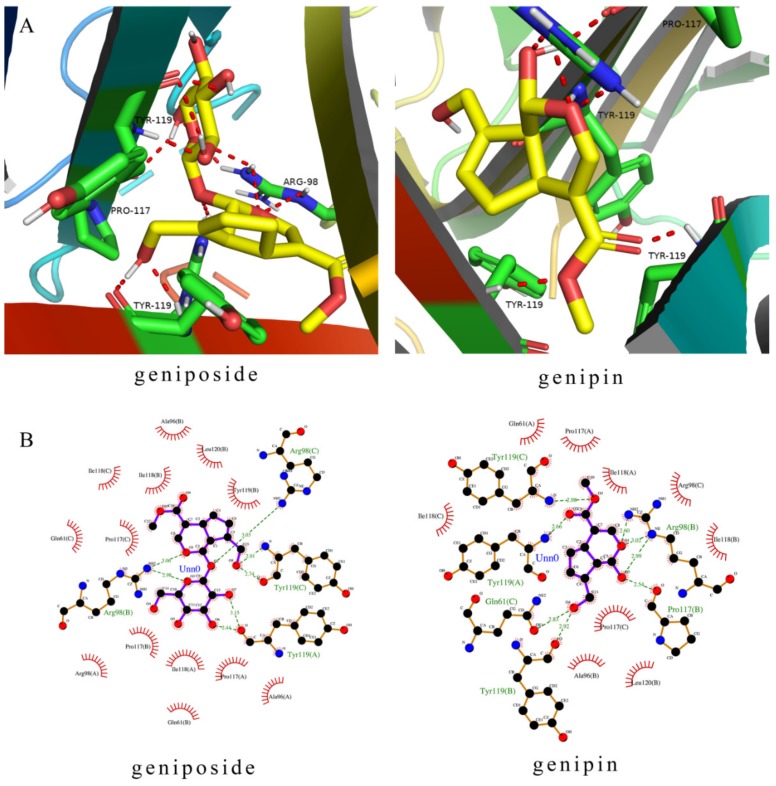
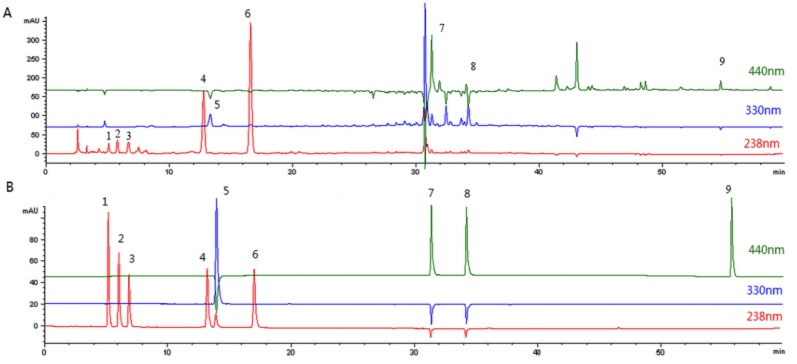
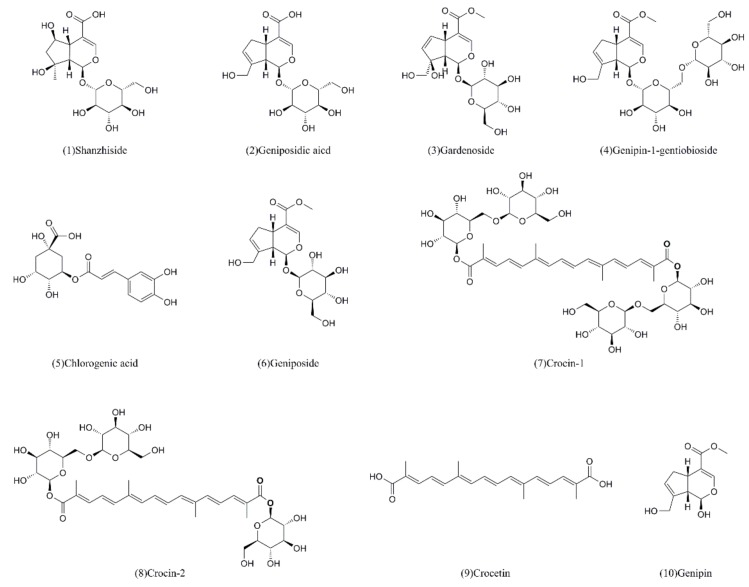
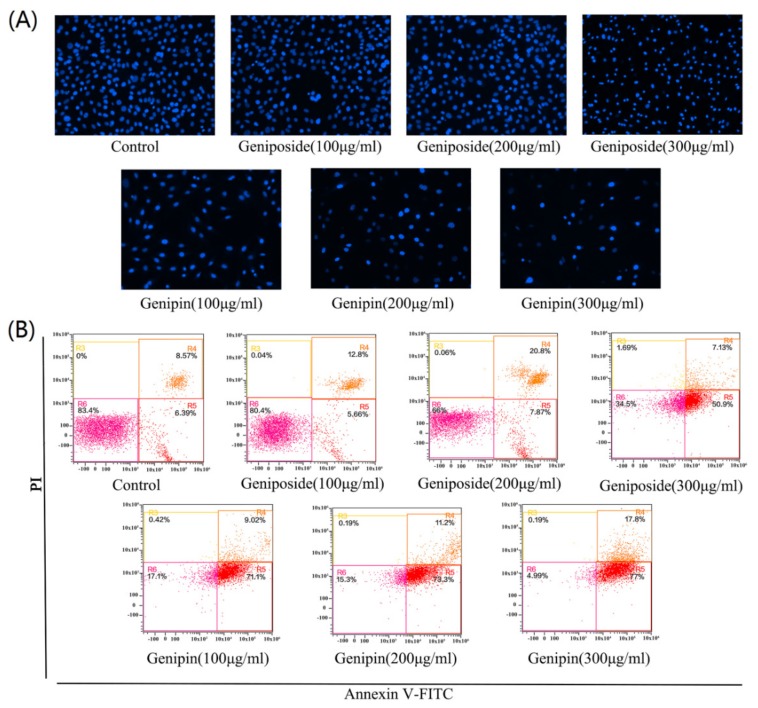
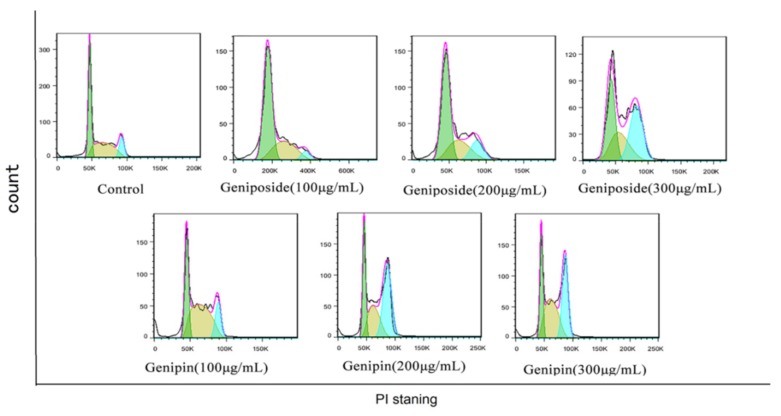
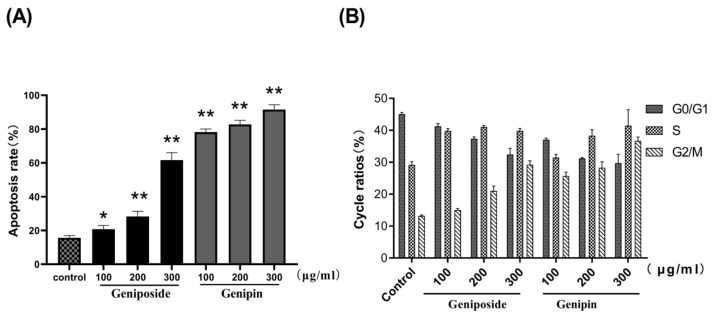
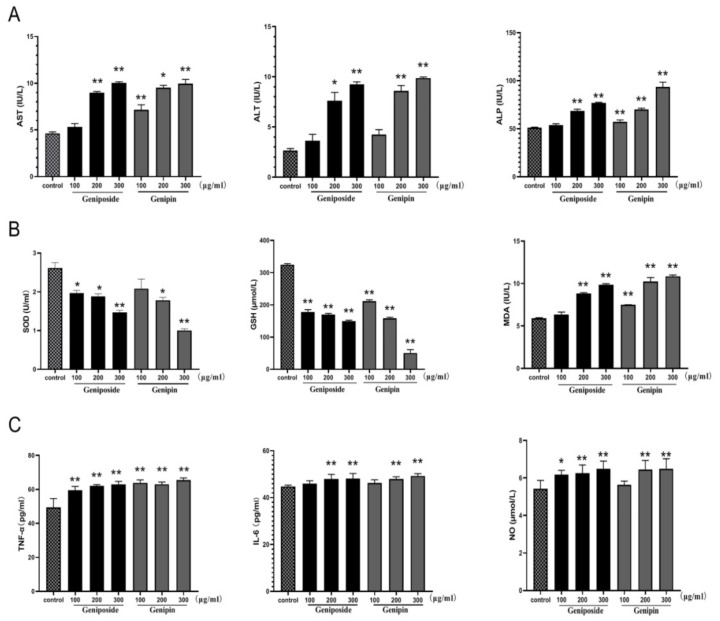
(FG) is a common Chinese medicine and food. However, the toxicity of FG has drawn increasing concern, especially its hepatotoxicity. The purpose of this study was to screen the hepatotoxic components of FG and evaluate their effects on rat liver BRL-3A cells. The chemical composition of FG was determined by HPLC-ESI-MS. CCK-8 assay was used to evaluate the cytotoxicity of ten chemical components from FG, and then the toxic components with significant inhibitory activity were selected for further study. The results showed that geniposide, genipin, genipin-1-gentiobioside, gardenoside, and shanzhiside all suppress cells viability. Apoptosis assays further indicated that geniposide and its metabolite genipin are the main hepatotoxic components of FG. Pretreatment of cells with geniposide or genipin increased the levels of aspartate aminotransferase (AST), alanine aminotransferase (ALT), and alkaline phosphatase (ALP). The activities of superoxide dismutase (SOD) and glutathione (GSH) were decreased, while the malondialdehyde (MDA) level was increased. The cell contents of tumor necrosis factor (TNF-α), interleukin-6 (IL-6), and nitric oxide (NO) were also increased. Molecular docking simulations were used to investigate the mechanism of FG-induced hepatotoxicity, revealing that geniposide and genipin bind strongly to the pro-inflammatory factor TNFR1 receptor of the NF-κB and MAPK signaling pathways. The obtained results strongly indicate that the hepatotoxicity of FG is caused by iridoids compounds. Genipin had the most significant hepatotoxic effect. These toxic substances destroy the cell antioxidant defense system, increasing inflammatory injury to the liver cells and leading to apoptosis and even necrosis. Thus, this study lays a foundation for toxicology research into FG and its rational application.
(FG)是一种常见的中药和食品。然而,FG 的毒性引起了越来越多的关注,尤其是其肝毒性。本研究旨在筛选 FG 的肝毒性成分,并评估它们对大鼠肝 BRL-3A 细胞的影响。采用 HPLC-ESI-MS 测定 FG 的化学成分。CCK-8 法评价 FG 中十种化学成分的细胞毒性,然后选择具有显著抑制活性的毒性成分进行进一步研究。结果表明,京尼平苷、京尼平、京尼平-1-龙胆二糖苷、栀子苷和獐牙菜苷均抑制细胞活力。凋亡实验进一步表明,京尼平苷及其代谢产物京尼平是 FG 的主要肝毒性成分。细胞先用京尼平苷或京尼平预处理,可增加天门冬氨酸氨基转移酶(AST)、丙氨酸氨基转移酶(ALT)和碱性磷酸酶(ALP)的水平。超氧化物歧化酶(SOD)和谷胱甘肽(GSH)的活性降低,而丙二醛(MDA)的水平增加。肿瘤坏死因子(TNF-α)、白细胞介素-6(IL-6)和一氧化氮(NO)的细胞含量也增加。分子对接模拟用于研究 FG 诱导肝毒性的机制,表明京尼平苷和京尼平与 NF-κB 和 MAPK 信号通路的促炎因子 TNFR1 受体结合紧密。研究结果强烈表明 FG 的肝毒性是由环烯醚萜类化合物引起的。京尼平的肝毒性作用最显著。这些有毒物质破坏了细胞抗氧化防御系统,增加了对肝细胞的炎症损伤,导致细胞凋亡甚至坏死。因此,本研究为 FG 及其合理应用的毒理学研究奠定了基础。