Menon Anish, Fatehi Farhad, Ding Hang, Bird Dominique, Karunanithi Mohan, Gray Leonard, Russell Anthony
Centre for Health Services Research, University of Queensland, Brisbane, Queensland, Australia
Department of Diabetes and Endocrinology, Princess Alexandra Hospital, Brisbane, Queensland, Australia.
BMJ Health Care Inform. 2019 Oct;26(1). doi: 10.1136/bmjhci-2019-100068.
Intensification of diabetes therapy with insulin is often delayed for people with suboptimal glycaemic control. This paper reports on the feasibility of using an innovative mobile health (mHealth) programme to assist a diabetes insulin dose adjustment (IDA) service.
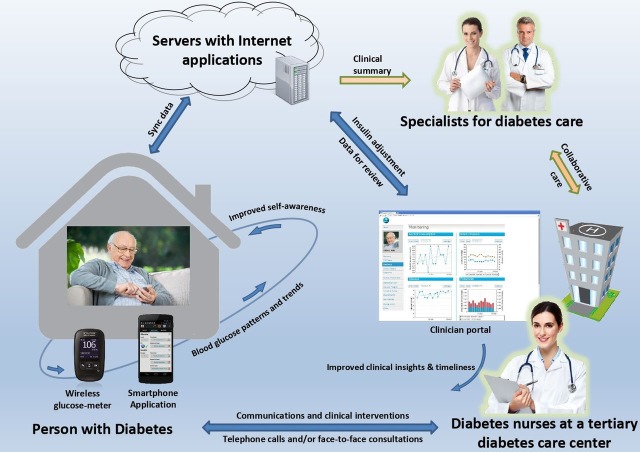
Twenty adults with diabetes referred to a tertiary hospital IDA service were recruited. They were provided with a cloud-based mobile remote monitoring system-the mobile diabetes management system (MDMS). The credentialled diabetes educator (CDE) recorded the time taken to perform IDA utilising the MDMS versus the conventional method-which is a weekly adjustment of insulin doses by a CDE through telephone contact based on three or more daily blood glucose readings. Participants and staff completed a feedback questionnaire.
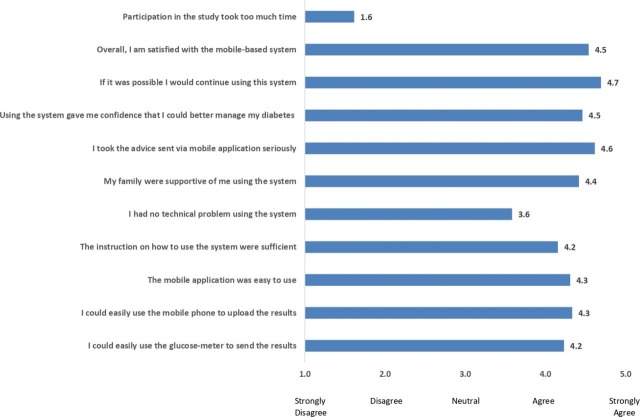
The CDE spent 55% less time performing IDA using MDMS than using the conventional method. The participants were satisfied with MDMS use and the CDEs reported improved efficiency.
Incorporating a mHealth programme for an IDA service has the potential to improve service delivery efficiencies while simultaneously improving the patient experience.
对于血糖控制不佳的糖尿病患者,强化胰岛素治疗往往会延迟。本文报告了使用创新的移动健康(mHealth)计划来协助糖尿病胰岛素剂量调整(IDA)服务的可行性。
招募了20名转诊至三级医院IDA服务的成年糖尿病患者。为他们提供了一个基于云的移动远程监测系统——移动糖尿病管理系统(MDMS)。有资质的糖尿病教育者(CDE)记录了使用MDMS与传统方法进行IDA所需的时间,传统方法是CDE根据每日三次或更多次血糖读数通过电话联系每周调整一次胰岛素剂量。参与者和工作人员完成了一份反馈问卷。
与传统方法相比,CDE使用MDMS进行IDA的时间减少了55%。参与者对使用MDMS感到满意,CDE报告效率有所提高。
将mHealth计划纳入IDA服务有可能提高服务提供效率,同时改善患者体验。