Johns Hopkins Bloomberg School of Public Health, Baltimore, MD, USA.
J Interpers Violence. 2021 Nov;36(21-22):10383-10404. doi: 10.1177/0886260519884694. Epub 2019 Nov 2.
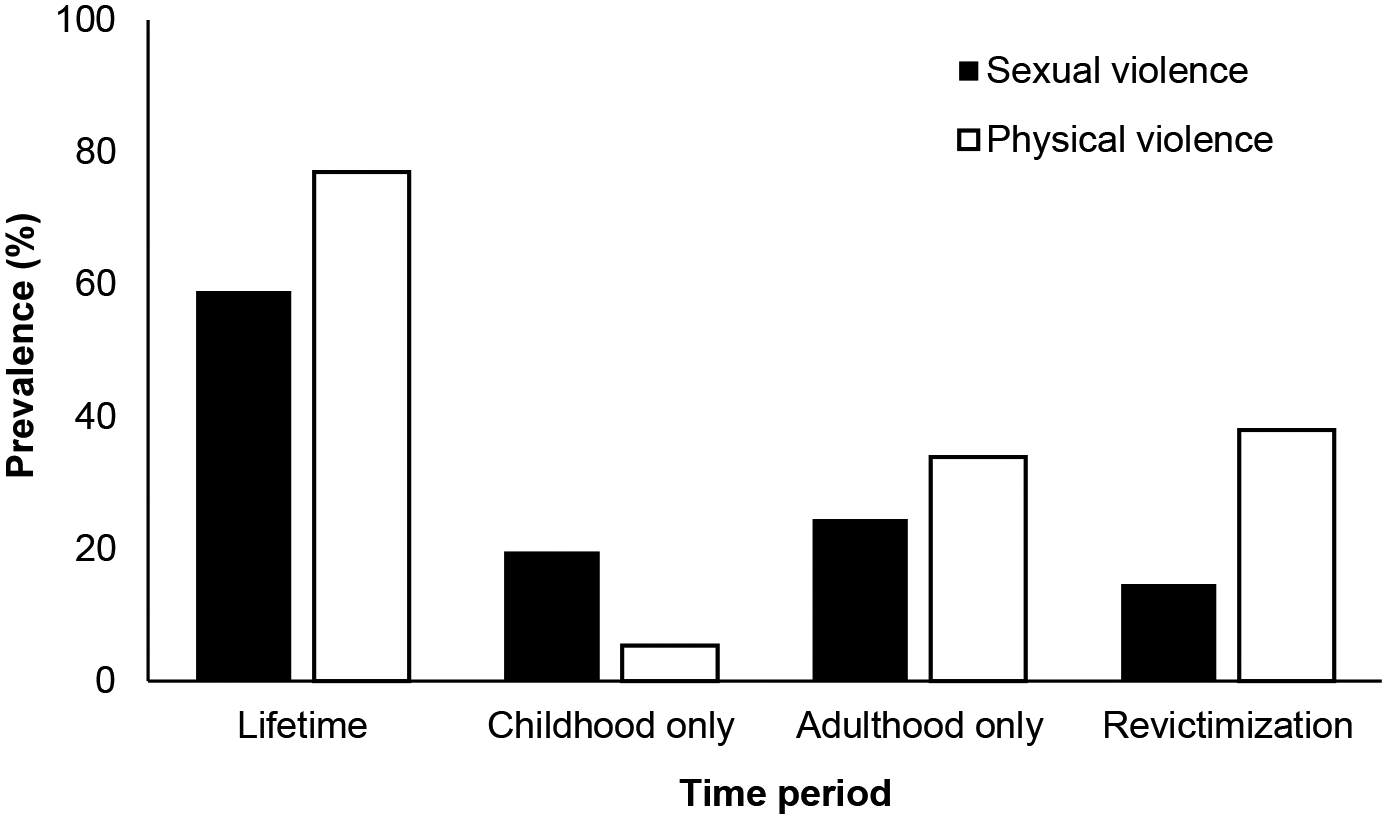
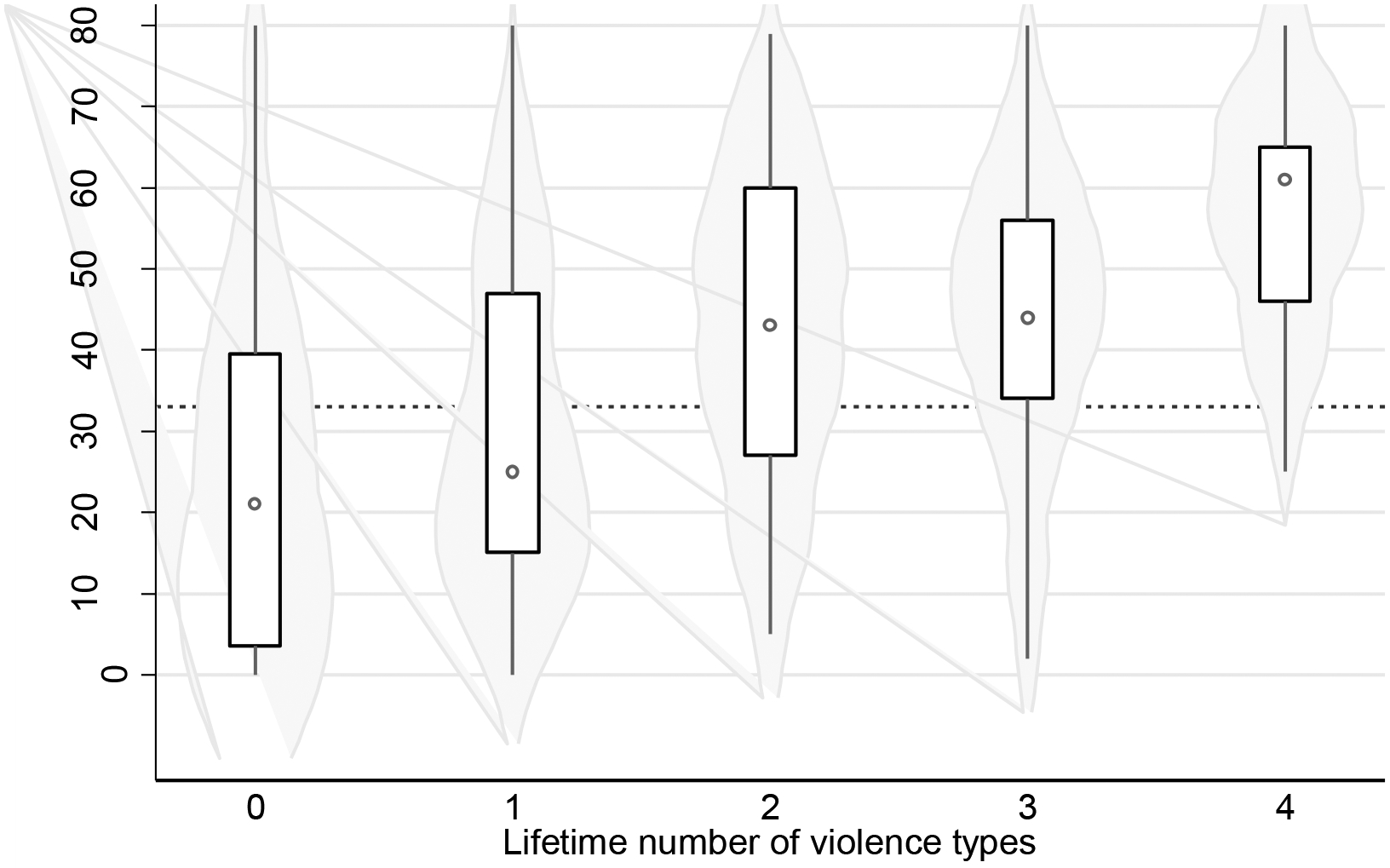
Female sex workers (FSW) are a marginalized and vulnerable population at high risk of gender-based violence within and outside of their occupation. However, FSW remain underrepresented in the trauma and mental health literature. The aims of this study were to (a) characterize exposure to violence among street-based FSW, including violence type, patterns over the life course, and key perpetrator groups, and (b) examine the multivariate associations between posttraumatic stress disorder (PTSD) symptom severity and two constructs (revictimization across life stages and cumulative violence). Data were drawn from the Sex Workers and Police Promoting Health in Risky Environments (SAPPHIRE) study, an observational community-based cohort of street-based FSW recruited through targeted sampling across Baltimore, Maryland (USA) in 2016 to 2017. PTSD symptom severity was measured using the PTSD Checklist for (PCL-5). At baseline, 61% of FSW screened positive for PTSD symptoms. The mean PCL-5 score was 38.6. We documented extensive histories of sexual and physical violence (lifetime: 81.8%; childhood and adult revictimization: 15.0% for sexual and 37.7% for physical). The vast majority of perpetrators were male and included paying clients, police officers, family members, and intimate partners. Exposure to childhood and adult sexual violence were independently associated with higher PTSD severity ( < .05), with marginal associations observed for physical violence. Data supported a cumulative violence model of PTSD severity ( < .05). Binge drinking also appeared to be a contributing factor ( < .05). The levels of PTSD observed among our sample were comparable with that reported among treatment-seeking war veterans. Our findings underscore the urgent need for tailored trauma-informed interventions and policies to address violence among urban street-based FSW, a population experiencing extremely high levels of violence, PTSD, and substance use.
性工作者(FSW)是一个边缘化和脆弱的群体,她们在职业内外都面临着很高的性别暴力风险。然而,FSW 在创伤和心理健康文献中的代表性仍然不足。本研究的目的是:(a)描述街头性工作者遭受暴力的情况,包括暴力类型、一生中的模式以及主要的加害者群体;(b)研究创伤后应激障碍(PTSD)症状严重程度与两个结构(生命各阶段的再受害和累积暴力)之间的多变量关联。数据来自于性工作者和警察在危险环境中促进健康(SAPPHIRE)研究,这是一项观察性的基于社区的街头性工作者队列研究,于 2016 年至 2017 年通过在马里兰州巴尔的摩的有针对性抽样进行招募。使用 PTSD 检查表(PCL-5)来测量 PTSD 症状严重程度。在基线时,61%的 FSW 筛查出 PTSD 症状阳性。PCL-5 的平均得分为 38.6。我们记录了广泛的性暴力和身体暴力史(终生:81.8%;儿童和成人再受害:15.0%为性暴力,37.7%为身体暴力)。绝大多数加害者是男性,包括付费客户、警察、家庭成员和亲密伴侣。儿童和成人期性暴力的暴露与更高的 PTSD 严重程度独立相关(<0.05),身体暴力则呈边缘相关。数据支持 PTSD 严重程度的累积暴力模型(<0.05)。酗酒也似乎是一个促成因素(<0.05)。我们样本中观察到的 PTSD 水平与寻求治疗的退伍军人报告的水平相当。我们的研究结果强调了迫切需要针对城市街头性工作者的创伤知情干预措施和政策,因为该人群经历着极高水平的暴力、PTSD 和物质使用。