Scientific Research Center, Shanghai Public Health Clinical Center, Fudan University, Shanghai, China.
Department of Infection Diseases, Shanghai Public Health Clinical Center, Fudan University, Shanghai, China.
Front Immunol. 2019 Oct 11;10:2358. doi: 10.3389/fimmu.2019.02358. eCollection 2019.
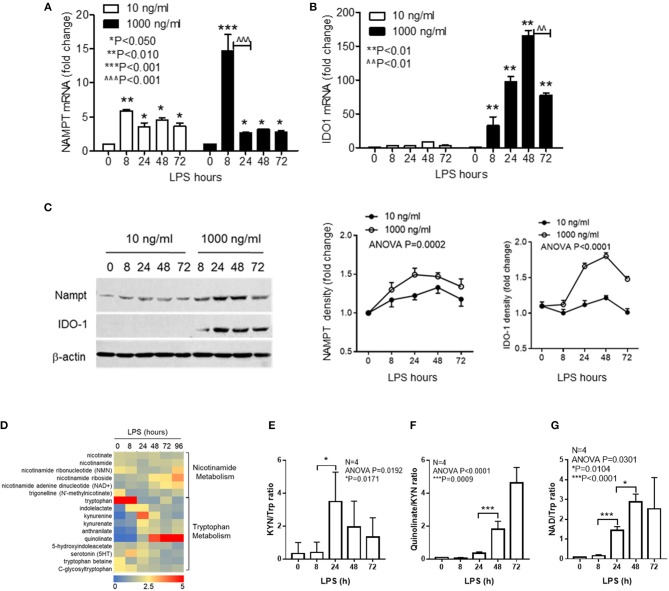
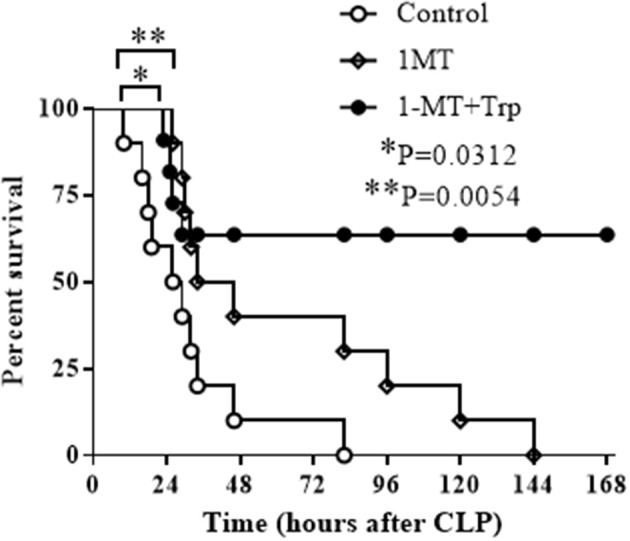
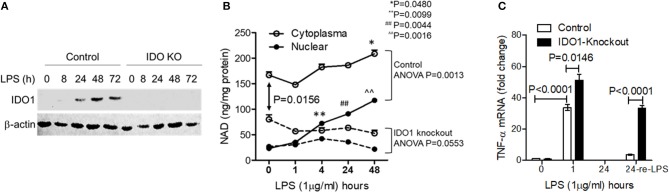
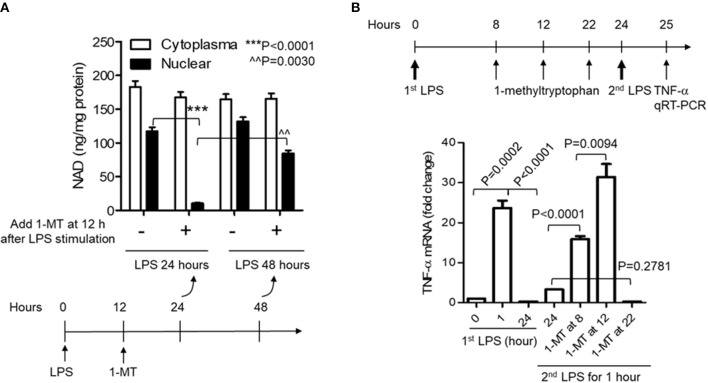
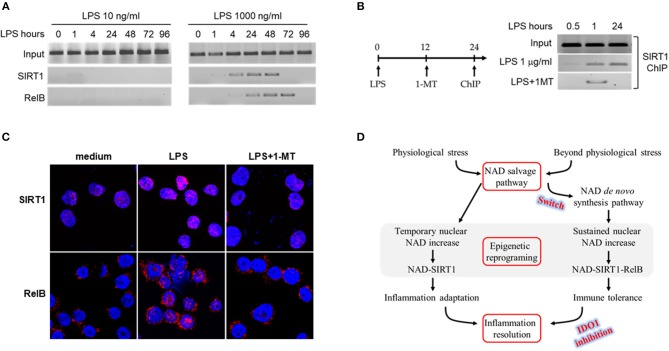
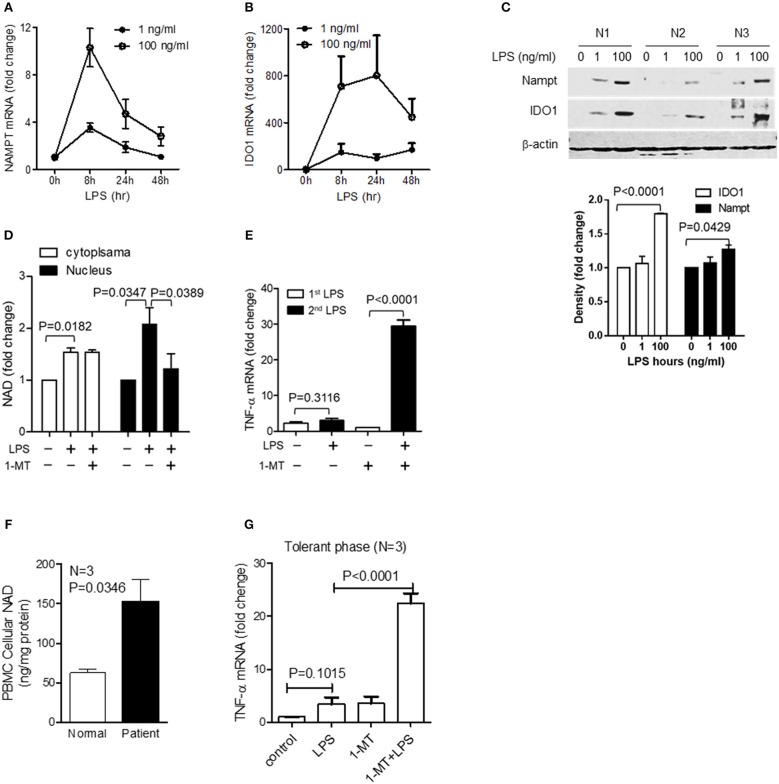
A typical inflammatory response sequentially progresses from pro-inflammatory, immune suppressive to inflammatory repairing phases. Although the physiological inflammatory response resolves in time, severe acute inflammation usually sustains immune tolerance and leads to high mortality, yet the underlying mechanism is not completely understood. Here, using the leukemia-derived THP-1 human monocytes, healthy and septic human peripheral blood mononuclear cells (PBMC), we report that endotoxin dose-dependent switch of nicotinamide adenine dinucleotide (NAD) biosynthesis pathways sustain immune tolerant status. Low dose endotoxin triggered nicotinamide phosphoribosyltransferase (NAMPT)-dependent NAD salvage activity to adapt pro-inflammation. In contrast, high dose endotoxin drove a shift of NAD synthesis pathway from early NAMPT-dependent NAD salvage to late indoleamine 2,3-dioxygenase-1 (IDO1)-dependent NAD biosynthesis, leading to persistent immune suppression. This is resulted from the IDO1-dependent expansion of nuclear NAD pool and nuclear NAD-dependent prolongation of sirtuin1 (SIRT1)-directed epigenetics of immune tolerance. Inhibition of IDO1 activity predominantly decreased nuclear NAD level, which promoted sequential dissociations of immunosuppressive SIRT1 and RelB from the promoter of pro-inflammatory α gene and broke endotoxin tolerance. Thus, NAMPT-NAD-SIRT1 axis adapts pro-inflammation, but IDO1-NAD-SIRT1-RelB axis sustains endotoxin tolerance during acute inflammatory response. Remarkably, in contrast to the prevention of sepsis death of animal model by IDO1 inhibition before sepsis initiation, we demonstrated that the combination therapy of IDO1 inhibition by 1-methyl-D-tryptophan (1-MT) and tryptophan supplementation rather than 1-MT administration alone after sepsis onset rescued sepsis animals, highlighting the translational significance of tryptophan restoration in IDO1 targeting therapy of severe inflammatory diseases like sepsis.
典型的炎症反应依次经历促炎、免疫抑制和炎症修复阶段。尽管生理炎症反应会及时消退,但严重的急性炎症通常会维持免疫耐受,并导致高死亡率,但其中的机制尚不完全清楚。在这里,我们使用白血病衍生的 THP-1 人单核细胞、健康和脓毒症患者的外周血单核细胞(PBMC),报告了烟酰胺腺嘌呤二核苷酸(NAD)生物合成途径的内毒素剂量依赖性转换维持免疫耐受状态。低剂量内毒素触发烟酰胺磷酸核糖转移酶(NAMPT)依赖性 NAD 补救活性以适应促炎反应。相比之下,高剂量内毒素驱动 NAD 合成途径从早期 NAMPT 依赖性 NAD 补救转变为晚期吲哚胺 2,3-双加氧酶-1(IDO1)依赖性 NAD 合成,导致持续的免疫抑制。这是由于 IDO1 依赖性核 NAD 池扩张和核 NAD 依赖性 SIRT1(沉默调节蛋白 1)指导的免疫耐受表观遗传学的延长。IDO1 活性的抑制主要降低核 NAD 水平,从而促进免疫抑制性 SIRT1 和 RelB 从促炎α基因启动子的顺序解离,并打破内毒素耐受。因此,NAMPT-NAD-SIRT1 轴适应促炎反应,但 IDO1-NAD-SIRT1-RelB 轴在急性炎症反应中维持内毒素耐受。值得注意的是,与 IDO1 抑制在脓毒症发病前预防脓毒症动物模型死亡的情况相反,我们证明了 IDO1 抑制与色氨酸补充的联合治疗,而非仅在脓毒症发病后给予 1-甲基-D-色氨酸(1-MT),可拯救脓毒症动物,强调了在严重炎症性疾病如脓毒症的 IDO1 靶向治疗中恢复色氨酸的转化意义。