Division of Advanced Prosthetic Dentistry, Tohoku University Graduate School of Dentistry, 4-1 Seiryo-machi, Aoba-ku, Sendai, Miyagi, 980-8575, Japan.
Department of Prosthodontics, Faculty of Dental Medicine, Universitas Airlangga, Surabaya, Indonesia.
Head Face Med. 2019 Nov 4;15(1):26. doi: 10.1186/s13005-019-0210-z.
Oral appliances (OAs) are generally designed to displace the mandible anteriorly and downward, to increase the airway patency. The present study aimed to examine the relationship between genioglossus (GG) muscle activity and mandibular position, considering both anterior and vertical displacements during sleep.
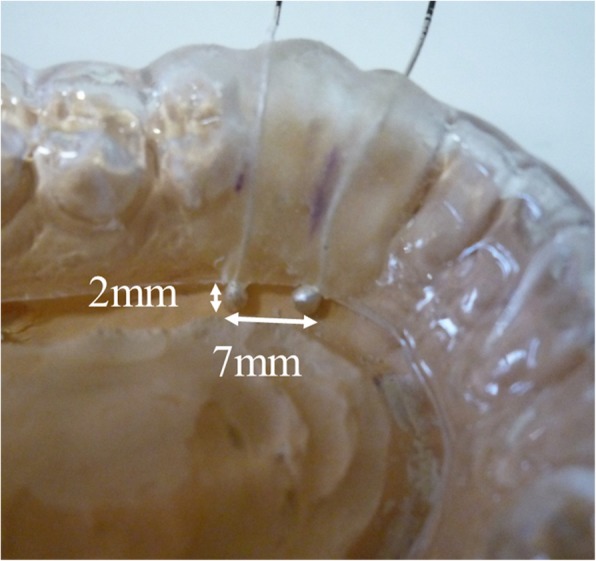
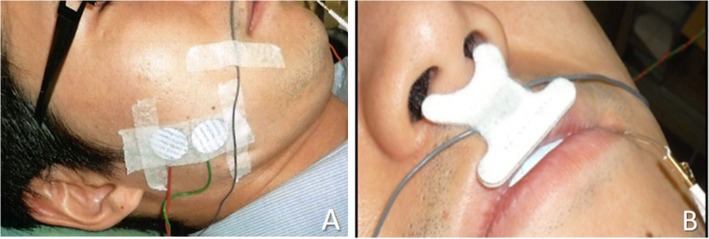
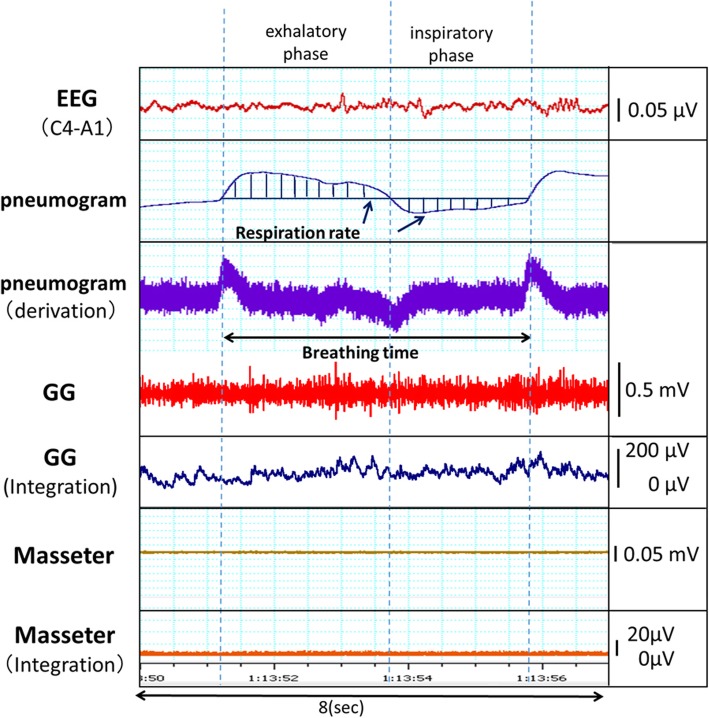
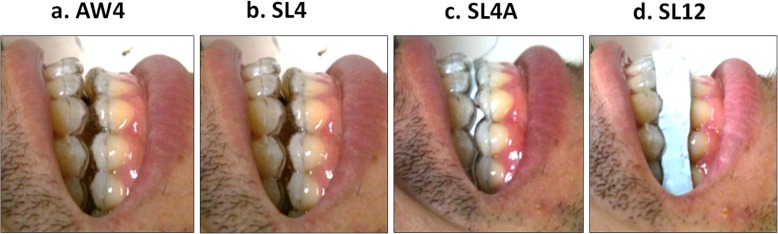
Seven healthy male adults aged 29.4 ± 1.99 years were evaluated. Maxillary and mandibular OAs were fabricated from 2-mm-thick resin plates with pressure-welding. The activity of the left GG was recorded using two silver ball electrodes attached to the lingual edge of the mandibular OA. Respiratory status and right masseter muscle activity were measured by an airflow sensor and surface electrodes, respectively. Electroencephalography was used to determine the sleep status. Stage 2 (the second stage of sleep) was defined as the state of sleeping. Four test conditions with different mandibular positions (0 and 50% anterior protrusion) and bite openings (4 mm and 12 mm) were examined.
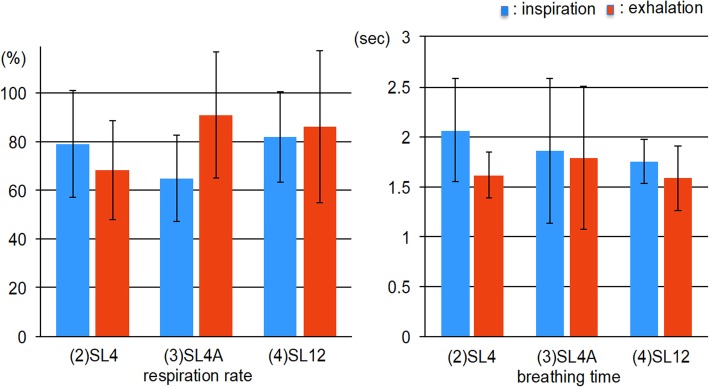
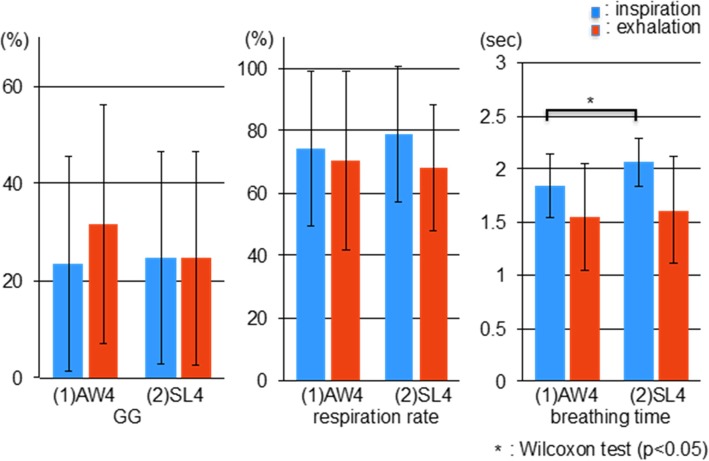
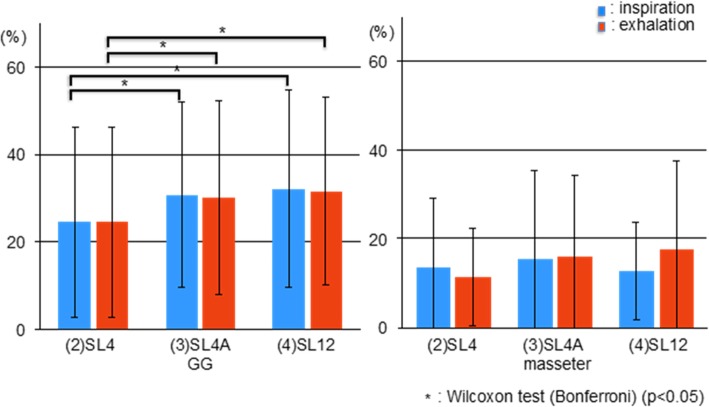
GG activity in SL4A (4 mm bite opening, 50% protrusion during sleep) and SL12 (12 mm bite opening, 0% protrusion during sleep) were significantly higher than that in SL4 (4 mm bite opening, 0% protrusion during sleep). Respiratory volume did not significantly differ between all test conditions.
GG activity is influenced not only by anterior protrusion of the mandible but also by vertical displacement during sleep. Thus, when determining the effectiveness of intraoral appliances in the treatment of obstructive sleep apnea, both protrusion and the size of the mandibular opening should be evaluated and taken into account.
口腔矫治器(OA)通常设计用于使下颌前伸和向下移位,以增加气道通畅度。本研究旨在探讨颏舌肌(GG)肌活动与下颌位置之间的关系,同时考虑睡眠期间的前伸和垂直移位。
评估了 7 名年龄为 29.4±1.99 岁的健康男性成年人。上颌和下颌 OA 由 2 毫米厚的树脂板用压力焊接制成。通过附着在下颌 OA 舌侧边缘的两个银球电极记录左侧 GG 的活动。呼吸状态和右侧咬肌肌活动分别通过气流传感器和表面电极进行测量。脑电图用于确定睡眠状态。第二阶段(睡眠的第二阶段)定义为睡眠状态。检查了四种具有不同下颌位置(0 和 50%前突)和开口(4 毫米和 12 毫米)的测试条件。
在 SL4A(4 毫米开口,睡眠时 50%前突)和 SL12(12 毫米开口,睡眠时 0%前突)中,GG 活动明显高于 SL4(4 毫米开口,睡眠时 0%前突)。在所有测试条件下,呼吸量均无显著差异。
颏舌肌活动不仅受下颌前突的影响,还受睡眠时垂直位移的影响。因此,在确定口腔内矫治器治疗阻塞性睡眠呼吸暂停的有效性时,应评估并考虑前突和下颌开口的大小。