Division of Pharmacology, Department of Molecular Cell Biology, Sungkyunkwan University School of Medicine, Samsung Biomedical Research Institute, Suwon 16419, Korea.
College of Pharmacy, Gachon University, Incheon 21936, Korea.
Int J Mol Sci. 2019 Nov 4;20(21):5481. doi: 10.3390/ijms20215481.
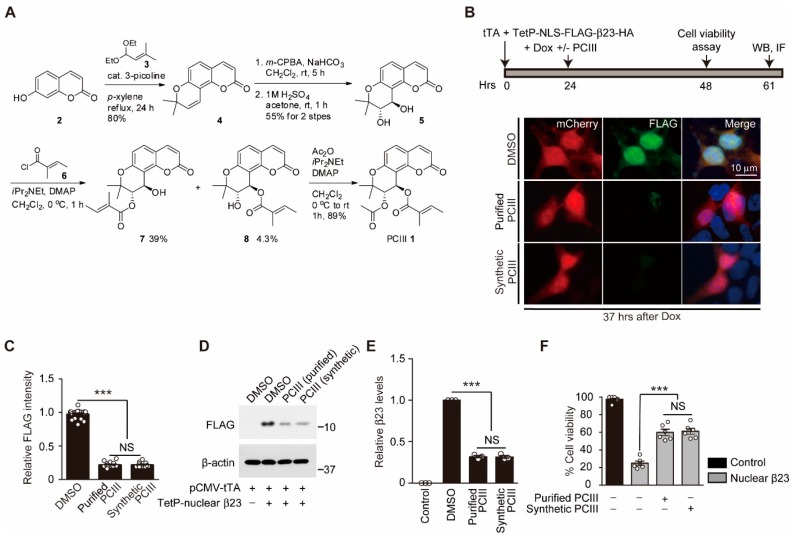
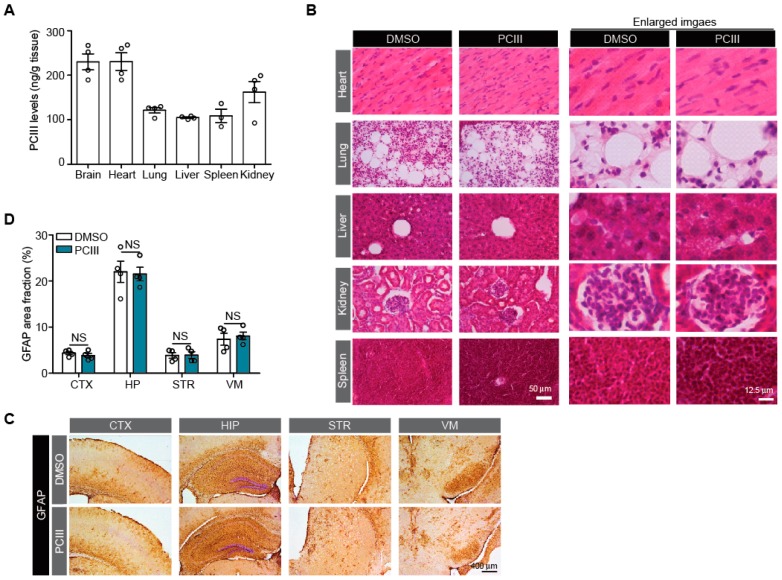
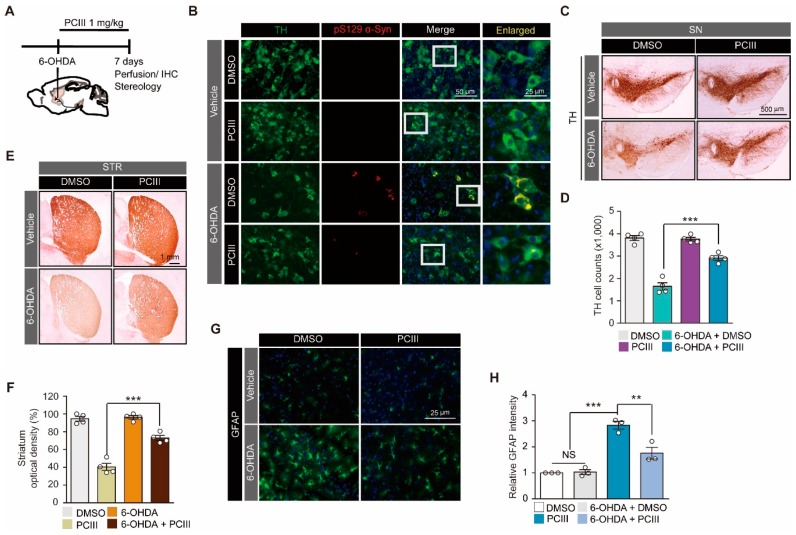
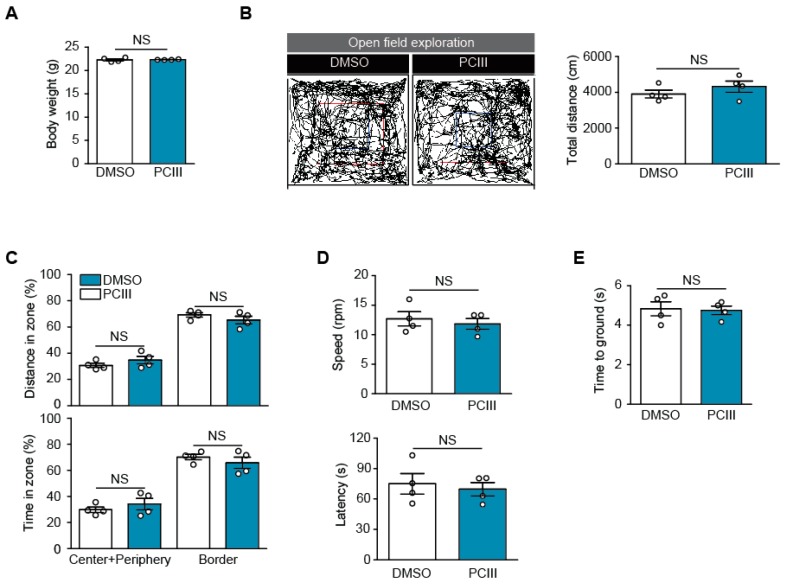
The motor and nonmotor symptoms of Parkinson's disease (PD) correlate with the formation and propagation of aberrant α-synuclein aggregation. This protein accumulation is a pathological hallmark of the disease. Our group recently showed that peucedanocoumarin III (PCIII) possesses the ability to disaggregate β sheet aggregate structures, including α-synuclein fibrils. This finding suggests that PCIII could be a therapeutic lead compound in PD treatment. However, the translational value of PCIII and its safety information have never been explored in relevant animal models of PD. Therefore, we first designed and validated a sequence of chemical reactions for the large scale organic synthesis of pure PCIII in a racemic mixture. The synthetic PCIII racemate facilitated clearance of repeated β sheet aggregate (β23), and prevented β23-induced cell toxicity to a similar extent to that of purified PCIII. Given these properties, the synthetic PCIII's neuroprotective function was assessed in 6-hydroxydopamine (6-OHDA)-induced PD mouse models. The PCIII treatment (1 mg/kg/day) in a 6-OHDA-induced PD mouse model markedly suppressed Lewy-like inclusions and prevented dopaminergic neuron loss. To evaluate the safety profiles of PCIII, high dose PCIII (10 mg/kg/day) was administered intraperitoneally to two-month-old mice. Following 7 days of PCIII treatment, PCIII distributed to various tissues, with substantial penetration into brains. The mice that were treated with high dose PCIII had no structural abnormalities in the major organs or neuroinflammation. In addition, high dose PCIII (10 mg/kg/day) in mice had no adverse impact on motor function. These findings suggest that PCIII has a relatively high therapeutic index. Given the favorable safety features of PCIII and neuroprotective function in the PD mouse model, it may become a promising disease-modifying therapy in PD to regulate pathogenic α-synuclein aggregation.
帕金森病(PD)的运动和非运动症状与异常α-突触核蛋白聚集的形成和传播有关。这种蛋白质的积累是该疾病的病理标志。我们的研究小组最近发现,前胡甲素(PCIII)具有解聚β 片层聚集结构的能力,包括α-突触核蛋白纤维。这一发现表明 PCIII 可能成为 PD 治疗的一种有前途的治疗先导化合物。然而,PCIII 的转化价值及其在 PD 相关动物模型中的安全性信息从未被探索过。因此,我们首先设计并验证了一个在非对映混合物中大规模有机合成纯 PCIII 的化学反应序列。合成的 PCIII 外消旋混合物促进了重复的β 片层聚集(β23)的清除,并以与纯化的 PCIII 相似的程度防止了β23 诱导的细胞毒性。鉴于这些特性,我们在 6-羟基多巴胺(6-OHDA)诱导的 PD 小鼠模型中评估了合成 PCIII 的神经保护作用。PCIII 治疗(1mg/kg/天)在 6-OHDA 诱导的 PD 小鼠模型中显著抑制 Lewy 样包涵体并防止多巴胺能神经元丢失。为了评估 PCIII 的安全性概况,将高剂量 PCIII(10mg/kg/天)腹腔内给予两个月大的小鼠。在 PCIII 治疗 7 天后,PCIII 分布到各种组织中,大量穿透到大脑中。用高剂量 PCIII 治疗的小鼠主要器官没有结构异常或神经炎症。此外,高剂量 PCIII(10mg/kg/天)在小鼠中对运动功能没有不良影响。这些发现表明 PCIII 具有相对较高的治疗指数。鉴于 PCIII 的良好安全性特征和 PD 小鼠模型中的神经保护作用,它可能成为调节致病性α-突触核蛋白聚集的 PD 有前途的疾病修饰治疗方法。