Vozniak Iurii, Hosseinnezhad Ramin, Morawiec Jerzy, Galeski Andrzej
Centre of Molecular and Macromolecular Studies Polish Academy of Sciences, 90-363 Lodz, Poland.
Polymers (Basel). 2019 Nov 4;11(11):1811. doi: 10.3390/polym11111811.
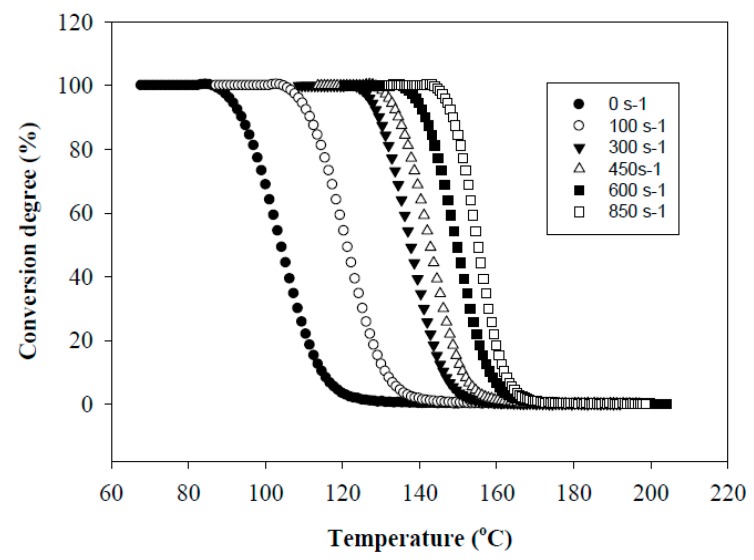
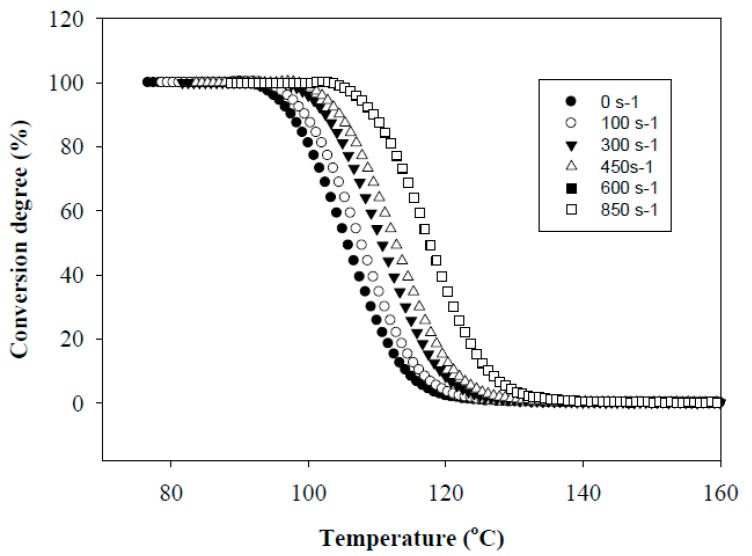
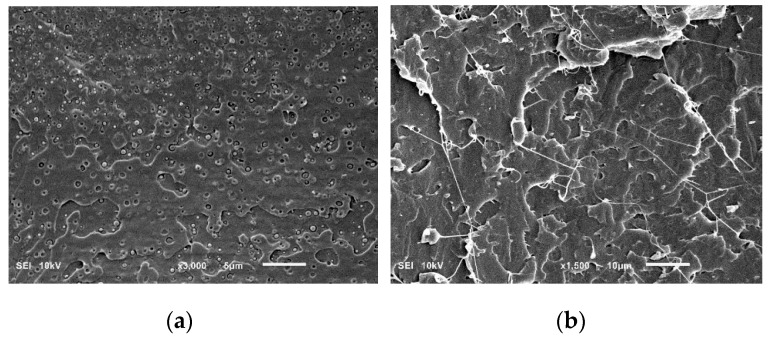
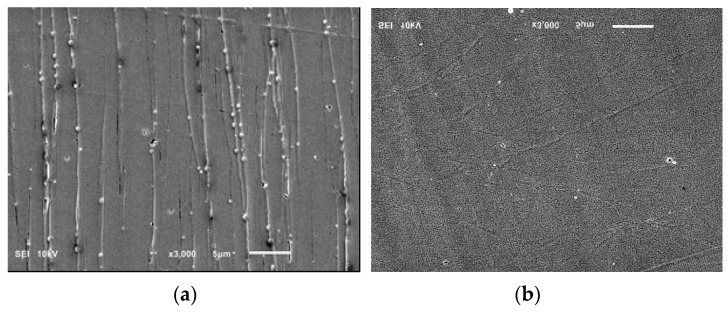
This study addresses the new concept of in situ inducing fibrillar morphology (micro or nanofibrils) of a minority component based on the simultaneous occurrence of orientation and shear induced crystallization of polymer fibers directly at the stage of extrusion in a single step. This possibility is demonstrated by using two entirely bio-sourced polymers: polylactide (PLA) and polyhydroxyalkanoate (PHA) as components. The shear induced crystallization allowed crystallization of PHA nanofibers immediately after applying high shear rate and elongation strain, avoiding subsequent cooling to initiate crystallization. Shearing of PHA increased non-isothermal crystallization temperature by 50 °C and decreased the temperature range in which the transition from a molten state to a crystallized one occurs by 17 °C. SEM observations demonstrate the successful transformation of the dispersed PHA phase into nanofibrils with diameters of nearly 200 nm. The transition from the droplets of PHA to fibers causes the brittle-to-ductile transition of the PLA matrix at a low concentration of PHA and contributes to the simultaneous increase of its rigidity and strength.
本研究提出了一种新的概念,即在挤出阶段一步实现聚合物纤维的取向和剪切诱导结晶同时发生的情况下,原位诱导少数组分形成纤维状形态(微纤维或纳米纤维)。通过使用两种完全来源于生物的聚合物:聚乳酸(PLA)和聚羟基脂肪酸酯(PHA)作为组分,证明了这种可能性。施加高剪切速率和拉伸应变后,剪切诱导结晶使PHA纳米纤维立即结晶,避免了随后冷却引发结晶。PHA的剪切使非等温结晶温度提高了50°C,并使从熔融态到结晶态转变的温度范围降低了17°C。扫描电子显微镜观察表明,分散的PHA相成功转变为直径近200nm的纳米纤维。在低浓度PHA下,PHA从液滴到纤维的转变导致PLA基体从脆性转变为韧性,并使其刚度和强度同时增加。