
碳水化合物包覆的二氧化铈纳米颗粒与小麦和豌豆的相互作用:应激诱导潜力及对发育的影响
Interaction of Carbohydrate Coated Cerium-Oxide Nanoparticles with Wheat and Pea: Stress Induction Potential and Effect on Development.
作者信息
Milenković Ivana, Mitrović Aleksandra, Algarra Manuel, Lázaro-Martínez Juan M, Rodríguez-Castellón Enrique, Maksimović Vuk, Spasić Slađana Z, Beškoski Vladimir P, Radotić Ksenija
机构信息
Institute for Multidisciplinary Research, University of Belgrade, KnezaVišeslava 1, 11030 Belgrade, Serbia.
CQM-Centro de Química da Madeira, University of Madeira, Campus da Penteada, 9020-105 Funchal, Portugal.
出版信息
Plants (Basel). 2019 Nov 6;8(11):478. doi: 10.3390/plants8110478.
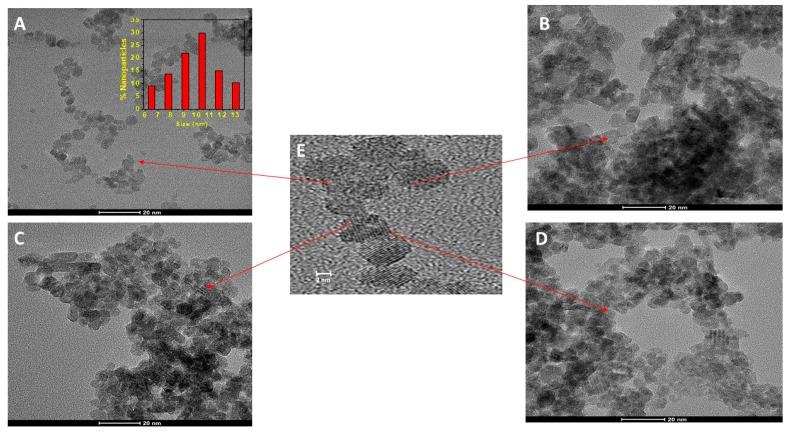
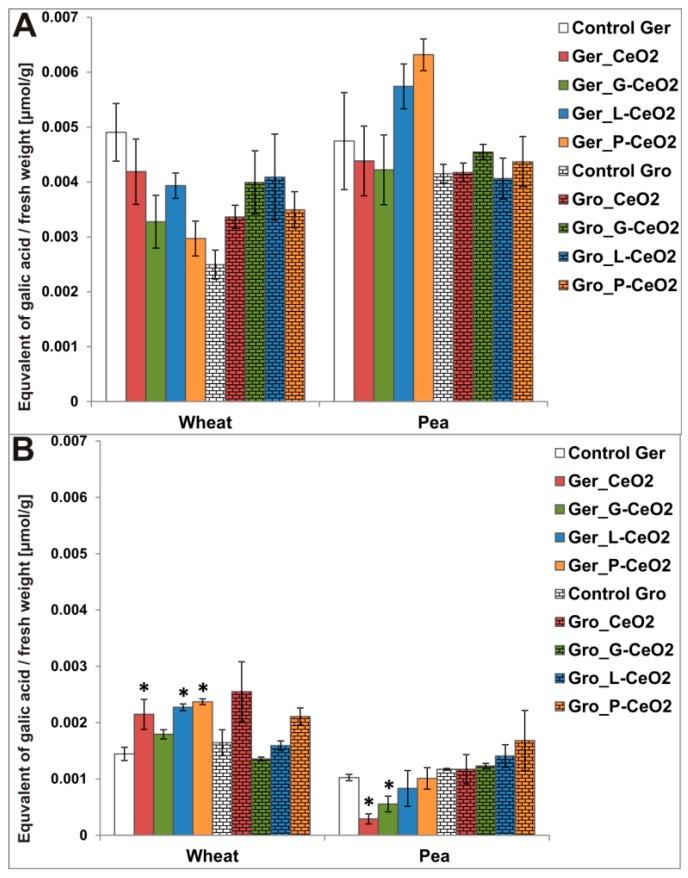
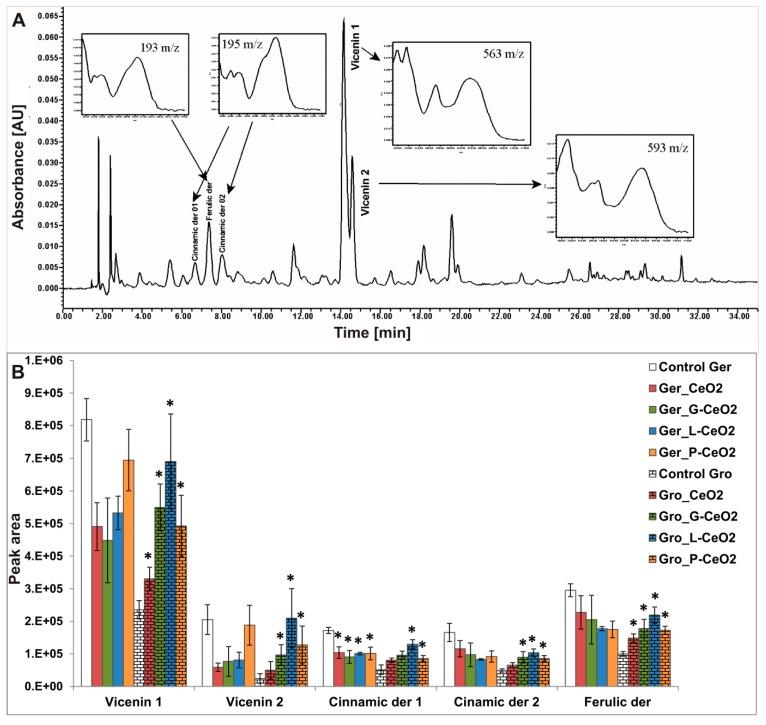
Reports about the influence of cerium-oxide nanoparticles (nCeO) on plants are contradictory due to their positive and negative effects on plants. Surface modification may affect the interaction of nCeO with the environment, and hence its availability to plants. In this study, the uncoated and glucose-, levan-, and pullulan-coated nCeO were synthesized and characterized. The aim was to determine whether nontoxic carbohydrates alter the effect of nCeO on the seed germination, plant growth, and metabolism of wheat and pea. We applied 200 mgL of nCeO on plants during germination (Ger treatment) or three week-growth (Gro treatment) in hydroponics. The plant response to nCeO was studied by measuring changes in Ce concentration, total antioxidative activity (TAA), total phenolic content (TPC), and phenolic profile. Our results generally revealed higher Ce concentration in plants after the treatment with coated nanoparticles compared to uncoated ones. Considering all obtained results, Ger treatment had a stronger impact on the later stages of plant development than Gro treatment. The Ger treatment had a stronger impact on TPC and plant elongation, whereas Gro treatment affected more TAA and phenolic profile. Among nanoparticles, levan-coated nCeO had the strongest and positive impact on tested plants. Wheat showed higher sensitivity to all treatments.
关于氧化铈纳米颗粒(nCeO)对植物影响的报道相互矛盾,因为它们对植物有正负两方面的影响。表面改性可能会影响nCeO与环境的相互作用,进而影响其对植物的有效性。在本研究中,合成并表征了未包覆以及葡萄糖、茁霉多糖和普鲁兰多糖包覆的nCeO。目的是确定无毒碳水化合物是否会改变nCeO对小麦和豌豆种子萌发、植物生长及代谢的影响。我们在水培条件下,于种子萌发期(萌发处理)或三周生长期(生长处理)对植物施用200 mg/L的nCeO。通过测量铈浓度、总抗氧化活性(TAA)、总酚含量(TPC)和酚类物质谱的变化来研究植物对nCeO的反应。我们的结果总体显示,与未包覆的纳米颗粒相比,包覆纳米颗粒处理后的植物中铈浓度更高。综合所有结果来看,萌发处理对植物发育后期的影响比生长处理更强。萌发处理对TPC和植物伸长的影响更强,而生长处理对TAA和酚类物质谱的影响更大。在纳米颗粒中,茁霉多糖包覆的nCeO对受试植物的影响最强且呈正向作用。小麦对所有处理表现出更高的敏感性。




 Zotero 插件