
生物源磷纳米营养物对不同pH值土壤的施肥效益
Fertilizing benefits of biogenic phosphorous nanonutrients on in soils with variable pH.
作者信息
Priyam Ayushi, Yadav Natasha, Reddy Pallavolu M, Afonso Luis O B, Schultz Aaron G, Singh Pushplata Prasad
机构信息
National Centre of Excellence for Advanced Research in Agricultural Nanotechnology, TERI - Deakin Nanobiotechnology Centre, Sustainable Agriculture Division, The Energy and Resources Institute (TERI), DS Block, India Habitat Centre, Lodhi Road, New Delhi, 110003, India.
School of Life and Environmental Sciences, Deakin University, Geelong, Victoria, 3217, Australia.
出版信息
Heliyon. 2022 Mar 19;8(3):e09144. doi: 10.1016/j.heliyon.2022.e09144. eCollection 2022 Mar.
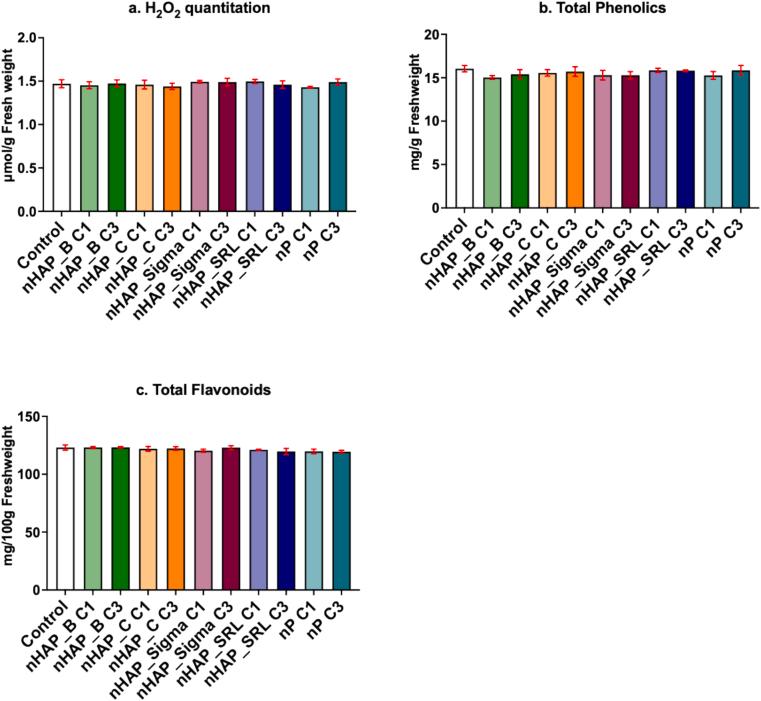
Nanoformulations of Phosphorous (P) have recently been proposed as alternatives to P fertilizers. In this study, the fertilizing efficacies of P-based nanomaterials (NMs), nanohydroxyapatite (nHAP) and nanophosphorus (nP), were examined on (Pusa Rohini, Indian tomato) in growth room pot experiments. These NMs differed in their mode of synthesis, chemical composition, size and shape. Rock-phosphate (RP), phosphoric acid (PA) and di-ammonium phosphate (DAP) were included as bulk materials for comparison. Three varieties of artificial soils were included in the study, neutral (pH 7.2), acidic (pH 4.3) and basic (pH 9.8). The effects of the NMs on germination, plant growth, and P content were assessed at the 15 and 30 days after treatment. The results showed that P-based NMs enhance the overall germination and plant growth by increasing P levels in all types of soils for the tomato plants in comparison to the bulk P sources. Analysis using X-ray fluorescence revealed enhanced P content in the plants indicating the uptake of P-based NMs. Evaluation of HO, total phenolics and total flavonoids contents after NM treatment suggest that there is no stress caused due to the application of NMs to the plant. The results of this study indicate the beneficial role of P-based NMs as fertilizers at the early stages of plant development, which opens a scope for further investigation of underlying metabolic and molecular pathways and field trials.
磷(P)的纳米制剂最近被提议作为磷肥的替代品。在本研究中,在生长室盆栽试验中,研究了磷基纳米材料(NMs)、纳米羟基磷灰石(nHAP)和纳米磷(nP)对(印度番茄品种Pusa Rohini)的施肥效果。这些纳米材料在合成方式、化学成分、尺寸和形状上有所不同。将磷矿粉(RP)、磷酸(PA)和磷酸二铵(DAP)作为大量材料用于比较。研究中包括三种人工土壤,中性(pH 7.2)、酸性(pH 4.3)和碱性(pH 9.8)。在处理后15天和30天评估纳米材料对发芽、植物生长和磷含量的影响。结果表明,与大量磷源相比,磷基纳米材料通过提高所有类型土壤中番茄植株的磷含量来增强整体发芽和植物生长。使用X射线荧光分析显示植物中磷含量增加,表明吸收了磷基纳米材料。对纳米材料处理后过氧化氢(HO)、总酚和总黄酮含量的评估表明,施用纳米材料不会对植物造成胁迫。本研究结果表明,磷基纳米材料在植物发育早期作为肥料具有有益作用,这为进一步研究潜在的代谢和分子途径以及田间试验开辟了空间。


 Zotero 插件