Yarovinsky Timur O, Mason Stephen W, Menon Manisha, Krady Marie M, Haslip Maria, Madina Bhaskara R, Ma Xianyong, Moshkani Safiehkhatoon, Chiale Carolina, Pal Anasuya Chattopadhyay, Almassian Bijan, Rose John K, Robek Michael D, Nakaar Valerian
CaroGen Corporation, Farmington, CT 06032, USA; Department of Pathology, Yale University School of Medicine, New Haven, CT 06510, USA.
CaroGen Corporation, Farmington, CT 06032, USA.
iScience. 2019 Nov 22;21:391-402. doi: 10.1016/j.isci.2019.10.040. Epub 2019 Oct 24.
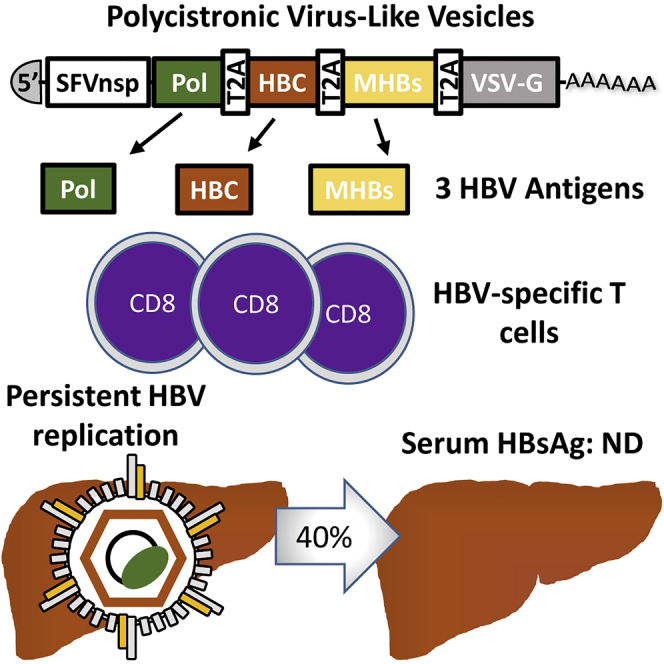
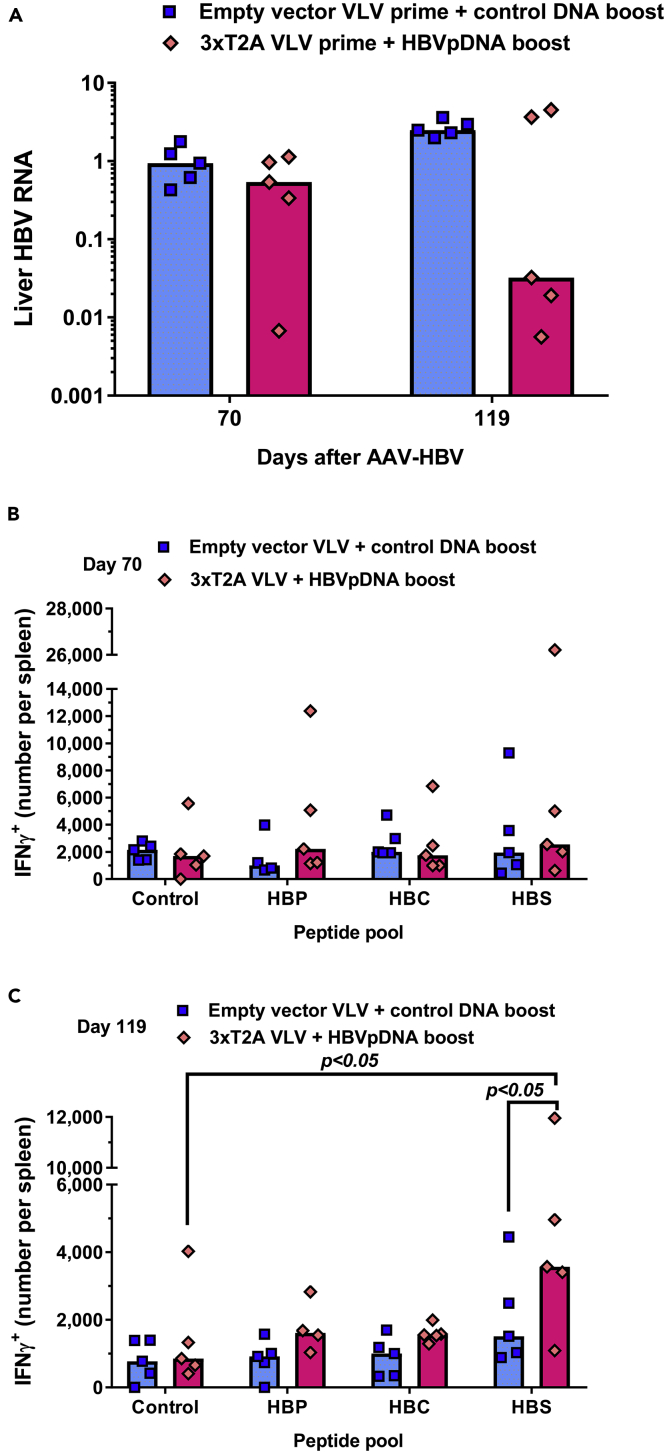
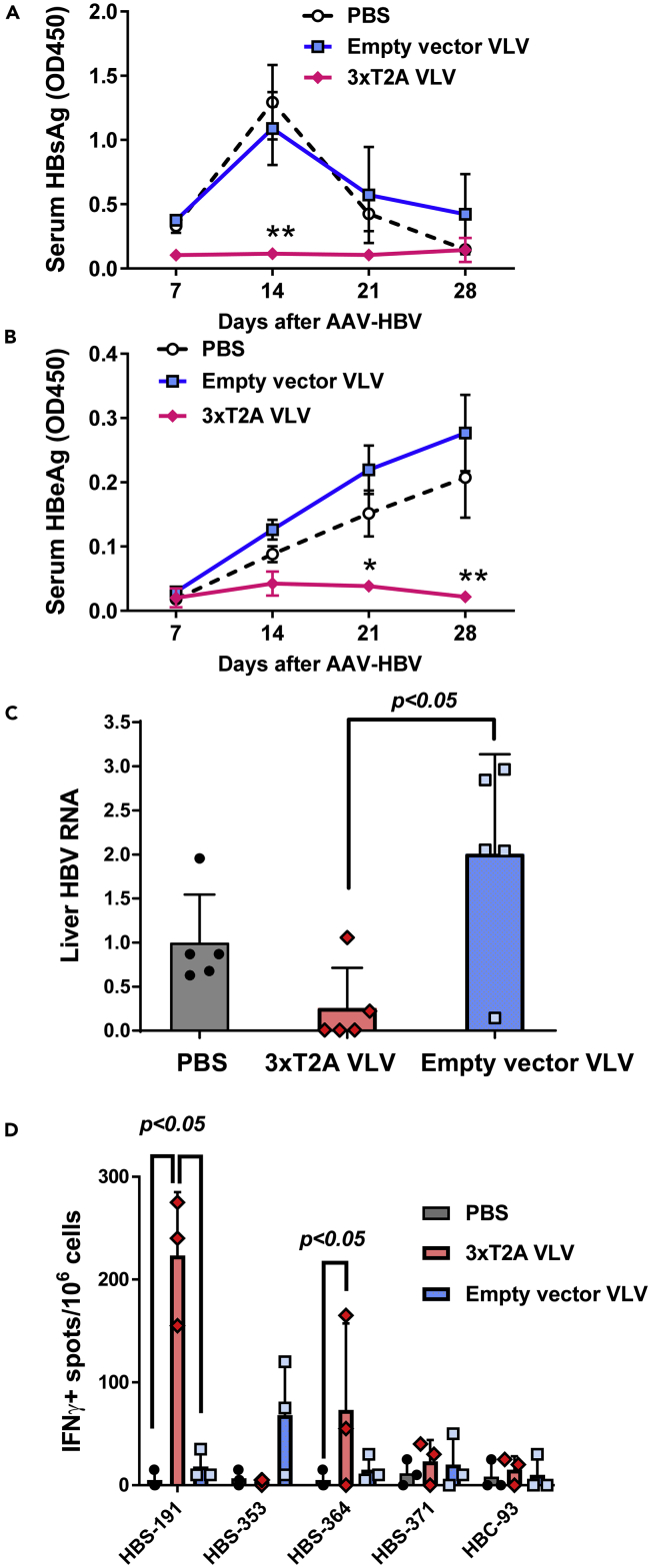
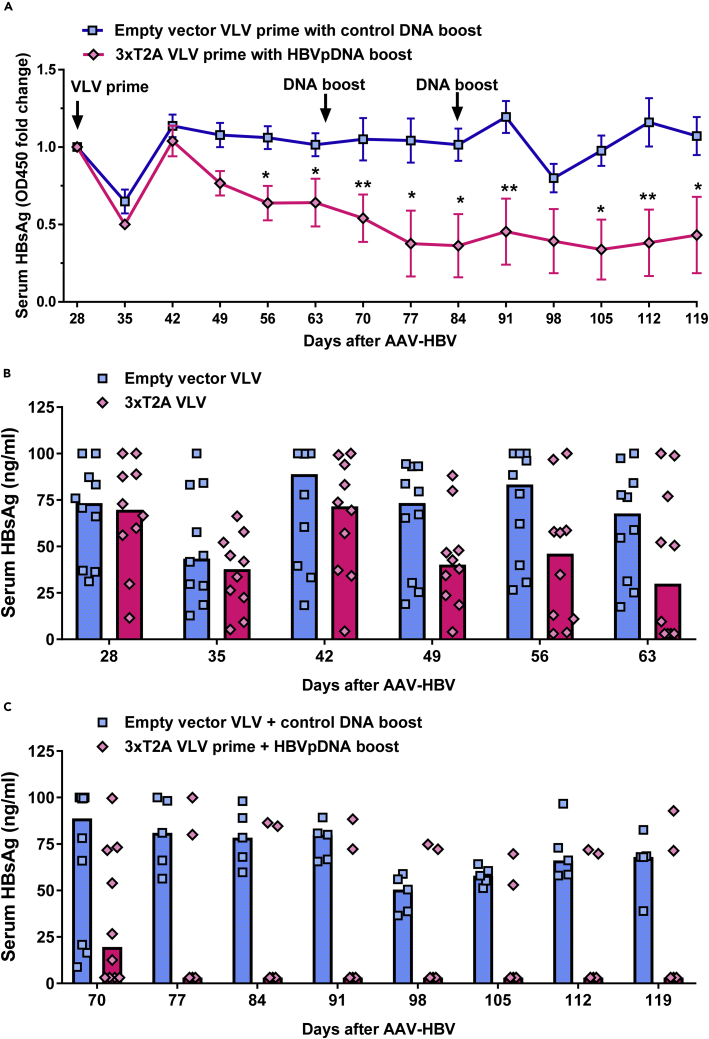
Infections with hepatitis B virus (HBV) can initiate chronic hepatitis and liver injury, causing more than 600,000 deaths each year worldwide. Current treatments for chronic hepatitis B are inadequate and leave an unmet need for immunotherapeutic approaches. We designed virus-like vesicles (VLV) as self-amplifying RNA replicons expressing three HBV antigens (polymerase, core, and middle surface) from a single vector (HBV-VLV) to break immune exhaustion despite persistent HBV replication. The HBV-VLV induces HBV-specific T cells in naive mice and renders them resistant to acute challenge with HBV. Using a chronic model of HBV infection, we demonstrate efficacy of HBV-VLV priming in combination with DNA booster immunization, as 40% of treated mice showed a decline of serum HBV surface antigen below the detection limit and marked reduction in liver HBV RNA accompanied by induction of HBsAg-specific CD8 T cells. These results warrant further evaluation of HBV-VLV for immunotherapy of chronic hepatitis B.
乙型肝炎病毒(HBV)感染可引发慢性肝炎和肝损伤,在全球范围内每年导致超过60万人死亡。目前针对慢性乙型肝炎的治疗方法并不充分,对免疫治疗方法仍存在未满足的需求。我们设计了病毒样囊泡(VLV)作为自扩增RNA复制子,从单个载体(HBV-VLV)表达三种HBV抗原(聚合酶、核心和中表面),以打破尽管HBV持续复制但出现的免疫耗竭。HBV-VLV在未感染的小鼠中诱导产生HBV特异性T细胞,并使它们对HBV急性攻击具有抗性。使用HBV感染的慢性模型,我们证明了HBV-VLV启动联合DNA加强免疫的疗效,因为40%的治疗小鼠血清HBV表面抗原下降至检测限以下,肝脏HBV RNA显著减少,同时诱导产生HBsAg特异性CD8 T细胞。这些结果值得对HBV-VLV用于慢性乙型肝炎免疫治疗进行进一步评估。