Department of Anesthesiology, Pain Research Center, University of Cincinnati College of Medicine, Cincinnati, OH, USA.
Department of Pathogen Biology, Medical College, Nantong University, Nantong, Jiangsu, China.
J Neuroinflammation. 2019 Nov 10;16(1):209. doi: 10.1186/s12974-019-1619-9.
Paclitaxel is a widely used and potent chemotherapeutic agent for the treatment of cancer. However, patients receiving paclitaxel often develop an acute pain syndrome for which there are few treatment options. Astrocytes play an important role in the pathogenesis of pain in multiple preclinical models, as well as in paclitaxel-treated rodents. However, it is still unclear what the exact contribution of astrocytes may be in paclitaxel-associated acute pain syndrome (P-APS).
P-APS was modeled by a single systemic or intrathecal injection of paclitaxel and astrocyte contribution tested by immunohistochemical, pharmacological, and behavioral approaches. Cell cultures were also prepared to assess whether paclitaxel treatment directly activates astrocytes and whether intrathecal injection of paclitaxel-treated astrocytes produces pain that is reminiscent of P-APS.
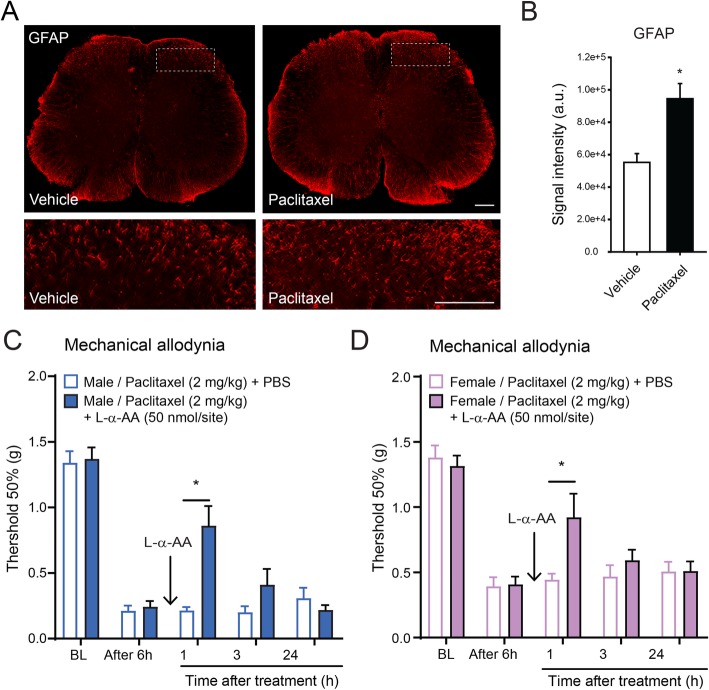
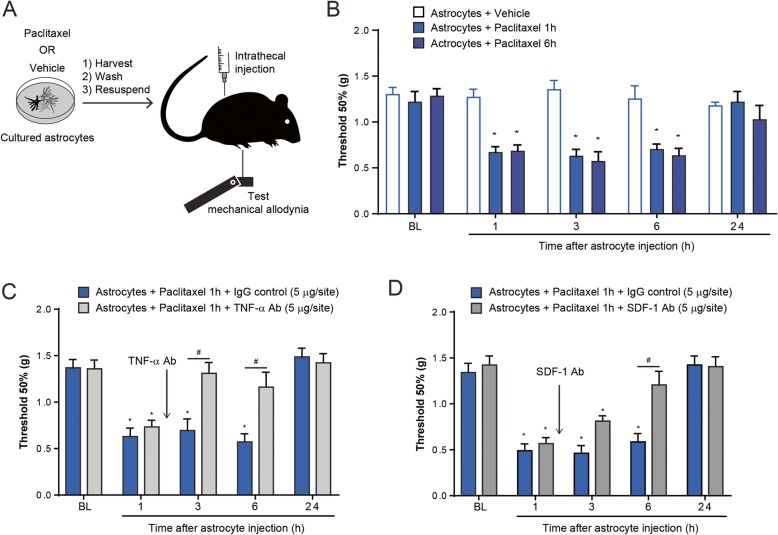
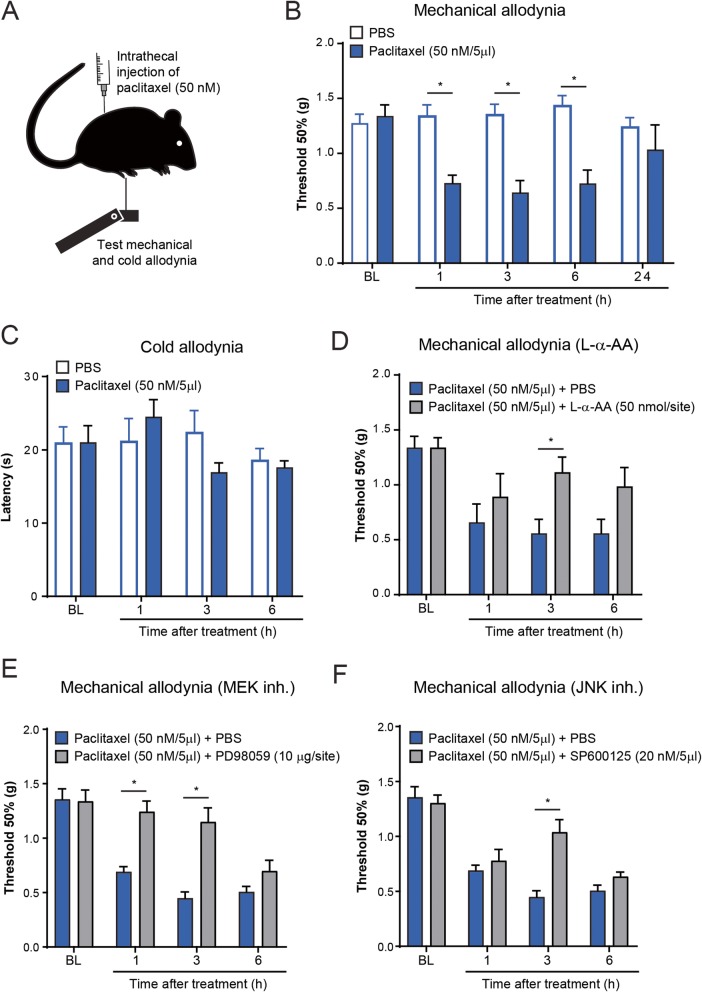
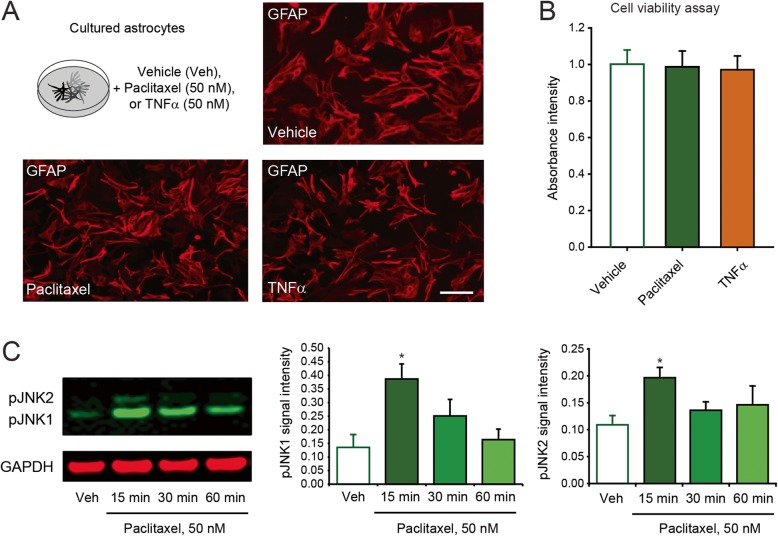
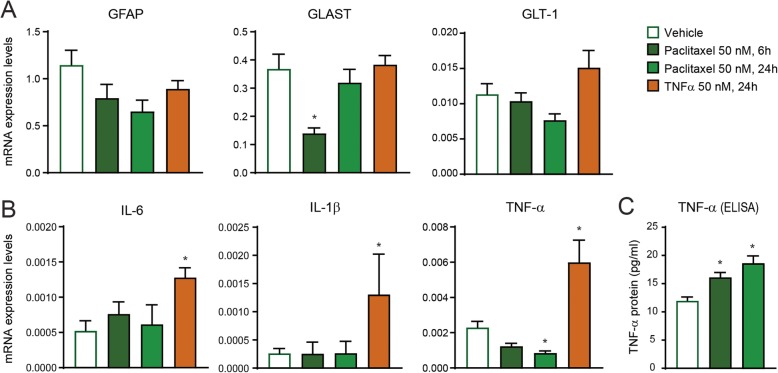
Systemic injection of paclitaxel resulted in increased expression of glial fibrillary acidic protein (a common marker of astrocytic activation), as well as both systemic or intrathecal injection of paclitaxel induced pain hypersensitivity indicated by the development of mechanical allodynia, which was significantly reversed by the astrocytic inhibitor L-α-AA. Cultured astrocytes were activated by paclitaxel with significant increases in protein levels for tumor necrosis factor-α (TNF-α) and stromal-derived cell factor 1 (SDF-1). Importantly, intrathecal injection of paclitaxel-activated astrocytes produced mechanical allodynia that was reversed by TNF-α and SDF-1 neutralizing antibodies.
Our results suggest for the first time that paclitaxel can directly activate astrocytes, which are sufficient to produce acute pain by releasing TNF-α and SDF-1. Targeting astrocytes and these cytokines may offer new treatments for P-APS.
紫杉醇是一种广泛应用于癌症治疗的强效化疗药物。然而,接受紫杉醇治疗的患者常出现急性疼痛综合征,而目前对此综合征的治疗选择有限。在多种临床前模型中,星形胶质细胞在疼痛发病机制中起着重要作用,在紫杉醇治疗的啮齿动物中也是如此。然而,星形胶质细胞在紫杉醇相关急性疼痛综合征(P-APS)中的确切作用仍不清楚。
通过单次系统或鞘内注射紫杉醇来建模 P-APS,并通过免疫组织化学、药理学和行为学方法来测试星形胶质细胞的贡献。还制备了细胞培养物,以评估紫杉醇治疗是否直接激活星形胶质细胞,以及鞘内注射紫杉醇处理的星形胶质细胞是否会产生类似于 P-APS 的疼痛。
紫杉醇全身注射导致胶质纤维酸性蛋白(星形胶质细胞激活的常见标志物)表达增加,同时全身或鞘内注射紫杉醇均诱导痛觉过敏,表现为机械性痛觉过敏的发展,这可被星形胶质细胞抑制剂 L-α-AA 显著逆转。紫杉醇激活了培养的星形胶质细胞,肿瘤坏死因子-α(TNF-α)和基质衍生细胞因子 1(SDF-1)的蛋白水平显著升高。重要的是,鞘内注射紫杉醇激活的星形胶质细胞产生的机械性痛觉过敏可被 TNF-α 和 SDF-1 中和抗体逆转。
我们的研究结果首次表明,紫杉醇可以直接激活星形胶质细胞,通过释放 TNF-α 和 SDF-1 而足以产生急性疼痛。靶向星形胶质细胞和这些细胞因子可能为 P-APS 提供新的治疗方法。