School of Chinese Medicine, Li Ka Shing Faculty of Medicine, The University of Hong Kong, 10 Sassoon Road, Pokfulam, Hongkong, China.
Department of Chinese Medicine, The University of Hong Kong Shenzhen Hospital, Shenzhen, China.
J Neuroinflammation. 2019 Nov 11;16(1):211. doi: 10.1186/s12974-019-1610-5.
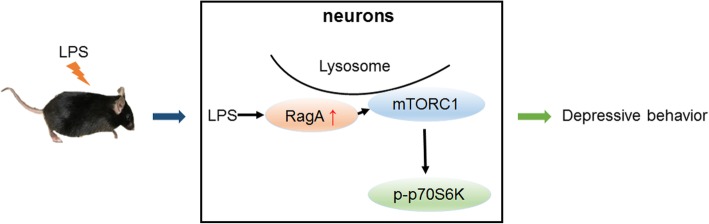
Bacterial infection is a potential risk factor for depression. However, little is known about the mechanistic link between bacterial endotoxin and depressive-like behaviors. The aim of the present study was to clarify whether liposaccharide (LPS) could induce depressive-like behaviors in mice via sequentially activating small GTPase RagA, mammalian target of rapamycin (mTOR), and p70S6K.
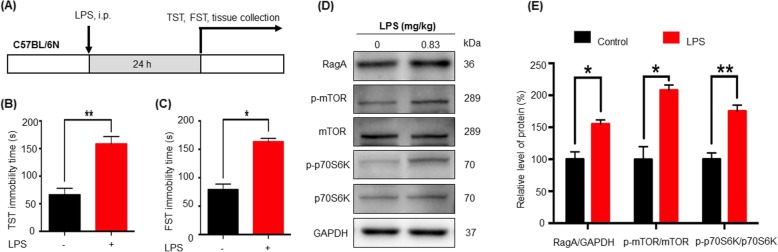
C57BL/6 N mice were treated with 0.83 mg/kg LPS by intraperitoneal injection for 24 h. The animals were assessed for depressive-like behaviors by forced swim test and tail suspension test. The expression levels of RagA, mTOR, and p70S6K were determined in mice, primary cortical neurons, neural stem cells, and PC12 cells.
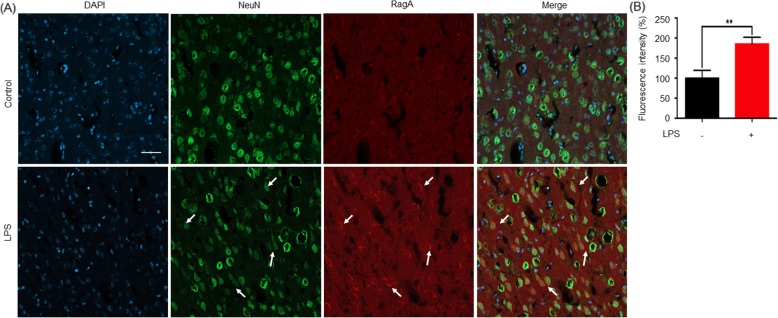
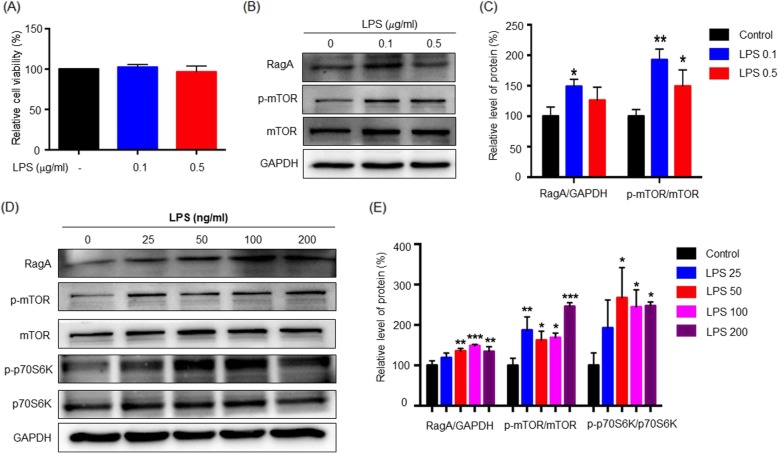
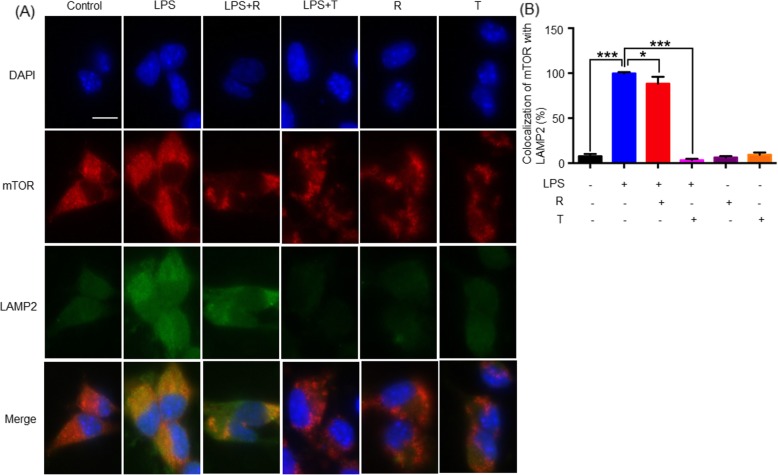
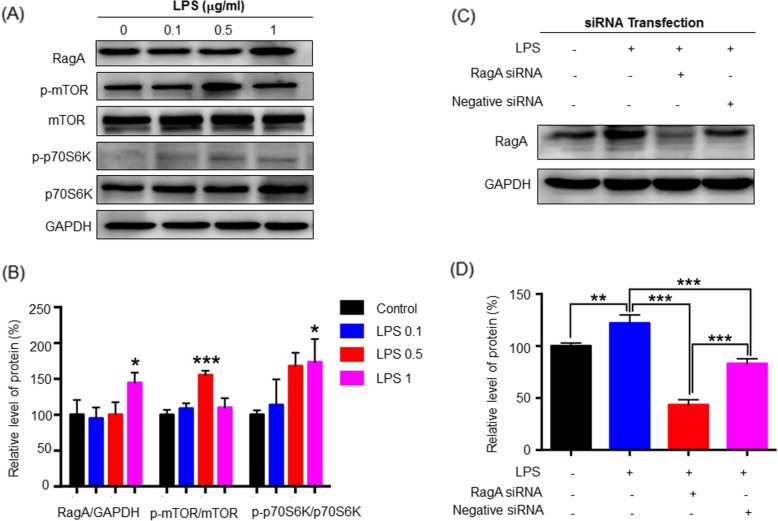
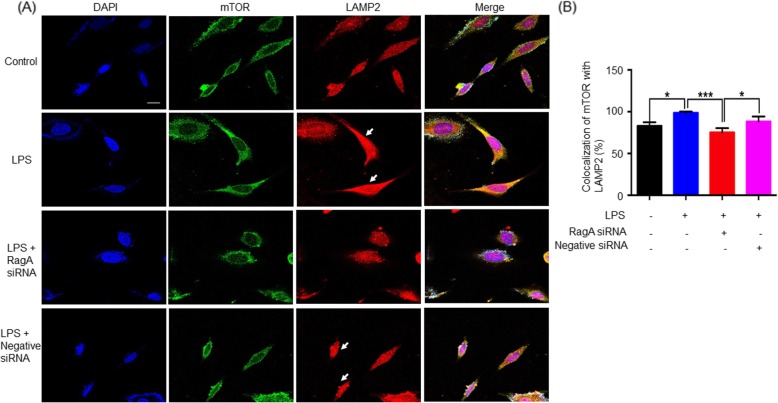
LPS effectively induced depressive-like behaviors in mice. Biochemical examination revealed that LPS not only upregulated RagA expression but also activated mTOR/p70S6K pathway in mouse brains. LPS challenge also achieved a similar effect in primary cortical neurons, neural stem cells, and PC12 cells. Following the silencing of RagA expression with specific siRNA, LPS failed to induce mTORC1 translocation to the lysosomal membranes in PC12 cells. These results suggested that LPS might sequentially upregulate RagA and activate mTOR and p70S6K pathways in mice and neural stem cells.
This study for the first time demonstrated that LPS might induce depressive-like behaviors in mice via the upregulation of RagA and subsequent activation of mTOR/p70S6K pathway. Such information may highlight the RagA-mTOR-p70S6K signaling cascade as a novel therapeutic target for the development of new anti-depressant therapeutics.
细菌感染是抑郁症的一个潜在风险因素。然而,细菌内毒素与抑郁样行为之间的机制联系知之甚少。本研究旨在阐明脂多糖(LPS)是否可以通过依次激活小 GTPase RagA、哺乳动物雷帕霉素靶蛋白(mTOR)和 p70S6K 诱导小鼠产生抑郁样行为。
C57BL/6N 小鼠通过腹腔注射 0.83mg/kg LPS 24h。通过强迫游泳试验和悬尾试验评估动物的抑郁样行为。在小鼠、原代皮质神经元、神经干细胞和 PC12 细胞中测定 RagA、mTOR 和 p70S6K 的表达水平。
LPS 有效诱导了小鼠的抑郁样行为。生化检测显示,LPS 不仅上调了 RagA 的表达,还激活了小鼠大脑中的 mTOR/p70S6K 通路。LPS 处理也在原代皮质神经元、神经干细胞和 PC12 细胞中产生了类似的效果。用特异性 siRNA 沉默 RagA 表达后,LPS 未能诱导 PC12 细胞中 mTORC1 向溶酶体膜的易位。这些结果表明,LPS 可能在小鼠和神经干细胞中依次上调 RagA 并激活 mTOR 和 p70S6K 通路。
本研究首次表明,LPS 可能通过上调 RagA 并随后激活 mTOR/p70S6K 通路诱导小鼠产生抑郁样行为。这些信息可能突出 RagA-mTOR-p70S6K 信号级联作为开发新型抗抑郁治疗药物的新治疗靶点。