MOE Key Laboratory of Bioinformatics, BNRIST Bioinformatics Division, Department of Automation, Tsinghua University, Beijing, 100084, China.
International Co-operation Laboratory on Signal Transduction, Eastern Hepatobiliary Surgery Institute, Second Military Medical University, Shanghai, 200438, China.
BMC Med Genomics. 2019 Nov 13;12(1):164. doi: 10.1186/s12920-019-0586-4.
Hepatocellular carcinoma (HCC) is the major type of primary liver cancer. Intrahepatic metastasis, such as portal vein tumor thrombosis (PVTT), strongly indicates poor prognosis of HCC. But now, there are limited understandings of the molecular features and mechanisms of those metastatic HCCs.
To characterize the molecular alterations of the metastatic HCCs, we implemented an integrative analysis of the copy number variations (CNVs), DNA methylations and transcriptomes of matched adjacent normal, primary tumor and PVTT samples from 19 HCC patients.
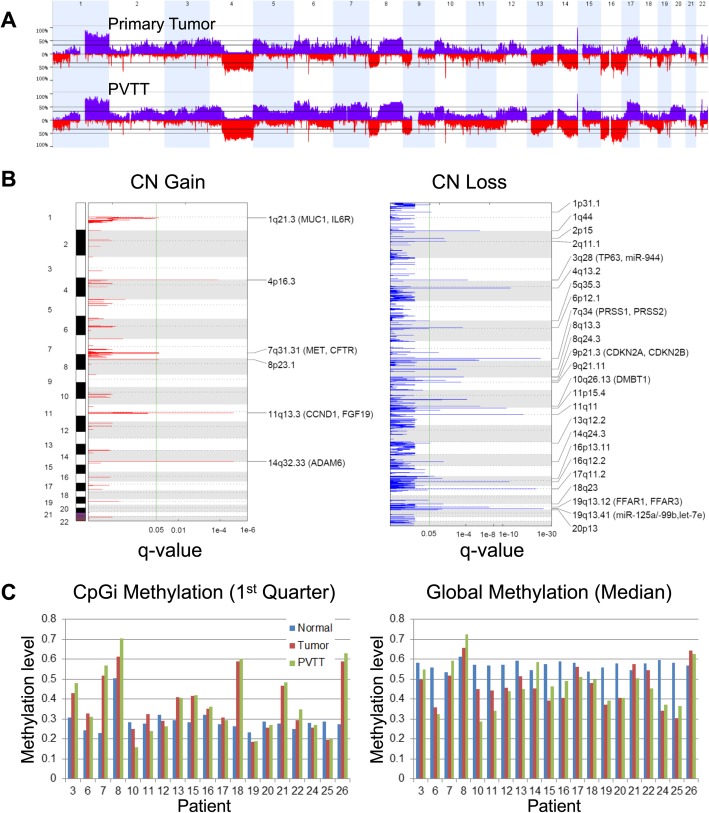
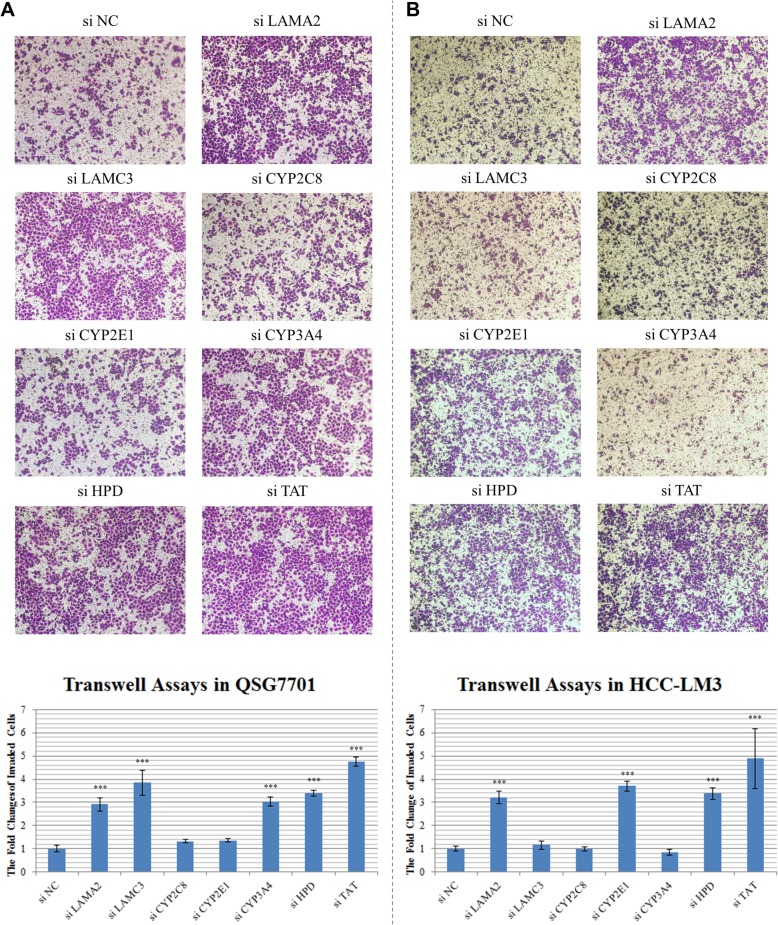
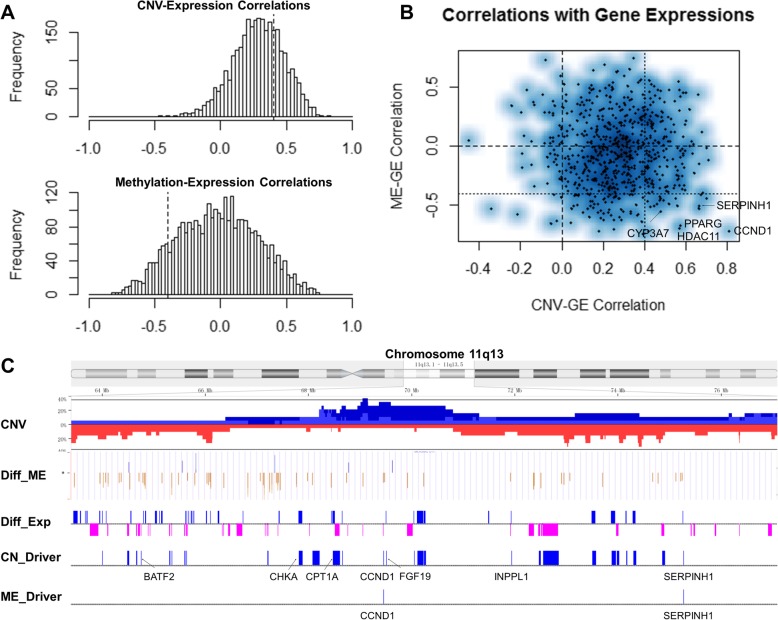
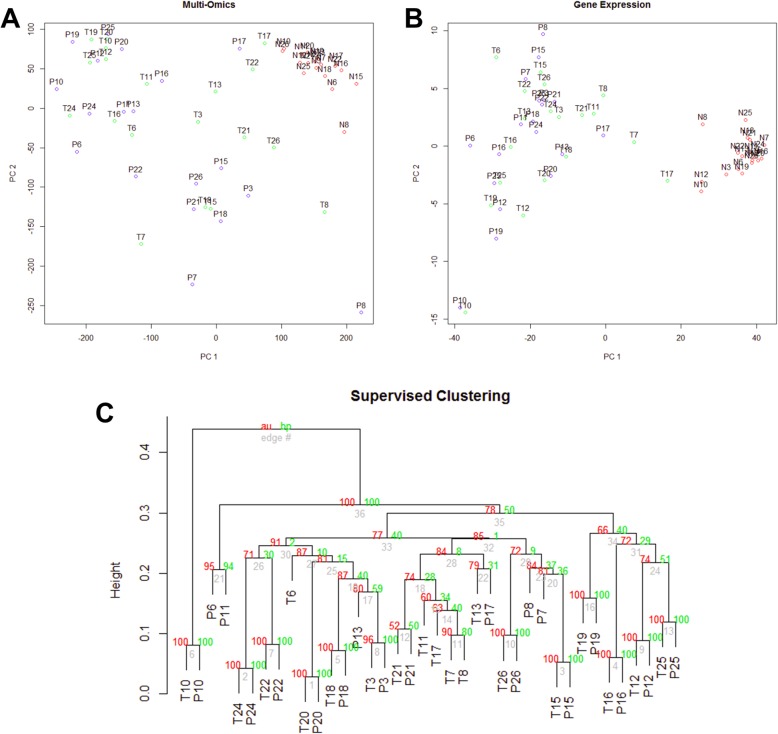
CNV analysis identified a frequently amplified focal region chr11q13.3 and a novel deletion peak chr19q13.41 containing three miRNAs. The integrative analysis with RNA-seq data suggests that CNVs and differential promoter methylations regulate distinct oncogenic processes. Then, we used individualized differential analysis to identify the differentially expressed genes between matched primary tumor and PVTT of each patient. Results show that 5 out of 19 studied patients acquire evidential progressive alterations of gene expressions (more than 1000 differentially expressed genes were identified in each patient). While, another subset of eight patients have nearly identical gene expressions between the corresponding matched primary tumor and PVTT. Twenty genes were found to be recurrently and progressively differentially expressed in multiple patients. These genes are mainly associated with focal adhesion, xenobiotics metabolism by cytochrome P450 and amino acid metabolism. For several differentially expressed genes in metabolic pathways, their expressions are significantly associated with overall survivals and vascular invasions of HCC patients. The following transwell assay experiments validate that they can regulate invasive phenotypes of HCC cells.
The metastatic HCCs with PVTTs have significant molecular alterations comparing with adjacent normal tissues. The recurrent alteration patterns are similar to several previously published general HCC cohorts, but usually with higher severity. By an individualized differential analysis strategy, the progressively differentially expressed genes between the primary tumor and PVTT were identified for each patient. A few patients aquire evidential progressive alterations of gene expressions. And, experiments show that several recurrently differentially expressed genes can strongly regulate HCC cell invasions.
肝细胞癌(HCC)是原发性肝癌的主要类型。肝内转移,如门静脉癌栓(PVTT),强烈提示 HCC 预后不良。但是,目前对于转移性 HCC 的分子特征和机制的了解有限。
为了描述转移性 HCC 的分子改变,我们对 19 例 HCC 患者的配对相邻正常、原发肿瘤和 PVTT 样本的拷贝数变异(CNV)、DNA 甲基化和转录组进行了综合分析。
CNV 分析鉴定了一个经常扩增的焦点区域 chr11q13.3 和一个新的缺失峰 chr19q13.41,其中包含三个 miRNA。与 RNA-seq 数据的综合分析表明,CNVs 和差异启动子甲基化调节不同的致癌过程。然后,我们使用个体化差异分析来识别每个患者配对的原发肿瘤和 PVTT 之间差异表达的基因。结果表明,19 例研究患者中有 5 例获得了证据充分的基因表达逐渐改变(每个患者鉴定出超过 1000 个差异表达基因)。而另一组 8 例患者在相应配对的原发肿瘤和 PVTT 之间几乎具有相同的基因表达。20 个基因在多个患者中反复且逐渐差异表达。这些基因主要与焦点粘连、细胞色素 P450 代谢的外来化合物和氨基酸代谢有关。对于代谢途径中的几个差异表达基因,它们的表达与 HCC 患者的总生存率和血管侵袭显著相关。随后的 Transwell 实验验证了它们可以调节 HCC 细胞的侵袭表型。
与相邻正常组织相比,伴有 PVTT 的转移性 HCC 具有显著的分子改变。反复出现的改变模式与几个已发表的一般 HCC 队列相似,但通常更为严重。通过个体化差异分析策略,为每个患者鉴定了原发肿瘤和 PVTT 之间逐渐差异表达的基因。少数患者获得了明显的基因表达逐渐改变。而且,实验表明,几个反复差异表达的基因可以强烈调节 HCC 细胞的侵袭。