Department of Pathology, Zhujiang Hospital, Southern Medical University, Guangzhou, China.
Department of Oncology, The First Affiliated Hospital of Hebei North University, Zhangjiakou, China.
Cell Death Differ. 2020 May;27(5):1709-1727. doi: 10.1038/s41418-019-0455-x. Epub 2019 Nov 14.
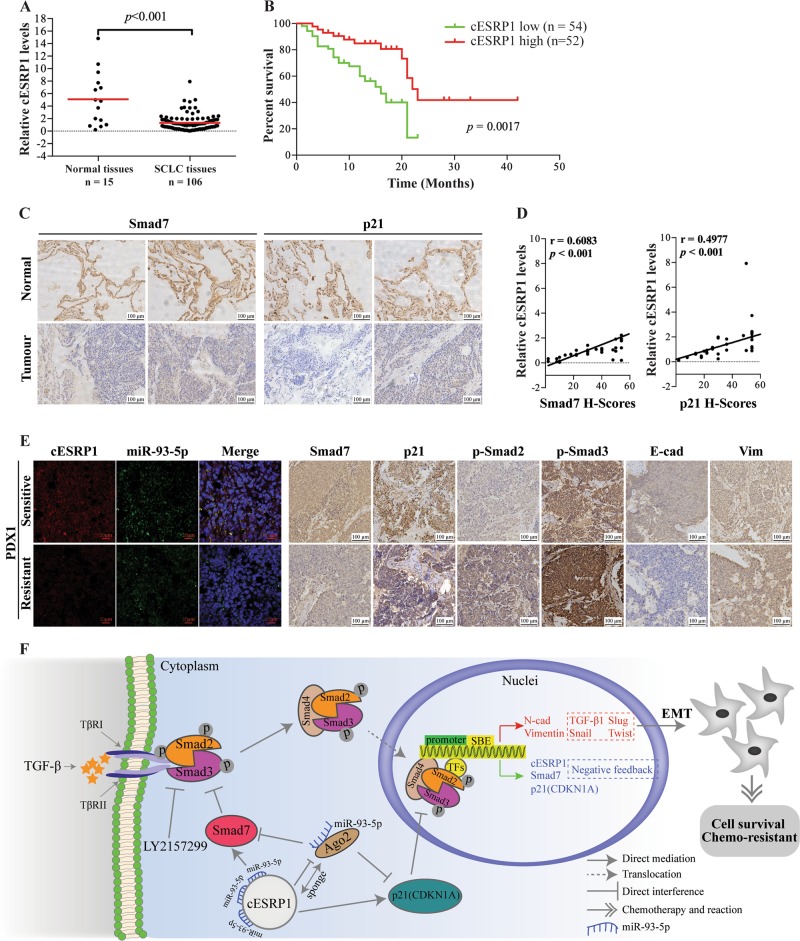
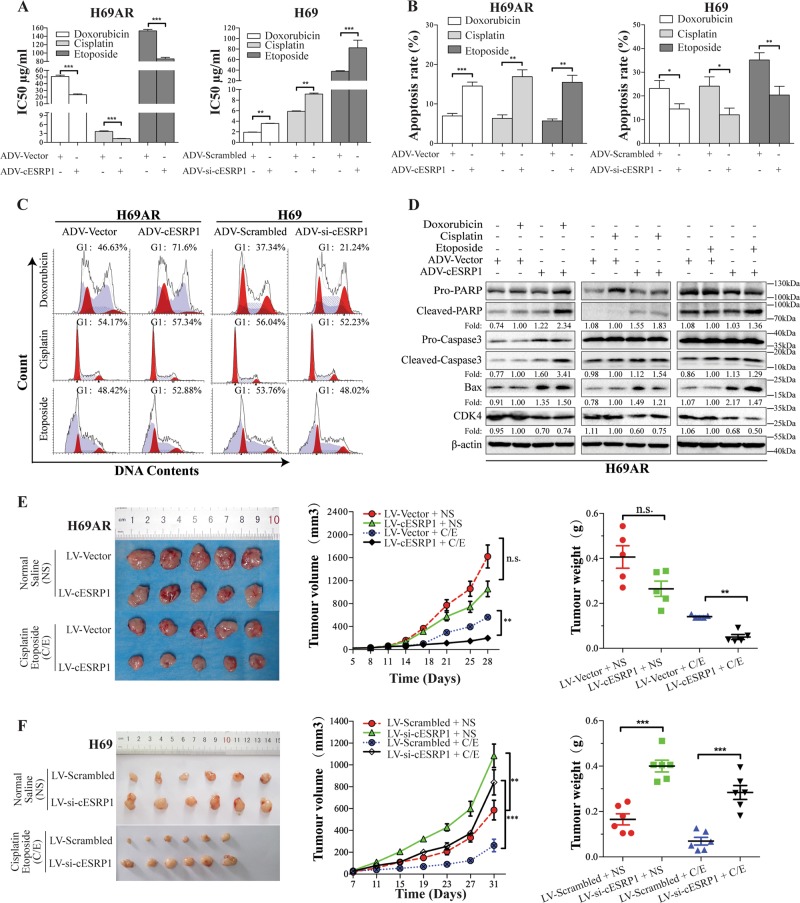
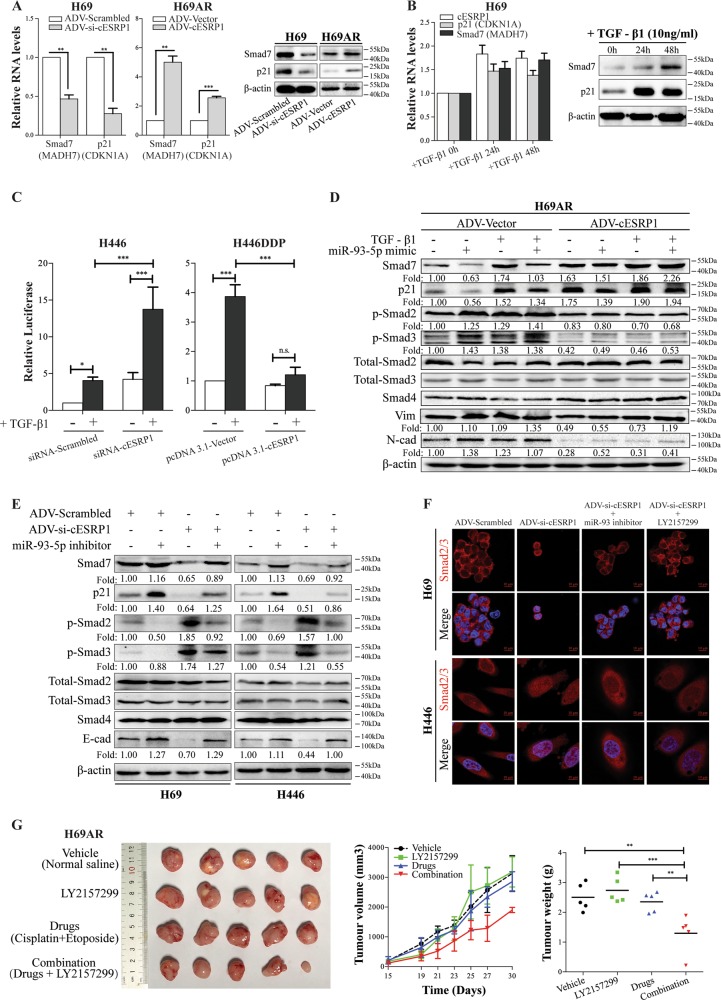
Circular RNAs (circRNAs) are novel RNA molecules that play important roles in chemoresistance in different cancers, including breast and gastric cancers. However, whether circRNAs are involved in the response to chemotherapy in small cell lung cancer (SCLC) remains largely unknown. In this study, we observed that cESRP1 (circular RNA epithelial splicing regulatory protein-1) expression was significantly downregulated in the chemoresistant cells compared with the parental chemosensitive cells. cESRP1 enhanced drug sensitivity by repressing miR-93-5p in SCLC. Cytoplasmic cESRP1 could directly bind to miR-93-5p and inhibit the posttranscriptional repression mediated by miR-93-5p, thereby upregulating the expression of the miR-93-5p downstream targets Smad7/p21(CDKN1A) and forming a negative feedback loop to regulate transforming growth factor-β (TGF-β) mediated epithelial-mesenchymal transition. Furthermore, cESRP1 overexpression and TGF-β pathway inhibition both altered tumour responsiveness to chemotherapy in an acquired chemoresistant patient-derived xenograft model. Importantly, cESRP1 expression was downregulated in SCLC patient tissues and was associated with survival. Our findings reveal, for the first time, that cESRP1 plays crucial a role in SCLC chemosensitivity by sponging miR-93-5p to inhibit the TGF-β pathway, suggesting that cESRP1 may serve as a valuable prognostic biomarker and a potential therapeutic target in SCLC patients.
环状 RNA(circRNAs)是一种新型 RNA 分子,在包括乳腺癌和胃癌在内的不同癌症的耐药性中发挥重要作用。然而,circRNAs 是否参与小细胞肺癌(SCLC)对化疗的反应在很大程度上尚不清楚。在这项研究中,我们观察到,与亲本化疗敏感细胞相比,耐药细胞中 cESRP1(环状 RNA 上皮剪接调节蛋白-1)的表达显著下调。cESRP1 通过抑制 SCLC 中的 miR-93-5p 来增强药物敏感性。细胞质 cESRP1 可以直接与 miR-93-5p 结合,并抑制 miR-93-5p 介导的转录后抑制,从而上调 miR-93-5p 下游靶标 Smad7/p21(CDKN1A) 的表达,并形成负反馈环来调节转化生长因子-β(TGF-β)介导的上皮-间充质转化。此外,cESRP1 的过表达和 TGF-β 通路抑制都改变了获得性耐药患者来源异种移植模型中肿瘤对化疗的反应性。重要的是,cESRP1 的表达在 SCLC 患者组织中下调,并与生存相关。我们的研究结果首次揭示,cESRP1 通过海绵吸附 miR-93-5p 抑制 TGF-β 通路,在 SCLC 化疗敏感性中发挥关键作用,表明 cESRP1 可能作为 SCLC 患者有价值的预后生物标志物和潜在的治疗靶点。