Oil Crops Research Institute of Chinese Academy of Agricultural Sciences/Key Laboratory for Biological Sciences and Genetic Improvement of Oil Crops, Ministry of Agriculture and Rural Affairs, Wuhan, 430062, China.
Crop Research Institute, Gansu academy of Agricultural Sciences, Lanzhou, 730070, Gansu, China.
BMC Plant Biol. 2019 Nov 15;19(1):500. doi: 10.1186/s12870-019-2094-2.
Plant height is one of the most important agronomic traits in many crops due to its influence on lodging resistance and yield performance. Although progress has been made in the use of dwarfing genes in crop improvement, identification of new dwarf germplasm is still of significant interest for breeding varieties with increased yield.
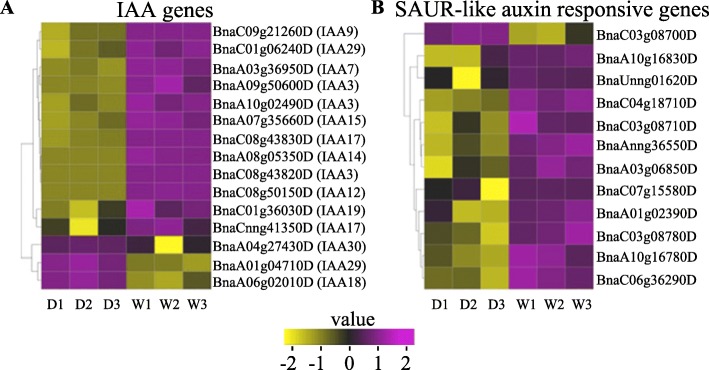
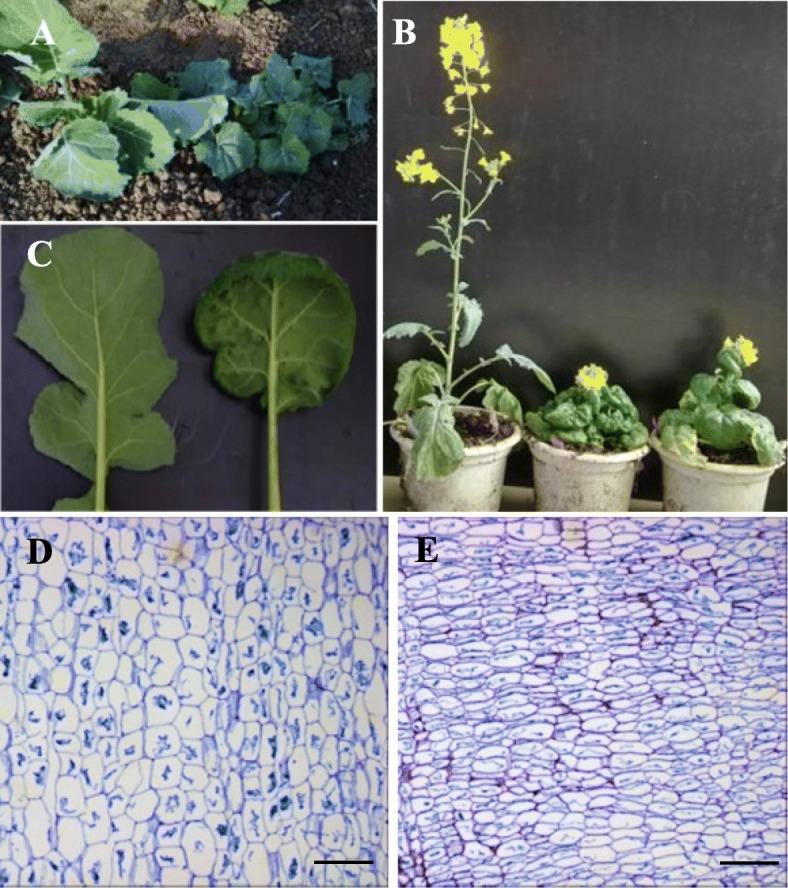
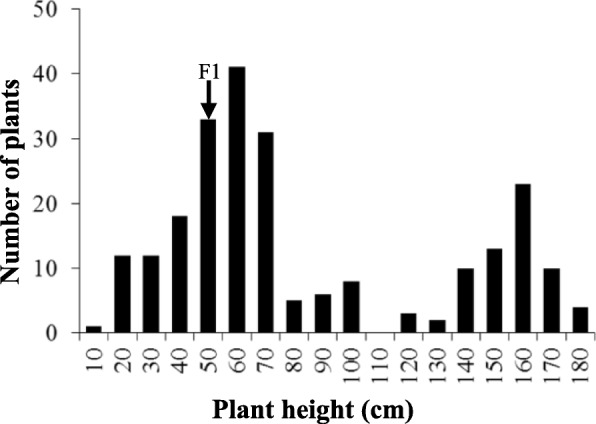
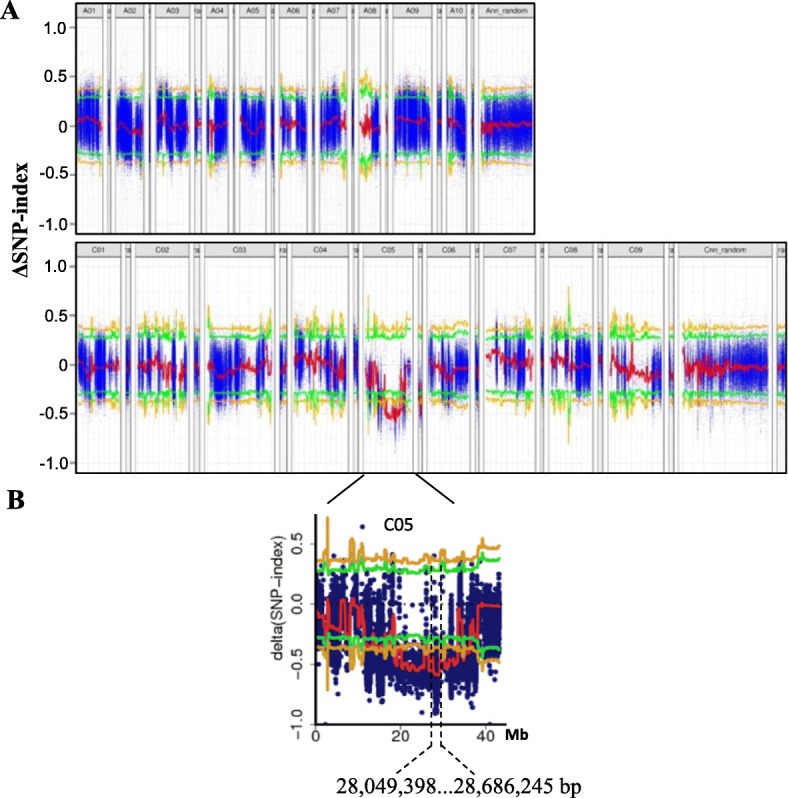
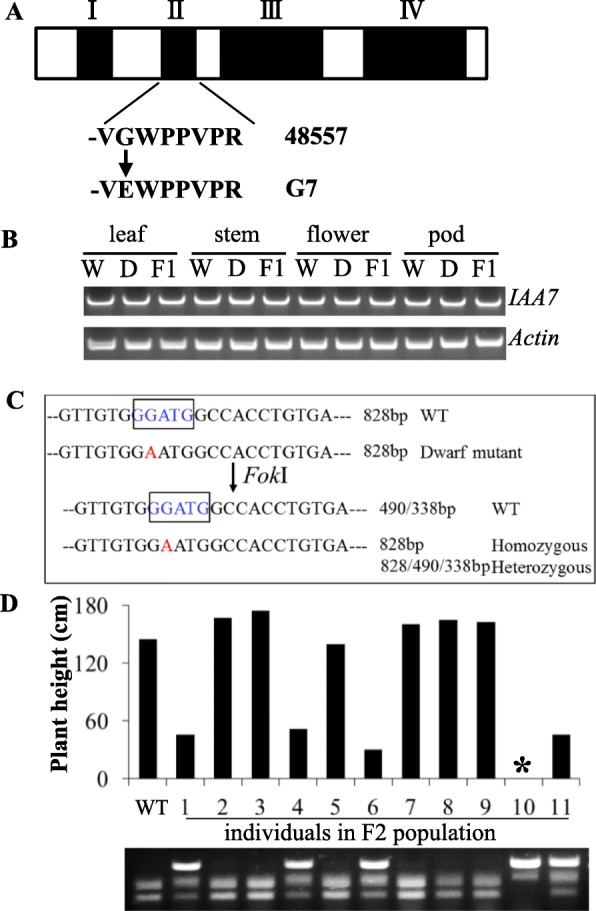
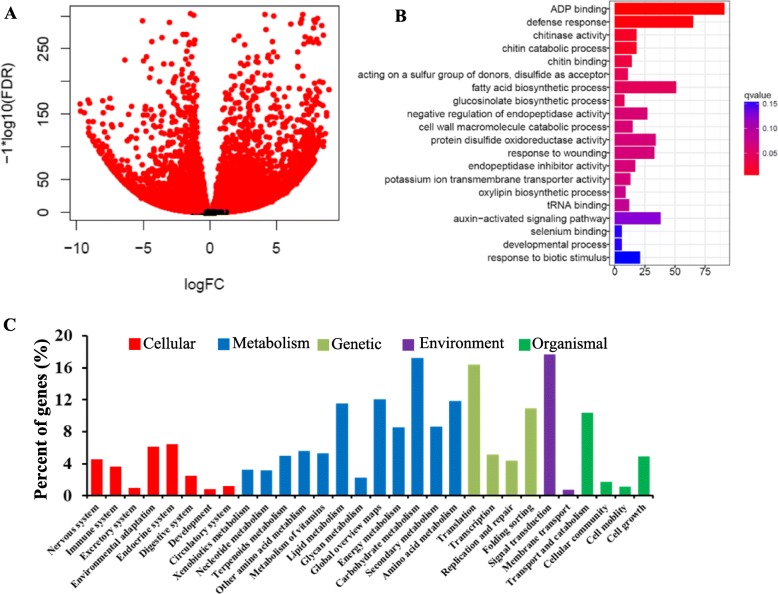
Here we describe a dominant, dwarf mutant G7 of Brassica napus with down-curved leaves derived from tissue culture. To explore the genetic variation responsible for the dwarf phenotype, the mutant was crossed to a conventional line to develop a segregating F population. Bulks were formed from plants with either dwarf or conventional plant height and subjected to high throughput sequencing analysis via mutation mapping (MutMap). The dwarf mutation was mapped to a 0.6 Mb interval of B. napus chromosome C05. Candidate gene analysis revealed that one SNP causing an amino acid change in the domain II of Bna.IAA7.C05 may contribute to the dwarf phenotype. This is consistent with the phenotype of a gain-of-function indole-3-acetic acid (iaa) mutant in Bna.IAA7.C05 reported recently. GO and KEGG analysis of RNA-seq data revealed the down-regulation of auxin related genes, including many other IAA and small up regulated response (SAUR) genes, in the dwarf mutant.
Our studies characterize a new allele of Bna.IAA7.C05 responsible for the dwarf mutant generated from tissue culture. This may provide a valuable genetic resource for breeding for lodging resistance and compact plant stature in B. napus.
植物高度是许多作物中最重要的农艺性状之一,因为它影响抗倒伏性和产量表现。尽管在作物改良中利用矮化基因已经取得了进展,但鉴定新的矮秆种质仍然是提高产量的品种选育的重要目标。
本文描述了一个来自组织培养的甘蓝型油菜显性、矮化突变体 G7,其叶片下弯。为了探索导致矮化表型的遗传变异,将突变体与常规系杂交以开发分离的 F 群体。从具有矮化或常规株高的植株中形成块体,并通过突变图谱(MutMap)进行高通量测序分析。矮化突变被定位到甘蓝型油菜染色体 C05 的 0.6 Mb 区间。候选基因分析表明,一个导致 Bna.IAA7.C05 结构域 II 中氨基酸变化的 SNP 可能导致矮化表型。这与最近报道的 Bna.IAA7.C05 中功能获得性吲哚-3-乙酸(iaa)突变体的表型一致。RNA-seq 数据的 GO 和 KEGG 分析显示,矮化突变体中生长素相关基因,包括许多其他 IAA 和小上调反应(SAUR)基因的下调。
本研究描述了一个来自组织培养的甘蓝型油菜 Bna.IAA7.C05 新等位基因的矮化突变体。这可能为培育抗倒伏和紧凑株型的甘蓝型油菜提供有价值的遗传资源。