Department of Medical Microbiology, Faculty of Medicine, University of Malaya, Kuala Lumpur, Malaysia.
Department of Pharmacology, Faculty of Medicine, University of Malaya, Kuala Lumpur, Malaysia.
PLoS Pathog. 2019 Nov 15;15(11):e1007863. doi: 10.1371/journal.ppat.1007863. eCollection 2019 Nov.
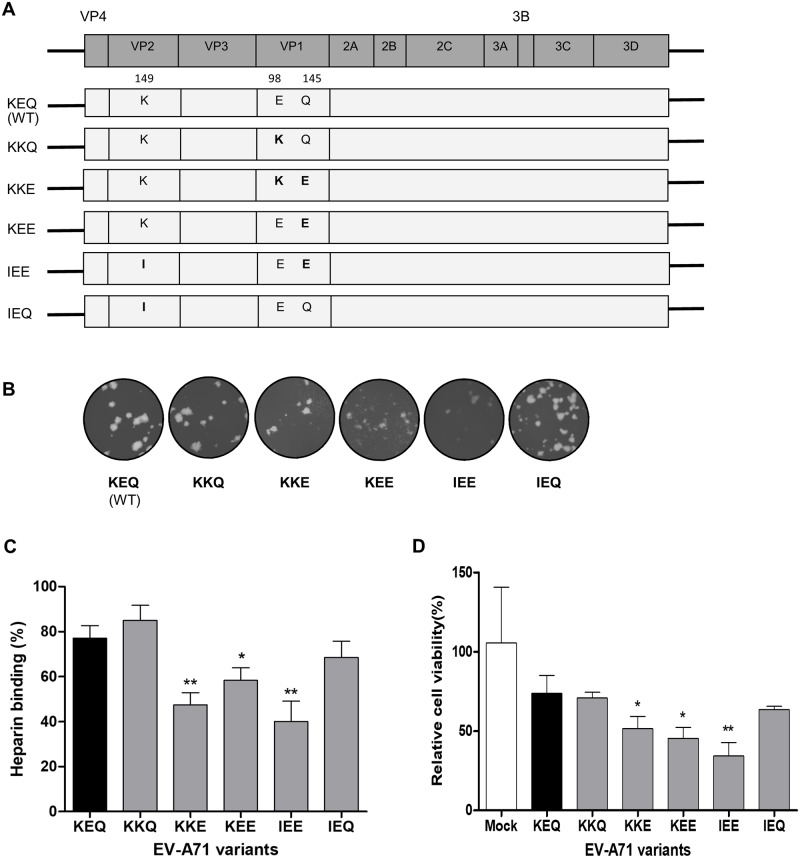
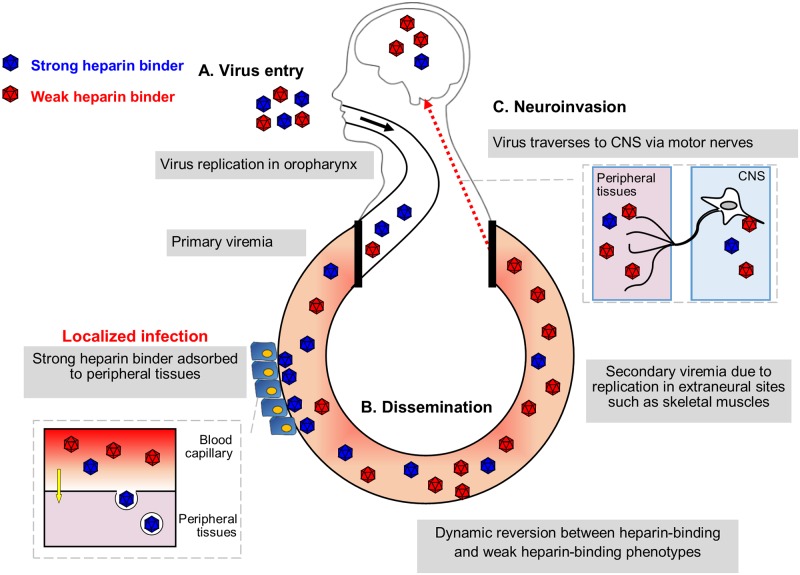
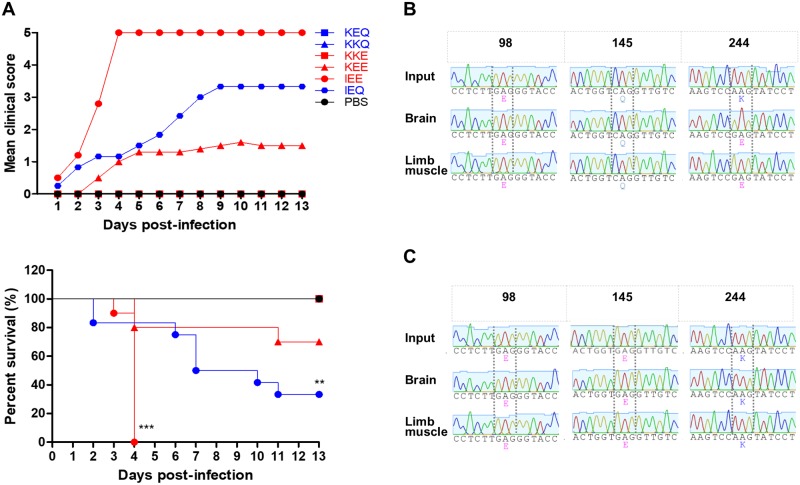
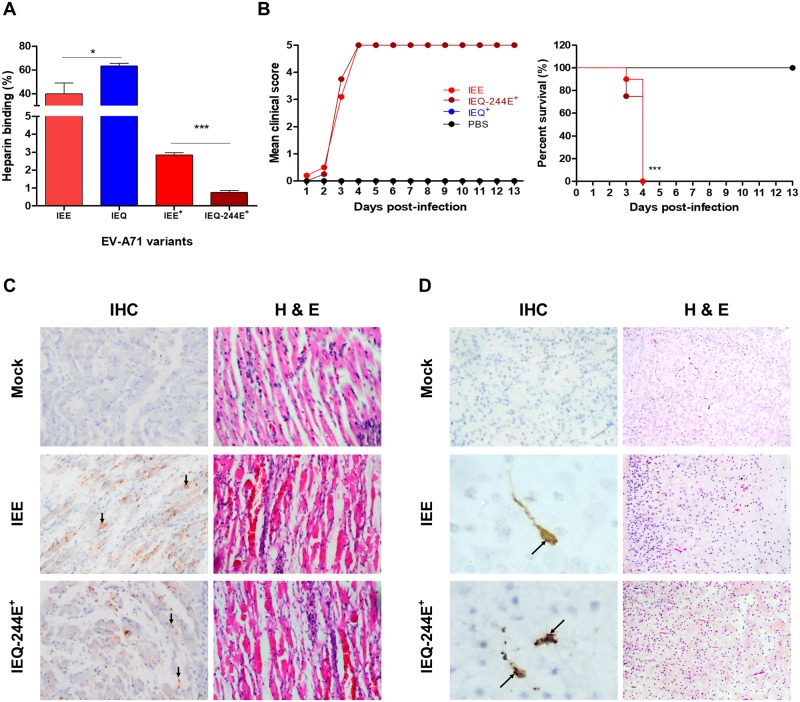
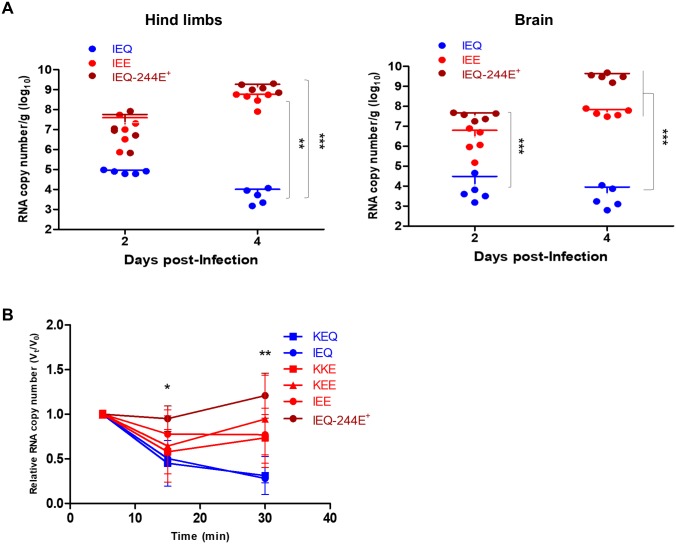
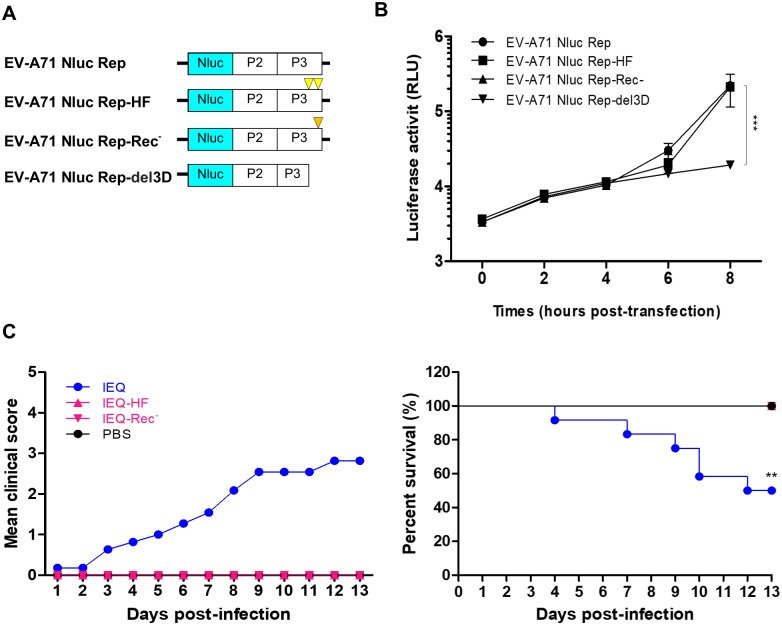
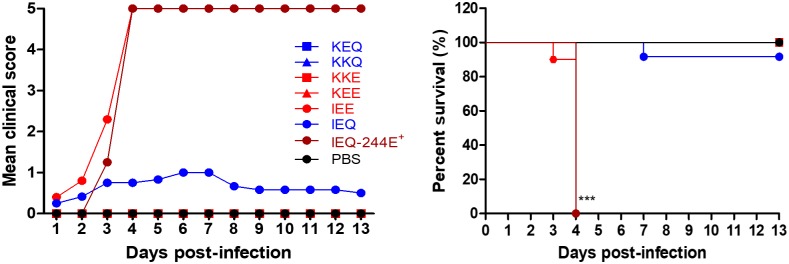
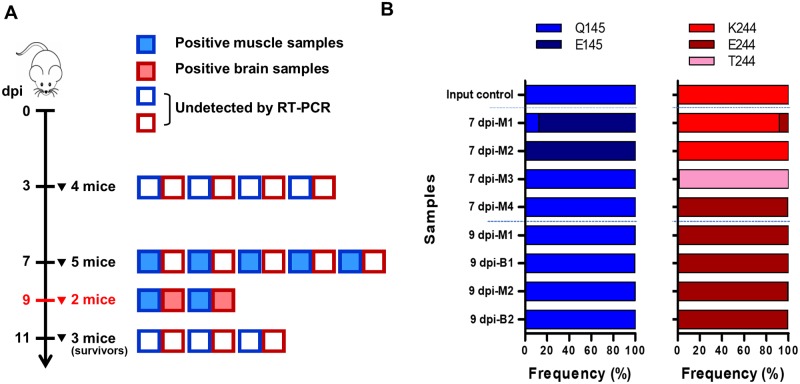
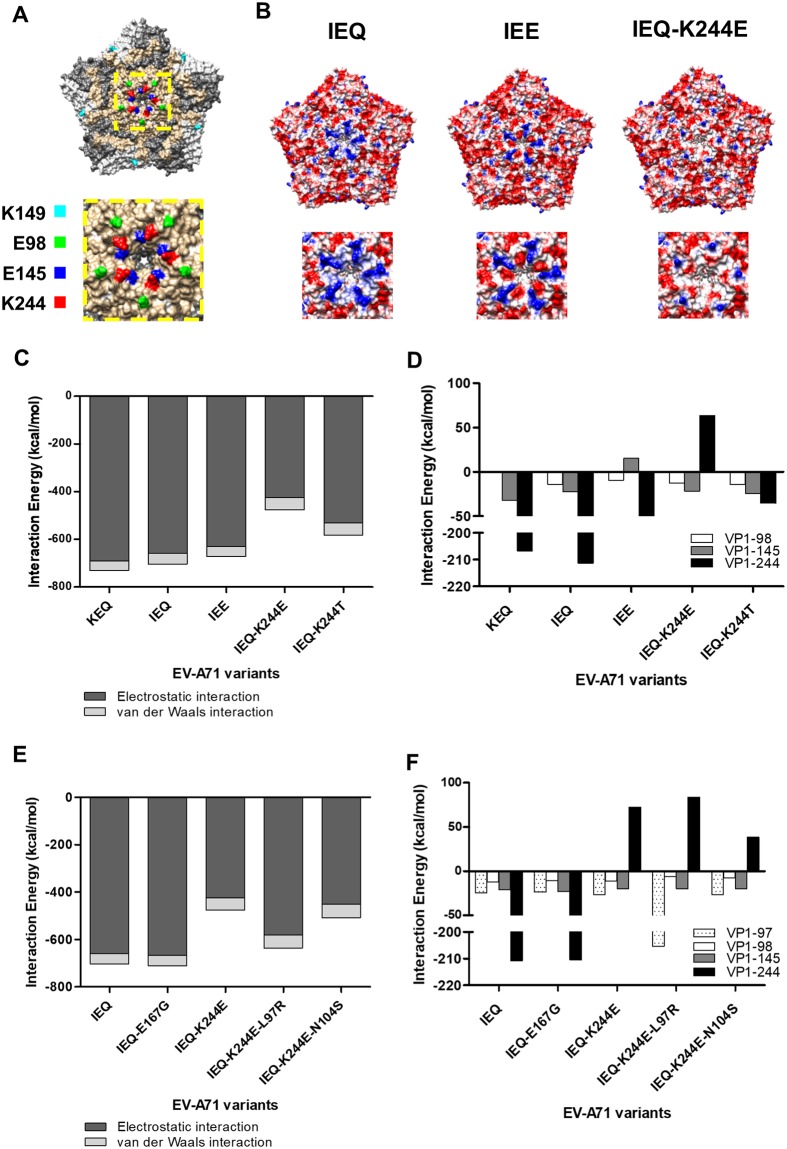
Enterovirus A71 (EV-A71) causes hand, foot and mouth disease epidemics with neurological complications and fatalities. However, the neuropathogenesis of EV-A71 remains poorly understood. In mice, adaptation and virulence determinants have been mapped to mutations at VP2-149, VP1-145 and VP1-244. We investigate how these amino acids alter heparin-binding phenotype and shapes EV-A71 virulence in one-day old mice. We constructed six viruses with varying residues at VP1-98, VP1-145 (which are both heparin-binding determinants) and VP2-149 (based on the wild type 149K/98E/145Q, termed KEQ) to generate KKQ, KKE, KEE, IEE and IEQ variants. We demonstrated that the weak heparin-binder IEE was highly lethal in mice. The initially strong heparin-binding IEQ variant acquired an additional mutation VP1-K244E, which confers weak heparin-binding phenotype resulting in elevated viremia and increased virus antigens in mice brain, with subsequent high virulence. IEE and IEQ-244E variants inoculated into mice disseminated efficiently and displayed high viremia. Increasing polymerase fidelity and impairing recombination of IEQ attenuated the virulence, suggesting the importance of population diversity in EV-A71 pathogenesis in vivo. Combining in silico docking and deep sequencing approaches, we inferred that virus population diversity is shaped by electrostatic interactions at the five-fold axis of the virus surface. Electrostatic surface charges facilitate virus adaptation by generating poor heparin-binding variants for better in vivo dissemination in mice, likely due to reduced adsorption to heparin-rich peripheral tissues, which ultimately results in increased neurovirulence. The dynamic switching between heparin-binding and weak heparin-binding phenotype in vivo explained the neurovirulence of EV-A71.
肠道病毒 A71(EV-A71)可引起手足口病疫情,并伴有神经并发症和死亡。然而,EV-A71 的神经发病机制仍知之甚少。在小鼠中,适应性和毒力决定因素已被映射到 VP2-149、VP1-145 和 VP1-244 突变。我们研究了这些氨基酸如何改变肝素结合表型,并塑造 EV-A71 在 1 日龄小鼠中的毒力。我们构建了六个具有不同 VP1-98、VP1-145(均为肝素结合决定因素)和 VP2-149(基于野生型 149K/98E/145Q,称为 KEQ)残基的病毒,以生成 KKQ、KKE、KEE、IEE 和 IEQ 变体。我们证明了弱肝素结合物 IEE 在小鼠中具有高度致死性。最初强肝素结合的 IEQ 变体获得了另一个突变 VP1-K244E,这赋予了弱肝素结合表型,导致病毒血症升高和小鼠大脑中病毒抗原增加,随后毒力增加。接种到小鼠体内的 IEE 和 IEQ-244E 变体有效传播,并显示出高病毒血症。增加聚合酶保真度并损害 IEQ 的重组可减弱其毒力,这表明病毒种群多样性在 EV-A71 体内发病机制中的重要性。通过计算对接和深度测序方法,我们推断病毒种群多样性是由病毒表面五倍轴的静电相互作用塑造的。静电表面电荷通过产生对肝素结合较差的变体来促进病毒适应性,从而更好地在小鼠体内传播,这可能是由于减少了对富含肝素的周围组织的吸附,最终导致神经毒力增加。体内肝素结合和弱肝素结合表型之间的动态切换解释了 EV-A71 的神经毒力。