Division of General Thoracic Surgery, Department of Surgery, Shiga University of Medical Science, Shiga, Japan.
Department of Thoracic Surgery, Mitsubishikyoto Hospital, Kyoto, Japan.
PLoS One. 2019 Nov 18;14(11):e0223917. doi: 10.1371/journal.pone.0223917. eCollection 2019.
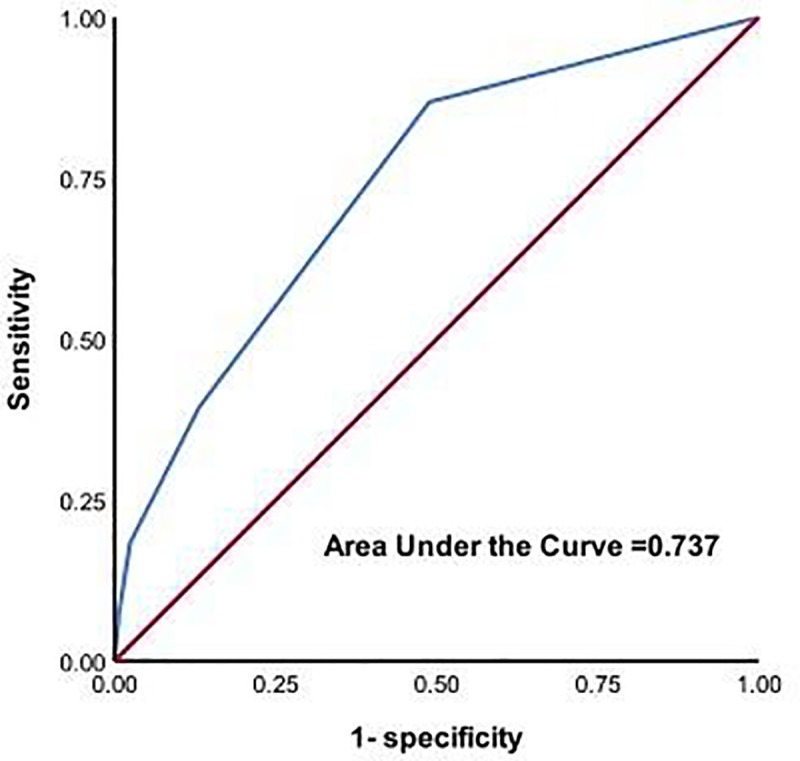
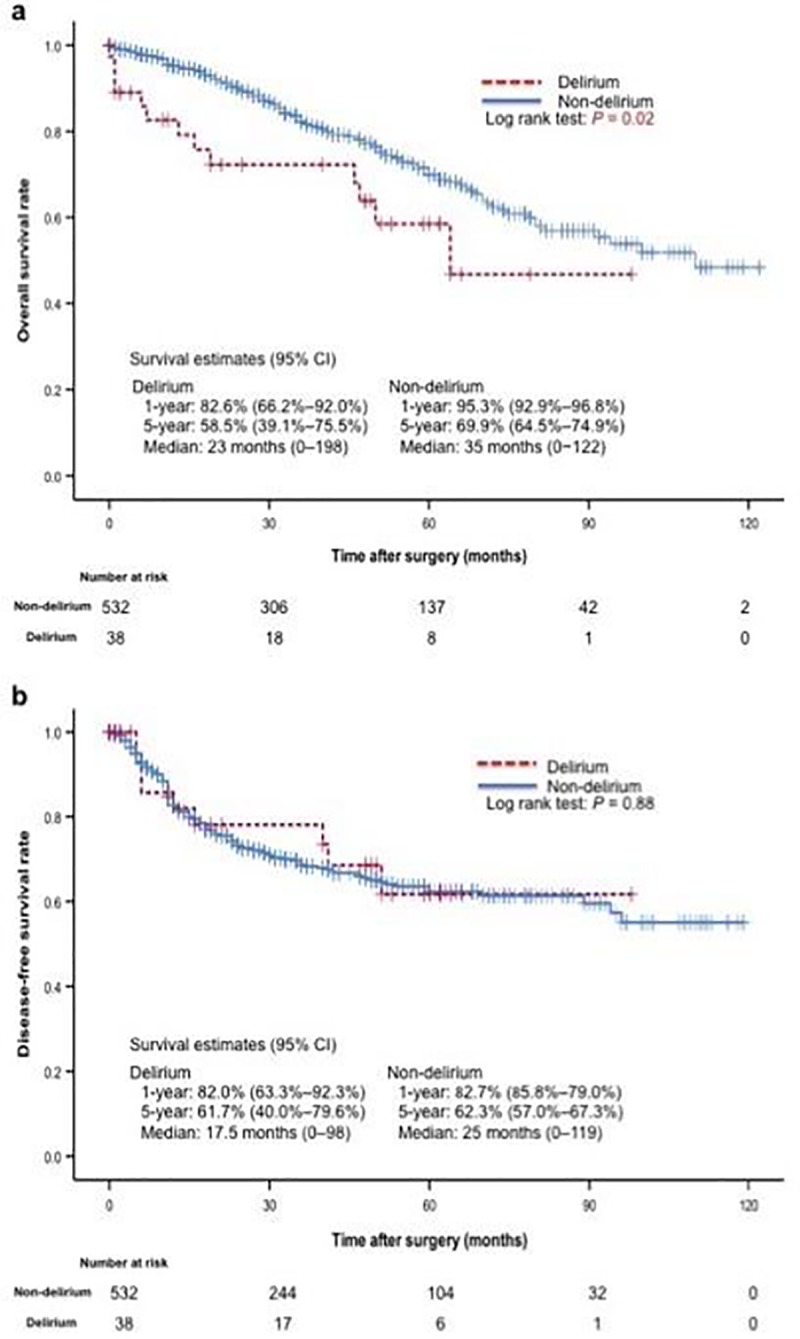
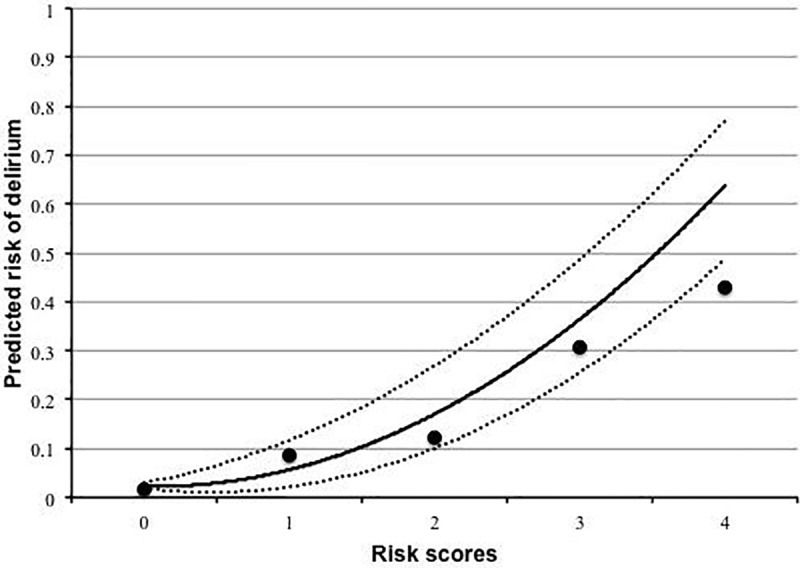
Delirium is a common post-surgical complication, but few studies have examined postoperative delirium following lung cancer surgery. The purpose of this study was to clarify the risk factors of postoperative delirium, to construct a useful scoring system, and to clarify the relationship between delirium and prognosis after lung cancer surgery. We retrospectively analyzed data from 570 patients who underwent surgery for primary lung cancer. Logistic regression analysis was used to determine the effects of various factors on the onset of delirium. Kaplan-Meier analysis was performed to determine the relationship between delirium and prognosis. Postoperative delirium occurred in 6.7% of the patients. Three risk factors were identified, and the risk scores were determined as follows: 2×(cerebrovascular disease history) + 1×(squamous cell carcinoma) + 1×(age older than 75 years). Scores 0-1 denoted low risk, 2 denoted intermediate risk, and 3-4 denoted high risk. Additionally, we found that patients who developed delirium had significantly shorter overall survival. However, there was no difference in the frequency between cancer-related death and non-cancer related death when comparing the delirium and non-delirium groups. We identified the risk factors, i.e., cerebrovascular disease history, squamous cell carcinoma, and age older than 75 years, that determine the onset of delirium after lung cancer surgery and constructed a useful scoring system. In addition, although the prognosis of the delirium group was poor, the factor that determines prognosis may not be cancer per se but vulnerability in the patient background.
谵妄是一种常见的术后并发症,但很少有研究探讨肺癌手术后的术后谵妄。本研究旨在阐明术后谵妄的危险因素,构建有用的评分系统,并阐明谵妄与肺癌手术后预后的关系。我们回顾性分析了 570 例接受原发性肺癌手术的患者的数据。采用逻辑回归分析确定各种因素对谵妄发生的影响。采用 Kaplan-Meier 分析确定谵妄与预后的关系。术后谵妄的发生率为 6.7%。确定了三个危险因素,并确定了风险评分如下:2×(脑血管病史)+1×(鳞状细胞癌)+1×(年龄大于 75 岁)。评分 0-1 表示低风险,2 表示中风险,3-4 表示高风险。此外,我们发现发生谵妄的患者总生存率明显缩短。然而,在比较谵妄组和非谵妄组时,癌症相关死亡和非癌症相关死亡的频率没有差异。我们确定了决定肺癌手术后谵妄发生的危险因素,即脑血管病史、鳞状细胞癌和年龄大于 75 岁,并构建了一个有用的评分系统。此外,尽管谵妄组的预后较差,但决定预后的因素可能不是癌症本身,而是患者背景的脆弱性。