Zhang Xiaoyu, Zhang Runxu, Kang Tianhe, Hu Yaoqing, Li Chao
Key Laboratory of In-situ Property-improving Mining of Ministry of Education, Taiyuan University of Technology, Taiyuan, 030024, P.R. China.
Sci Rep. 2019 Nov 20;9(1):17163. doi: 10.1038/s41598-019-53840-9.
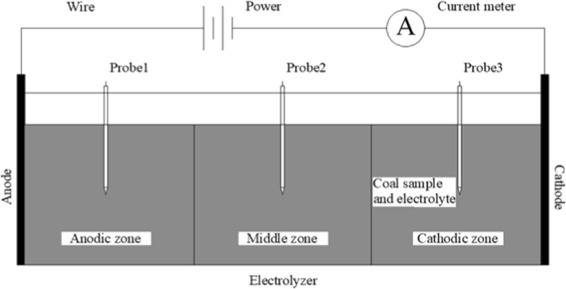
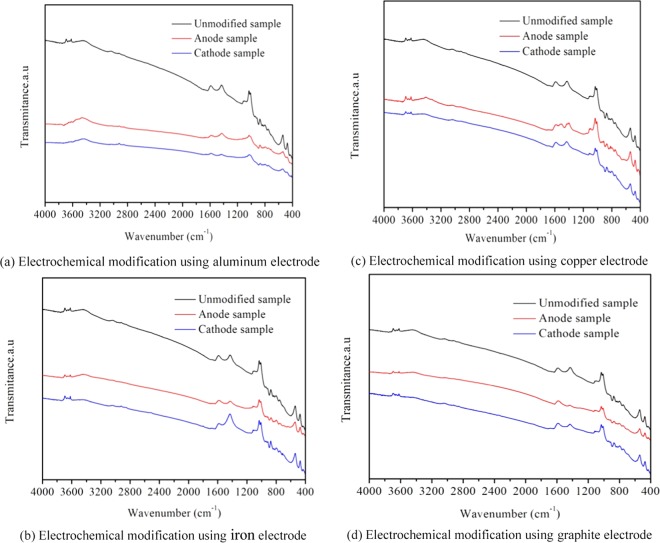
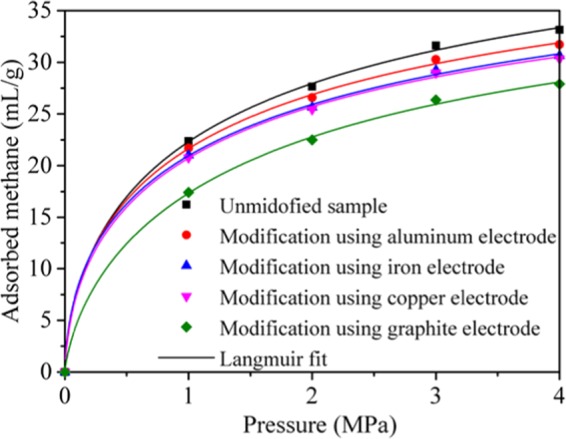
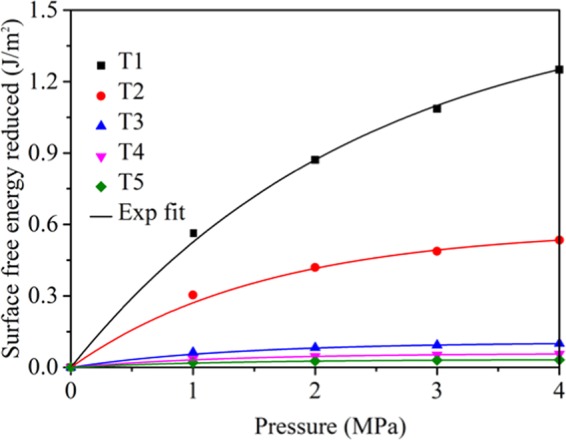
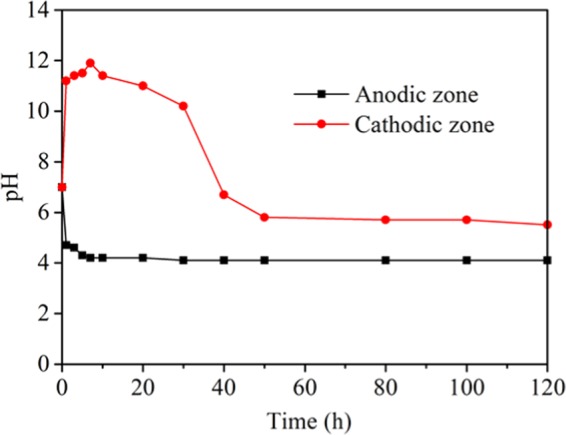
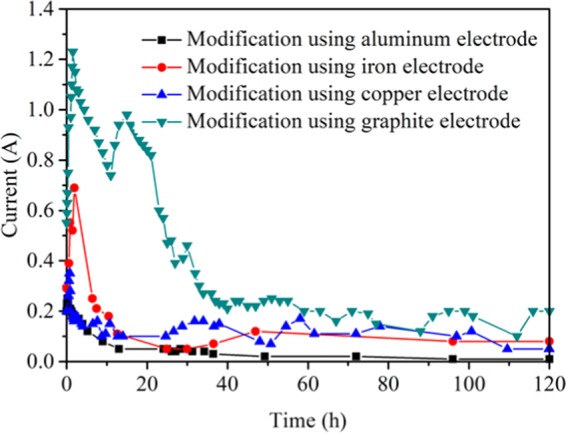
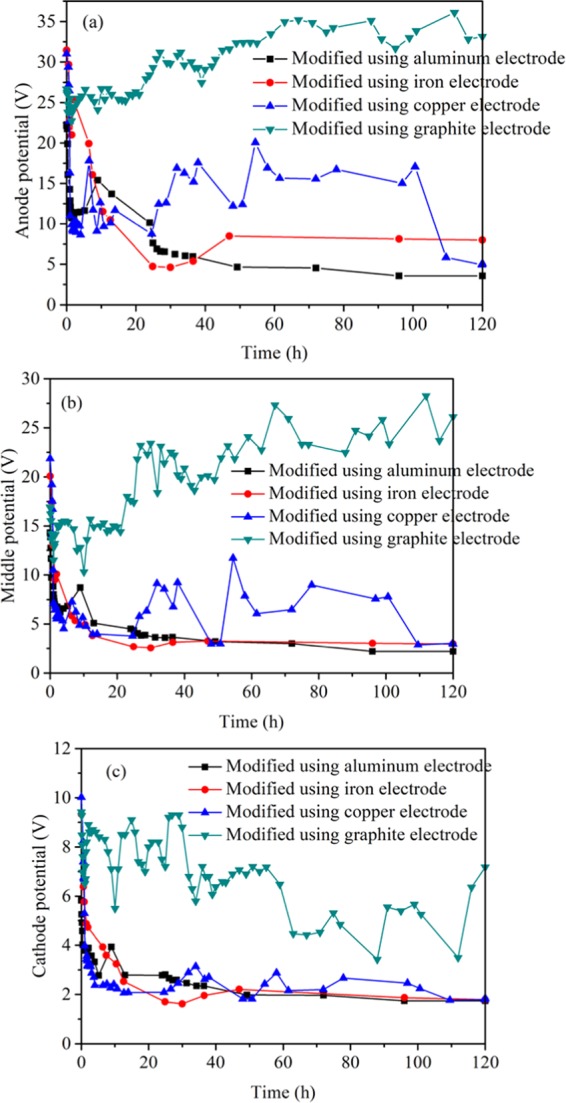
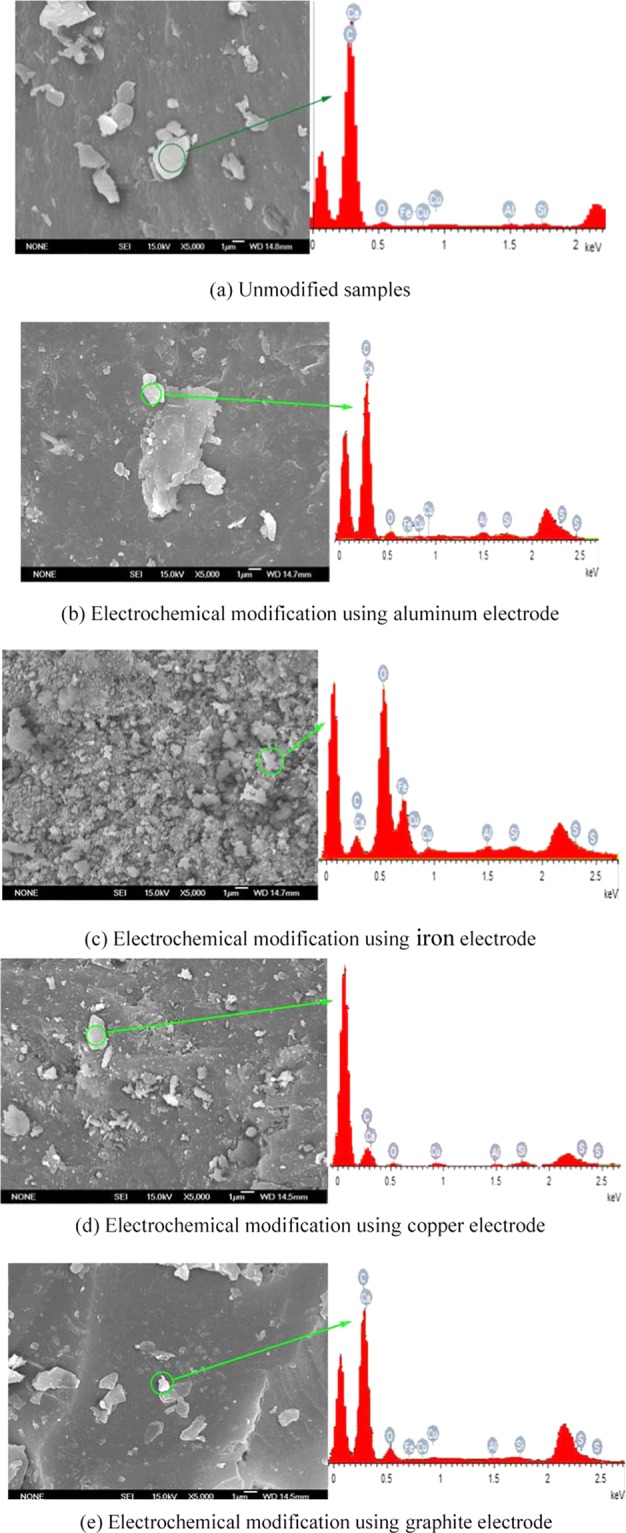
The strong adsorption capacity of methane in anthracite can seriously affect the methane extraction. Electrochemical treatment is an effective way to weaken the capacity of methane adsorption in coal. Iron, copper, aluminum and graphite as four kinds of electrode materials were selected to modify anthracite by electrochemical treatment. The adsorption of methane in anthracite, before and after modification, was tested under different adsorption pressure. Based on the changes of pore characteristics and chemical groups of anthracite, the modification process of different electrode materials was analyzed. The results showed that after electrochemical modification, the adsorption of methane decreased, when the graphite electrode was used, the methane adsorption decreases the most, followed by copper and iron electrodes, and the aluminum electrode decreased the least. After electrochemical modification using aluminum, iron, copper and graphite electrodes, the Langmuir constant a reduced by 5.22%, 8.48%, 9.24% and 11.33%, respectively, and the degree of reduction is graphite > copper > iron > aluminum. After electrochemical modification using the graphite electrode, the Langmuir constant b was reduced by 23.52%. On the contrary, after electrochemical modification using the mental electrodes, the Langmuir constant b was increased by about 5%. The surface free energy of anthracite decreased with the adsorption of CH, the higher the pressure, the more the free energy decreased, and the reduction of surface energy decreased after electrochemical modification. The difference of the electrode reactions was the main reason for the electrochemical results, the M ions generated in the anode changed the properties of the clay mineral in the coal, and the H ions corroded the calcite minerals in the coal. The results obtained from this work indicate that the selection of electrode materials is crucial for the electrochemical modification, and graphite electrode is optimum for anthracite when accelerating methane extraction by electrochemical method.
无烟煤对甲烷的强吸附能力会严重影响甲烷抽采。电化学处理是削弱煤中甲烷吸附能力的有效方法。选择铁、铜、铝和石墨四种电极材料对无烟煤进行电化学改性。在不同吸附压力下测试改性前后无烟煤对甲烷的吸附情况。基于无烟煤孔隙特征和化学基团的变化,分析了不同电极材料的改性过程。结果表明,电化学改性后,甲烷吸附量降低,其中使用石墨电极时甲烷吸附量降低最多,其次是铜电极和铁电极,铝电极降低最少。使用铝、铁、铜和石墨电极进行电化学改性后,朗缪尔常数a分别降低了5.22%、8.48%、9.24%和11.33%,降低程度为石墨>铜>铁>铝。使用石墨电极进行电化学改性后,朗缪尔常数b降低了23.52%。相反,使用金属电极进行电化学改性后,朗缪尔常数b增加了约5%。无烟煤的表面自由能随着CH的吸附而降低,压力越高,自由能降低越多,电化学改性后表面能的降低幅度减小。电极反应的差异是导致电化学结果的主要原因,阳极产生的M离子改变了煤中黏土矿物的性质,H离子腐蚀了煤中的方解石矿物。本研究结果表明,电极材料的选择对电化学改性至关重要,用电化学方法加速甲烷抽采时,石墨电极对无烟煤是最佳的。