Department of Biomedical Engineering, Rutgers University, 599 Taylor Road, Piscataway, NJ 08854, United States of America.
Department of Biomedical Engineering, Rutgers University, 599 Taylor Road, Piscataway, NJ 08854, United States of America.
Exp Neurol. 2020 Mar;325:113119. doi: 10.1016/j.expneurol.2019.113119. Epub 2019 Nov 18.
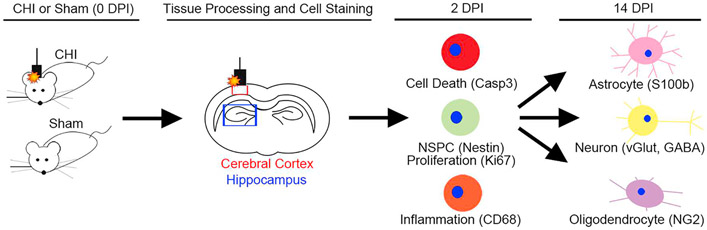
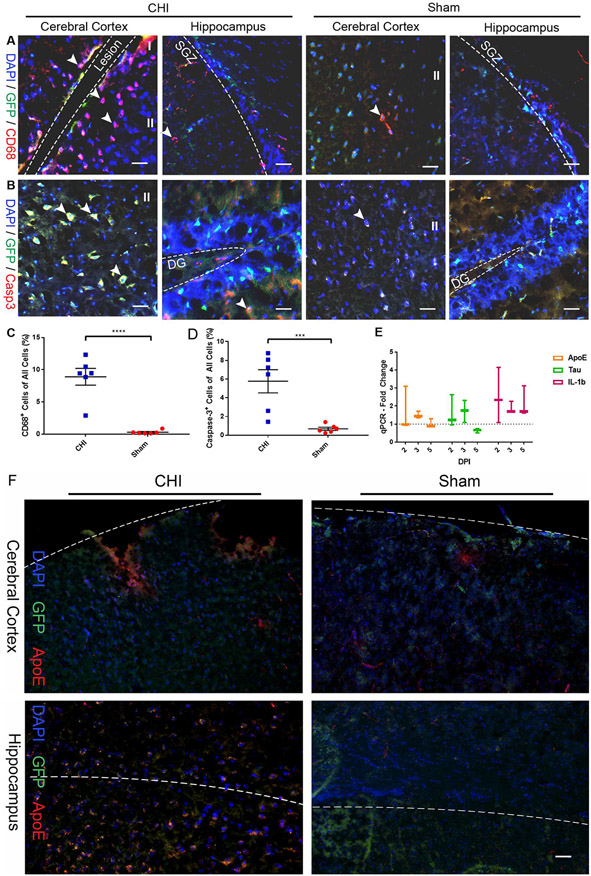
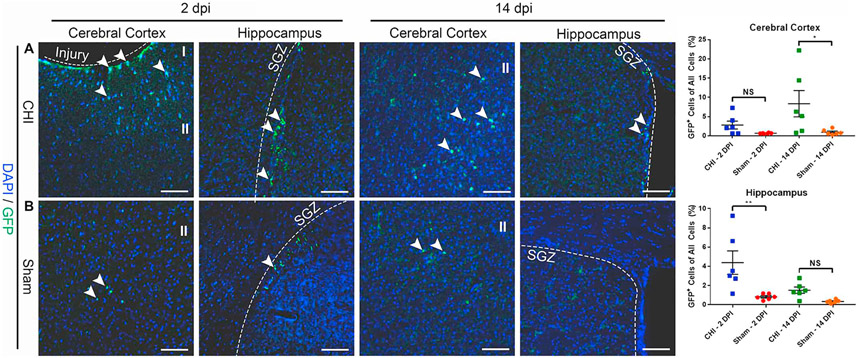
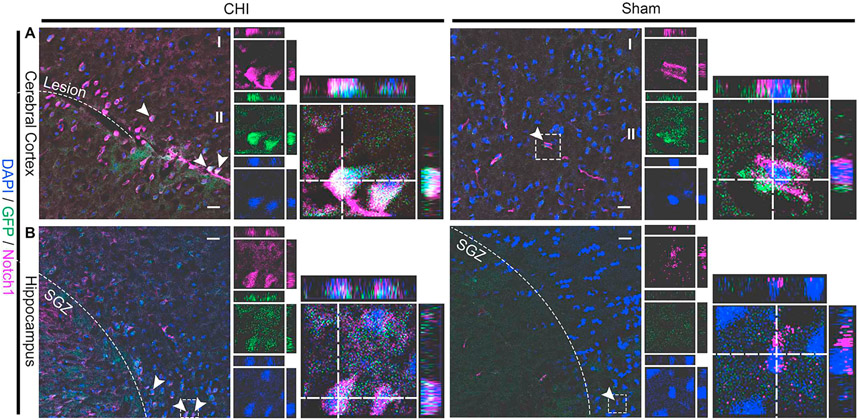
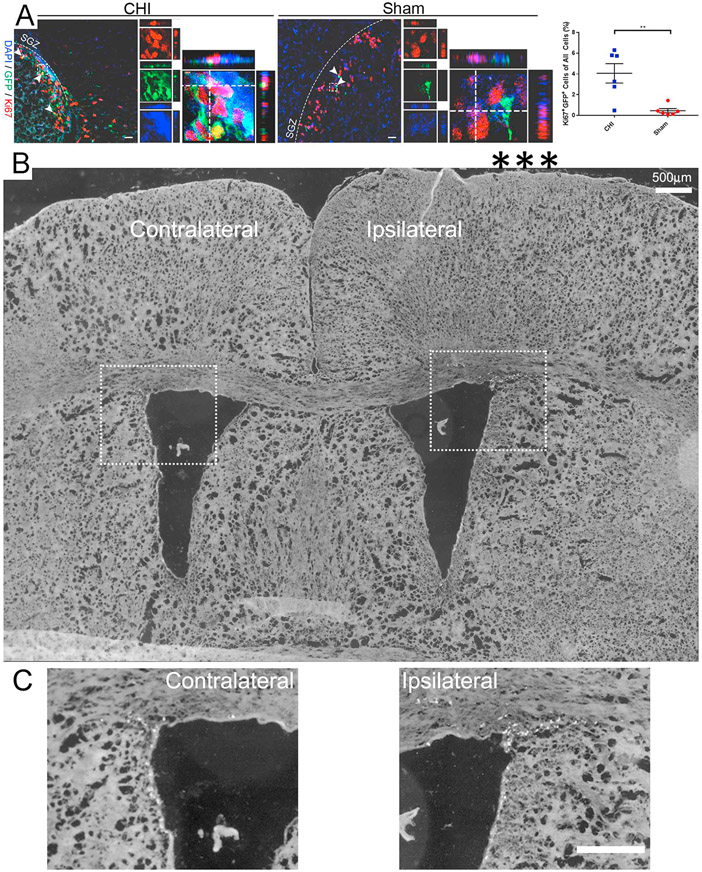
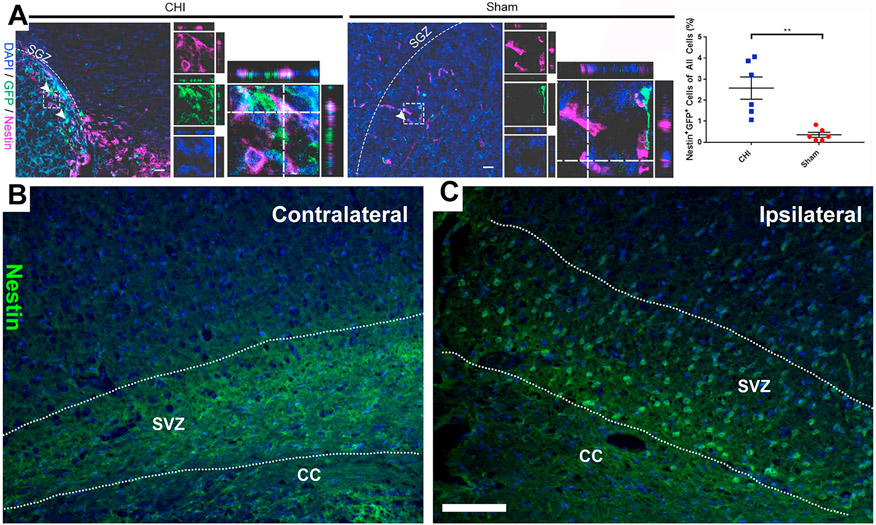
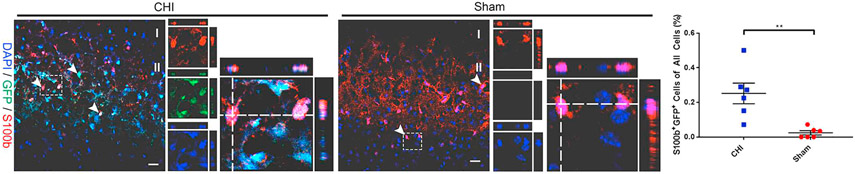
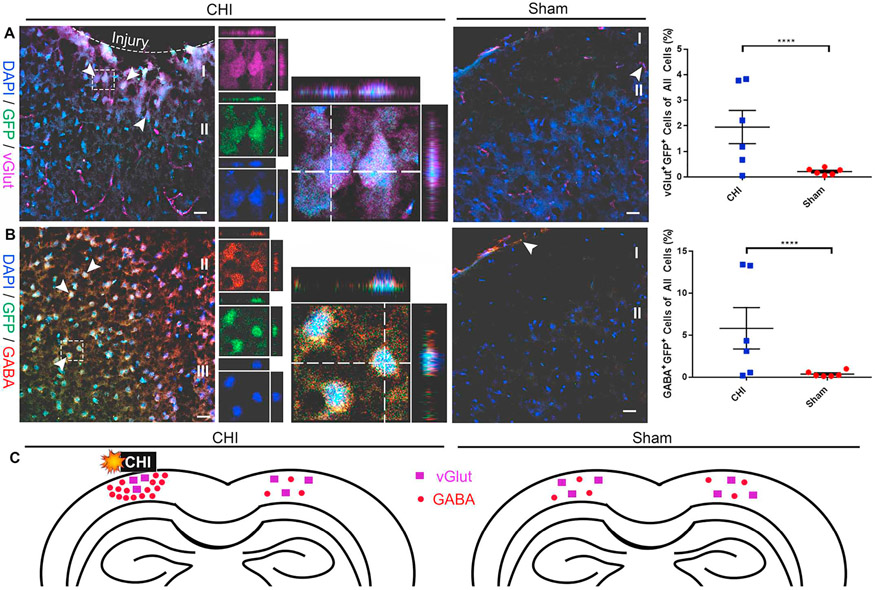
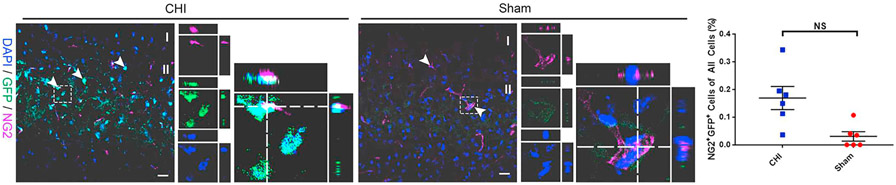
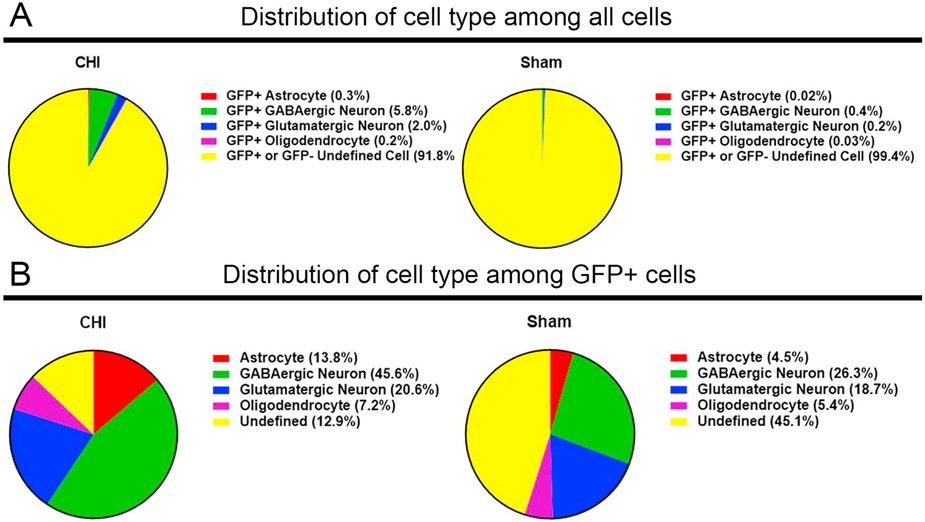
Traumatic brain injury (TBI) is a leading cause of death and disability in the US. Neural stem/progenitor cells (NSPCs) persist in the adult brain and represent a potential cell source for tissue regeneration and wound healing after injury. The Notch signaling pathway is critical for embryonic development and adult brain injury response. However, the specific role of Notch signaling in the injured brain is not well characterized. Our previous study has established a Notch1CR2-GFP reporter mouse line in which the Notch1CR2 enhancer directs GFP expression in NSPCs and their progeny. In this study, we performed closed head injury (CHI) in the Notch1CR2-GFP mice to study the response of injury-activated NSPCs. We show that CHI induces neuroinflammation, cell death, and the expression of typical TBI markers (e.g., ApoE, Il1b, and Tau), validating the animal model. In addition, CHI induces cell proliferation in GFP+ cells expressing NSPC markers, e.g., Notch1 and Nestin. A significant higher percentage of GFP+ astrocytes and GABAergic neurons was observed in the injured brain, with no significant change in oligodendrocyte lineage between the CHI and sham animal groups. Since injury is known to activate astrogliosis, our results suggest that injury-induced GFP+ NSPCs preferentially differentiate into GABAergic neurons. Our study establishes that Notch1CR2-GFP transgenic mouse is a useful tool for the study of NSPC behavior in vivo after TBI. Unveiling the potential of NSPCs response to TBI (e.g., proliferation and differentiation) will identify new therapeutic strategy for the treatment of brain trauma.
创伤性脑损伤(TBI)是美国导致死亡和残疾的主要原因。神经干/祖细胞(NSPCs)在成年大脑中持续存在,代表了受伤后组织再生和伤口愈合的潜在细胞来源。Notch 信号通路对于胚胎发育和成年脑损伤反应至关重要。然而,Notch 信号在受损大脑中的具体作用尚未得到很好的描述。我们之前的研究建立了 Notch1CR2-GFP 报告小鼠品系,其中 Notch1CR2 增强子指导 NSPCs 及其祖细胞中的 GFP 表达。在这项研究中,我们对 Notch1CR2-GFP 小鼠进行了闭合性颅脑损伤(CHI),以研究损伤激活的 NSPCs 的反应。我们表明,CHI 诱导神经炎症、细胞死亡和典型 TBI 标志物(例如 ApoE、Il1b 和 Tau)的表达,验证了动物模型。此外,CHI 诱导表达 NSPC 标志物(例如 Notch1 和 Nestin)的 GFP+细胞增殖。在受伤大脑中观察到 GFP+星形胶质细胞和 GABA 能神经元的比例显著增加,而 CHI 和假手术动物组之间少突胶质细胞谱系没有明显变化。由于损伤已知会激活星形胶质细胞增生,我们的结果表明,损伤诱导的 GFP+NSPC 优先分化为 GABA 能神经元。我们的研究表明,Notch1CR2-GFP 转基因小鼠是研究 TBI 后体内 NSPC 行为的有用工具。揭示 NSPC 对 TBI 的反应潜力(例如增殖和分化)将为脑创伤的治疗确定新的治疗策略。