Department of Otolaryngology-Head and Neck Surgery, Virginia Merrill Bloedel Hearing Research Center, University of Washington, Seattle, WA, USA.
Department of Pharmacology, Southern Illinois University School of Medicine, Springfield, IL, USA; Department of Otolaryngology, Southern Illinois University School of Medicine, Springfield, IL, USA.
Hear Res. 2020 Jan;385:107838. doi: 10.1016/j.heares.2019.107838. Epub 2019 Nov 7.
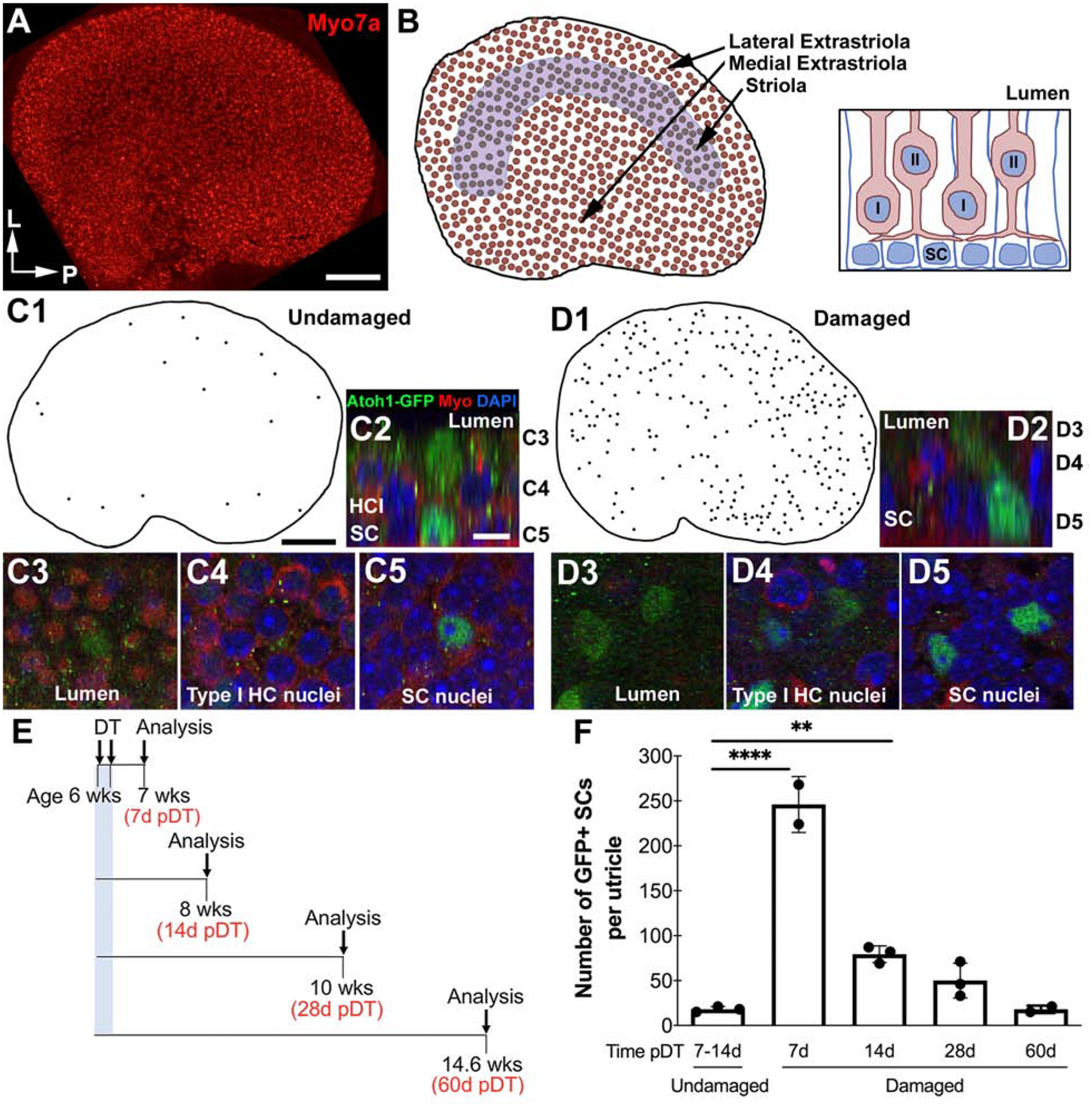
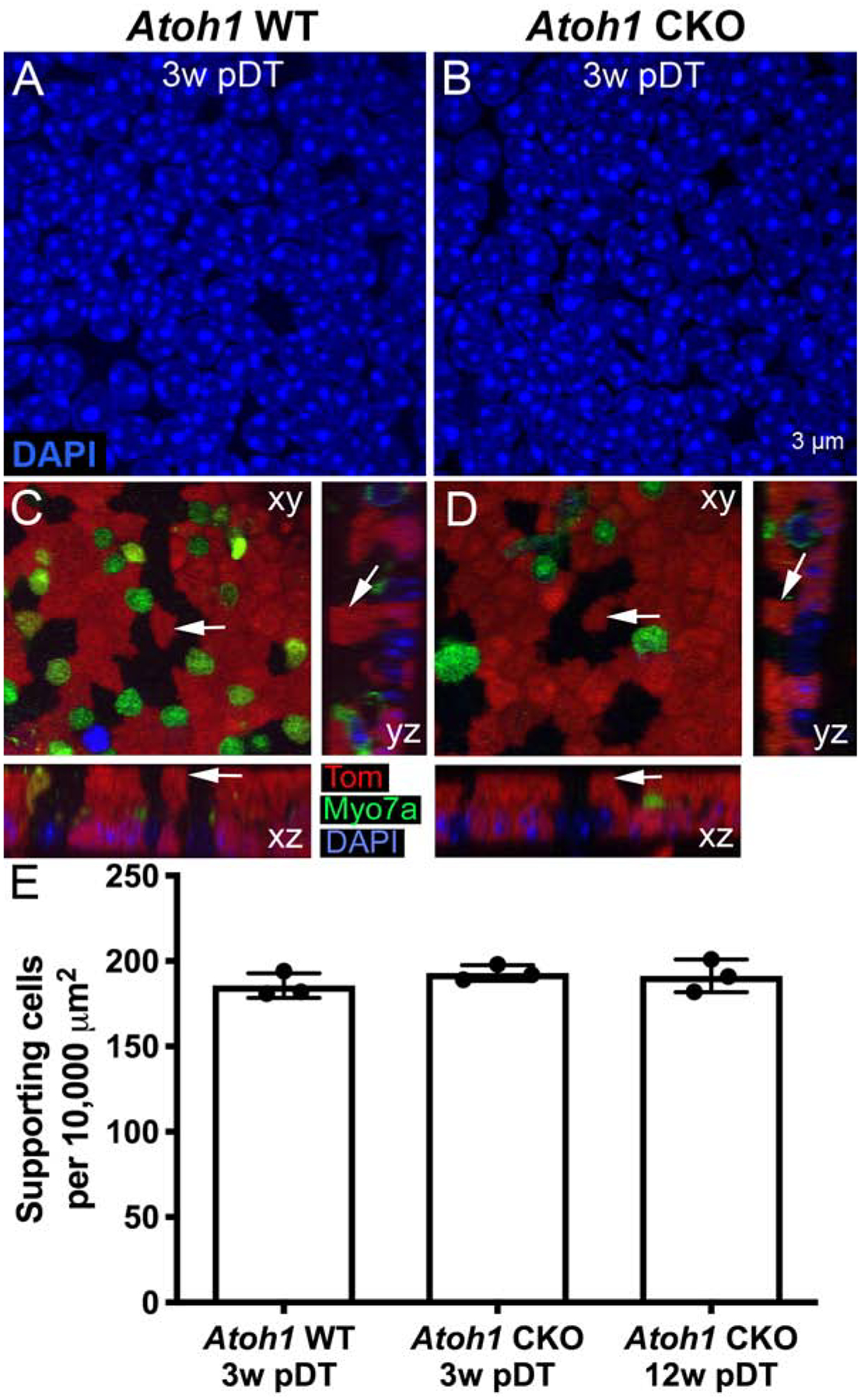
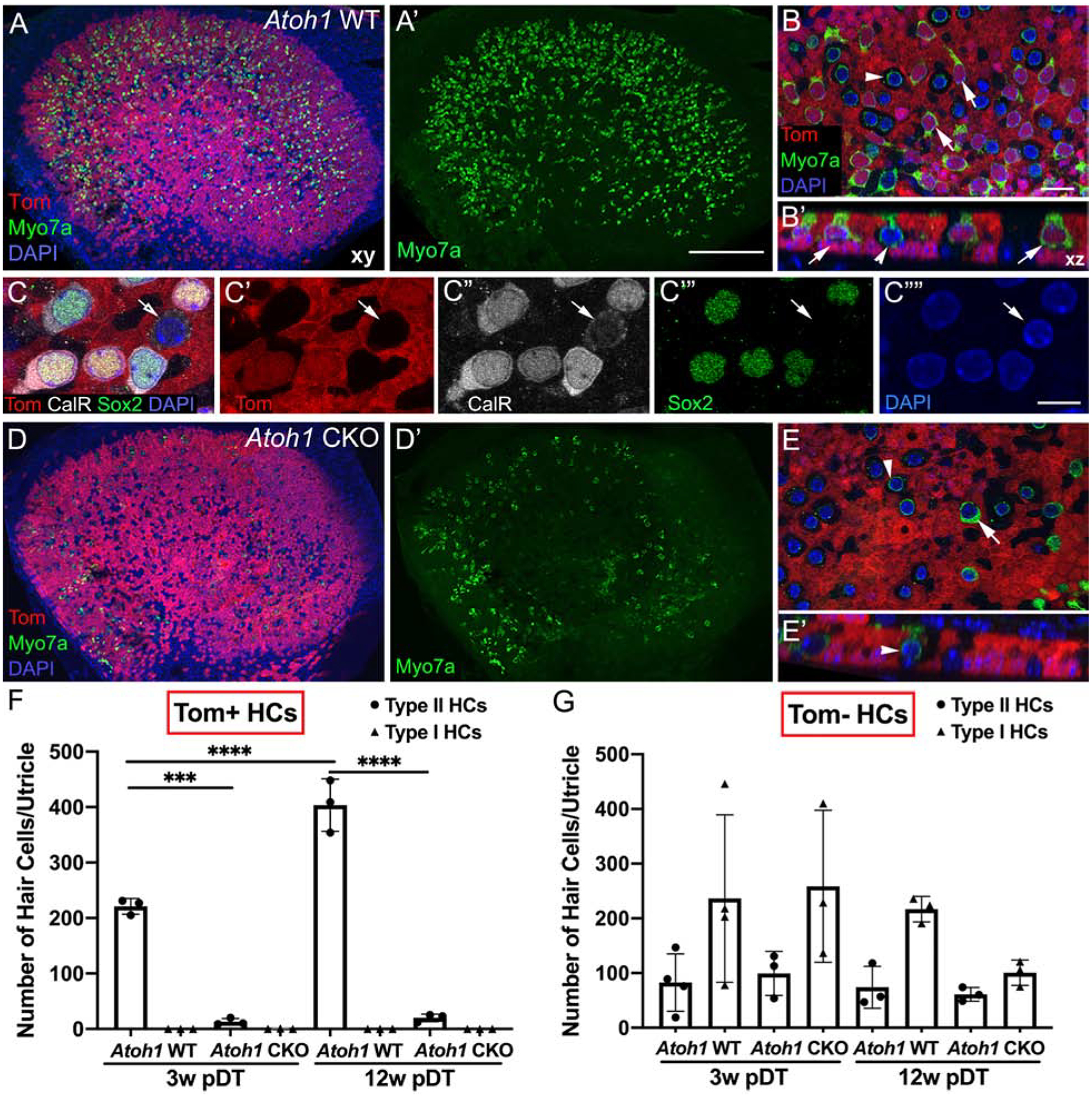
In amniotes, head movements are encoded by two types of vestibular hair cells (type I and type II) with unique morphology, physiology, and innervation. After hair cell destruction in mature rodents, supporting cells regenerate some type II hair cells, but no type I hair cells are replaced. The transcription factor Atoh1 is required for hair cell development, and Atoh1 is upregulated in supporting cells, the hair cell progenitors, in mature chickens and mice following hair cell damage. We investigated whether Atoh1 is required for type II hair cell regeneration in adult mice after genetic ablation of hair cells. First, we used a knock-in Atoh1 reporter to demonstrate that supporting cells in the utricle, a vestibular organ that detects linear acceleration of the head, upregulate Atoh1 expression by 7 days after hair cell destruction was initiated. Next, we labeled supporting cells prior to damage and fate-mapped them over time to test whether conditional deletion of Atoh1 from supporting cells prevented them from converting into hair cells after damage. In mice with normal Atoh1 expression, fate-mapped supporting cells in the adult utricle gave rise to hundreds of type II hair cells after hair cell destruction, but they did not form new type I hair cells. By contrast, mice with Atoh1 deletion prior to hair cell damage had only 10-20 fate-mapped type II hair cells per utricle at 3 weeks post-damage, and numbers did not change at 12 weeks after hair cell destruction. Supporting cells had normal cell shape and nuclear density up to 12 weeks after Atoh1 deletion. Similar observations were made in two other vestibular organs, the saccule and the lateral ampulla. Our findings demonstrate that Atoh1 is necessary in adult mouse supporting cells for regeneration of type II vestibular hair cells and that deletion of Atoh1 from supporting cells prior to damage does not appear to induce supporting cells to die or to proliferate.
在羊膜动物中,头部运动由具有独特形态、生理学和神经支配的两种前庭毛细胞(I 型和 II 型)编码。在成熟啮齿动物的毛细胞受损后,支持细胞会再生一些 II 型毛细胞,但不会替代任何 I 型毛细胞。转录因子 Atoh1 是毛细胞发育所必需的,并且在成熟鸡和鼠中,Atoh1 在毛细胞受损后会在支持细胞(毛细胞祖细胞)中上调。我们研究了在成熟鼠中通过基因敲除毛细胞后,Atoh1 是否对成年鼠的 II 型毛细胞再生是必需的。首先,我们使用了一个敲入 Atoh1 报告基因,以证明在启动毛细胞破坏后 7 天,前庭器官(检测头部线性加速度的器官)中的支持细胞上调 Atoh1 的表达。接下来,我们在损伤前标记支持细胞,并随时间追踪它们的命运,以测试在支持细胞中条件性缺失 Atoh1 是否阻止它们在损伤后转化为毛细胞。在具有正常 Atoh1 表达的鼠中,成年鼠前庭器官中的命运标记支持细胞在毛细胞破坏后会产生数百个 II 型毛细胞,但不会形成新的 I 型毛细胞。相比之下,在毛细胞损伤前缺失 Atoh1 的鼠在损伤后 3 周每个前庭器官中只有 10-20 个命运标记的 II 型毛细胞,并且在毛细胞破坏后 12 周时数量没有变化。在 Atoh1 缺失后,支持细胞的细胞形状和核密度在 12 周内保持正常。在另外两个前庭器官,即囊和外侧壶腹,也观察到了类似的结果。我们的研究结果表明,Atoh1 在成年鼠支持细胞中是再生 II 型前庭毛细胞所必需的,并且在损伤前从支持细胞中缺失 Atoh1 似乎不会诱导支持细胞死亡或增殖。