Department of General Surgery, Huashan Hospital, Fudan University, 12 Urumqi Road (M), Shanghai 200040, China.
Key Laboratory of Medical Molecular Virology (MOE & MOH), Institutes of Biomedical Sciences, Fudan University, 138 Yi Xue Yuan Road, Shanghai 200032, China.
Neoplasia. 2020 Jan;22(1):1-9. doi: 10.1016/j.neo.2019.08.002. Epub 2019 Nov 18.
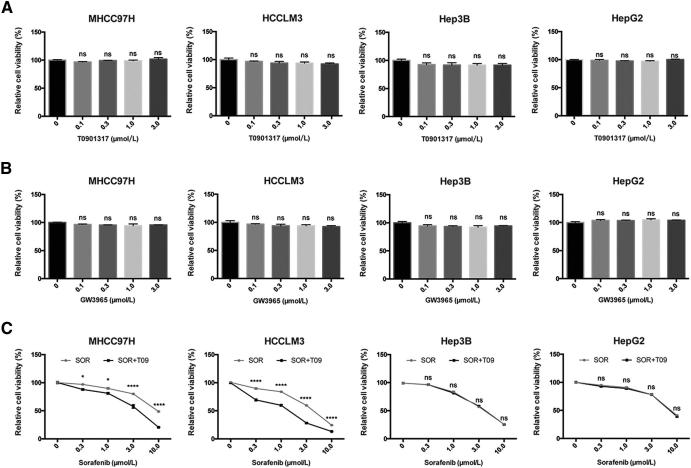
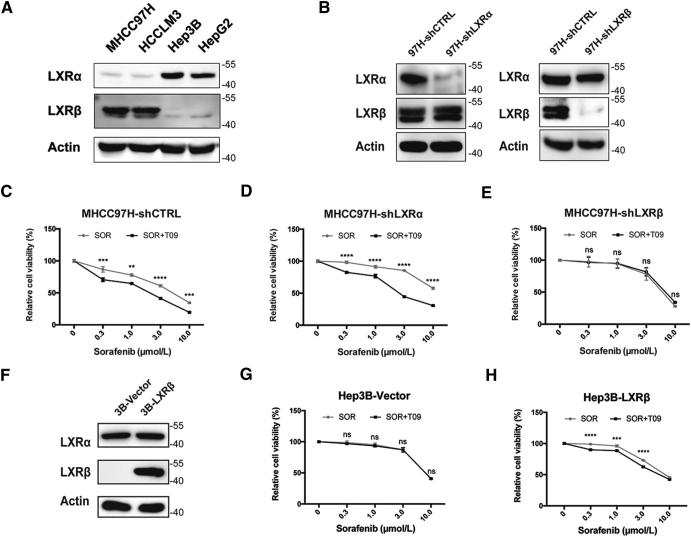
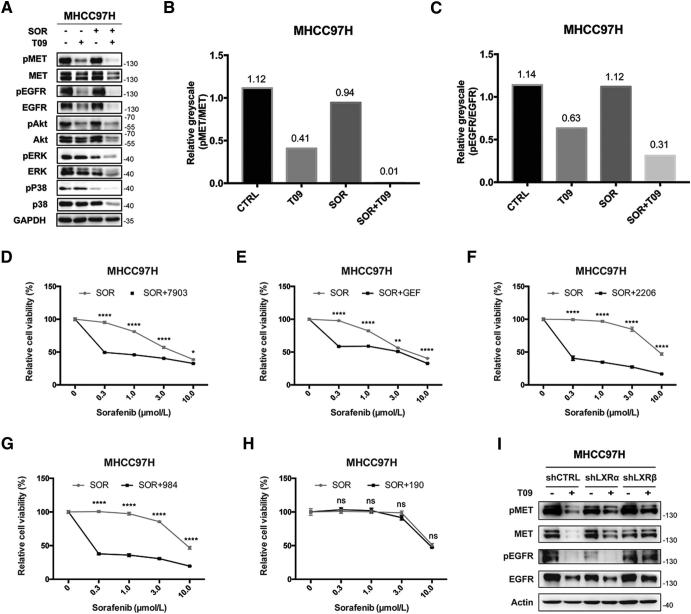
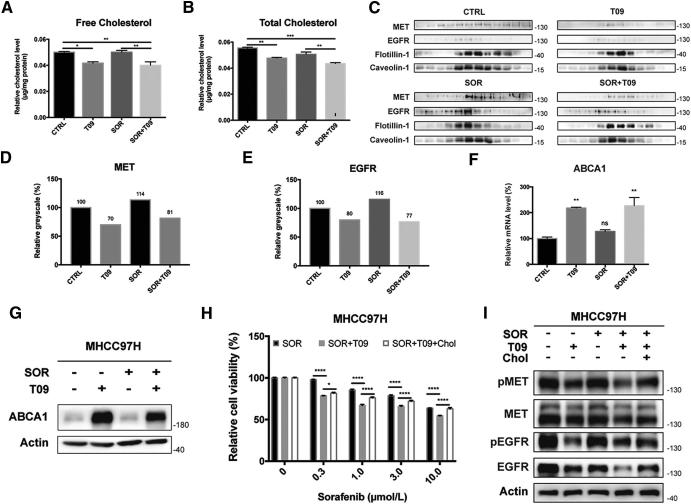
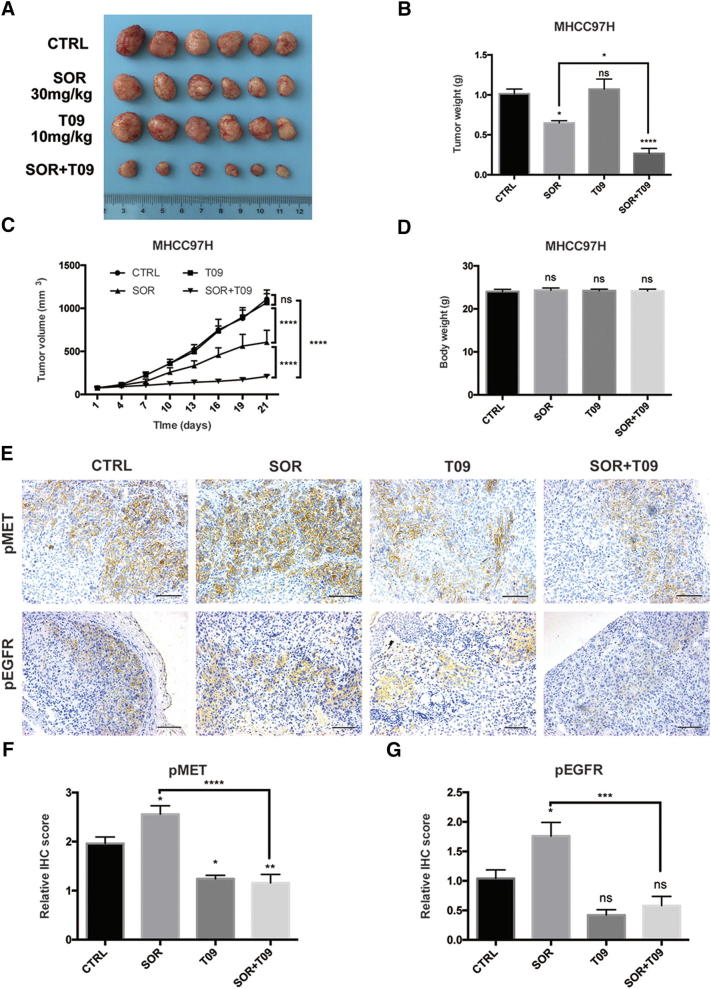
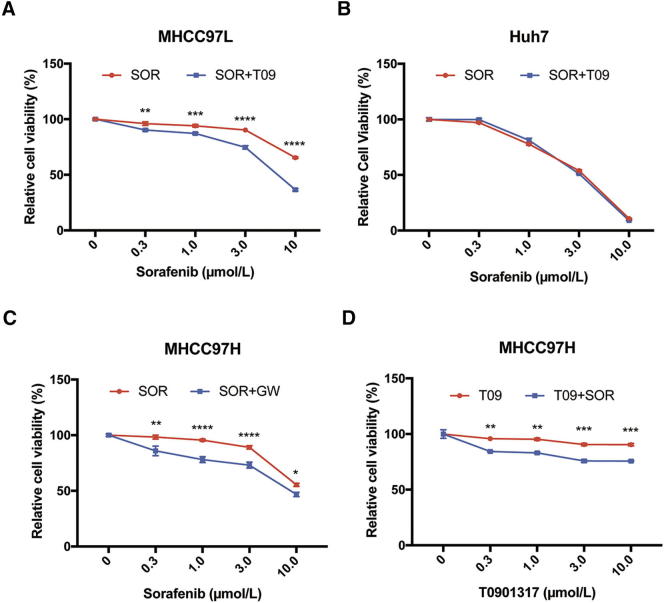
Sorafenib is the first approved systemic therapy for advanced hepatocellular carcinoma (HCC) and is the first-line choice in clinic. Sustained activation of receptor tyrosine kinases (RTKs) is associated with low efficacy of sorafenib in HCC. Activation of liver X receptor (LXR) has been reported to inhibit some RTKs. In this study, we found that the LXR agonist enhanced the anti-tumor activity of sorafenib in a subset of HCC cells with high LXR-β/α gene expression ratio. Mechanically, the activation of LXR suppressed sorafenib dependent recruitment of MET and epidermal growth factor receptor (EGFR) in lipid rafts through cholesterol efflux. Our findings imply that LXR agonist can serve as a potential sensitizer to enhance the anti-tumor effect of sorafenib.
索拉非尼是首个被批准用于治疗晚期肝细胞癌(HCC)的系统治疗药物,也是临床一线治疗药物。受体酪氨酸激酶(RTKs)的持续激活与索拉非尼在 HCC 中的低疗效有关。已有报道称肝 X 受体(LXR)的激活可以抑制一些 RTKs。在这项研究中,我们发现 LXR 激动剂增强了高 LXR-β/α 基因表达比值的 HCC 细胞亚群中索拉非尼的抗肿瘤活性。从机制上讲,LXR 的激活通过胆固醇外流抑制了索拉非尼依赖性 MET 和表皮生长因子受体(EGFR)在脂筏中的募集。我们的研究结果表明,LXR 激动剂可以作为一种潜在的增敏剂,增强索拉非尼的抗肿瘤作用。