
构建作为血管狭窄模型的双锥形微芯片。
Engineering a Bi-Conical Microchip as Vascular Stenosis Model.
作者信息
Li Yan, Wang Jianchun, Wan Wei, Chen Chengmin, Wang Xueying, Zhao Pei, Hou Yanjin, Tian Hanmei, Wang Jianmei, Nandakumar Krishnaswamy, Wang Liqiu
机构信息
Energy Research Institute, Qilu University of Technology (Shandong Academy of Sciences), Jinan 250014, China.
Key Laboratory of Interfacial Reaction & Sensing Analysis in Universities of Shandong, School of Chemistry and Chemical Engineering, University of Jinan, Jinan 250022, China.
出版信息
Micromachines (Basel). 2019 Nov 18;10(11):790. doi: 10.3390/mi10110790.
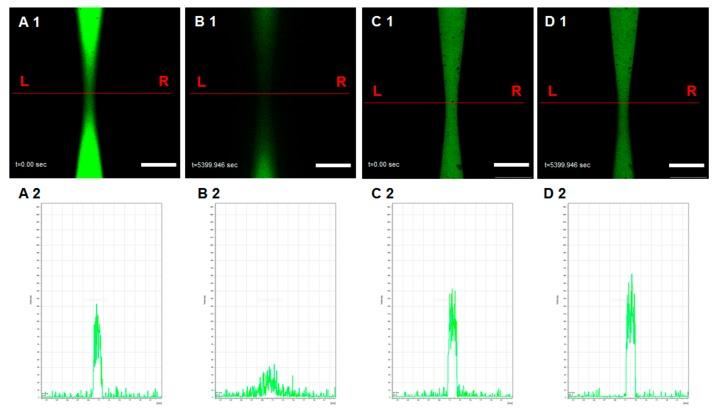
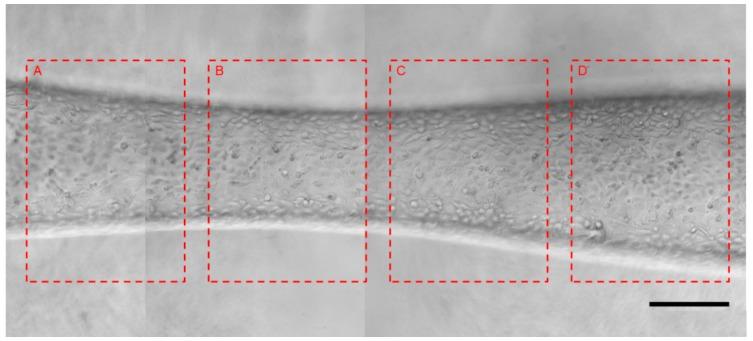
Vascular stenosis is always associated with hemodynamic changes, especially shear stress alterations. Herein, bi-conical shaped microvessels were developed through flexibly and precisely controlled templated methods for hydrogel blood-vessel-like microchip. The blood-vessel-like microvessels demonstrated tunable dimensions, perfusable ability, and good cytocompatibility. The microchips showed blood-vessel-like lumens through fine embeddedness of human umbilical vein endothelial cells (HUVECs) on the interior surface of hydrogel microchannels, which closely reproduced the morphology and functions of human blood vessels. In the gradual narrowing region of bi-conical shape, fluid flow generated wall shear stress, which caused cell morphology variations. Wall shear rates at the gradual narrowing region were simulated by FLUENT software. The results showed that our microchannels qualified for performance as a vascular stenosis-like model in evaluating blood hydrodynamics. In general, our blood-vessel-on-a-chip could offer potential applications in the prevention, diagnosis, and therapy of arterial thrombosis.
血管狭窄总是与血流动力学变化相关,尤其是剪切应力改变。在此,通过灵活且精确控制的模板法制备了用于水凝胶血管样微芯片的双锥形微血管。这种血管样微血管展现出可调节的尺寸、灌注能力以及良好的细胞相容性。通过将人脐静脉内皮细胞(HUVECs)精细地包埋在水凝胶微通道的内表面,微芯片呈现出血管样管腔,这紧密再现了人体血管的形态和功能。在双锥形的逐渐变窄区域,流体流动产生壁面剪切应力,导致细胞形态发生变化。利用FLUENT软件模拟了逐渐变窄区域的壁面剪切速率。结果表明,我们的微通道具备作为血管狭窄样模型来评估血液流体动力学的性能。总体而言,我们的芯片上血管在动脉血栓形成的预防、诊断和治疗方面具有潜在应用价值。





 Zotero 插件