The Nossal Institute for Global Health, The University of Melbourne, Melbourne 3010, Australia.
WHO Collaborating Centre on Implementation Research for Prevention & Control of NCDs, Melbourne 3010, Australia.
Int J Environ Res Public Health. 2019 Nov 19;16(22):4578. doi: 10.3390/ijerph16224578.
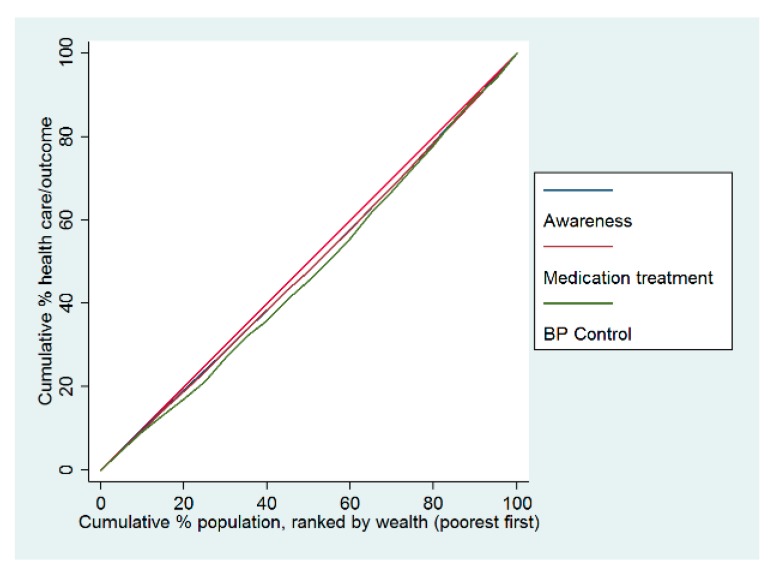
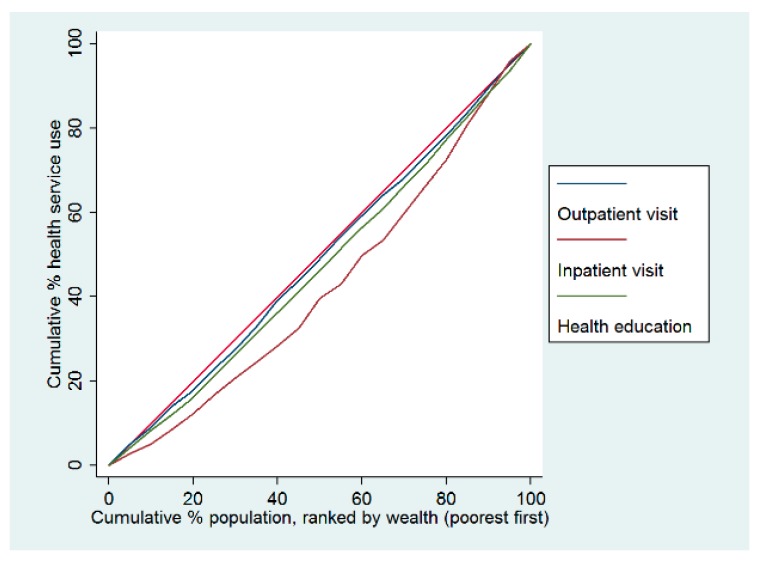
Hypertension is one of the most significant and common risk factors for cardiovascular disease, yet it remains poorly controlled in China. This study aims to examine trends and socioeconomic inequalities in the management of hypertension between 2011 and 2015 in China and to investigate the association between antihypertensive medication treatment and reduction of blood pressure, using nationally representative data. Concentration curve and concentration index were used to assess socioeconomic-related inequalities in hypertension care and health service utilisation. The fixed-effects analysis was performed to measure the impact of medication treatment on reduction of blood pressure among people with hypertension by using linear regression models. : Among hypertensive individuals, there were growing trends in the rates of awareness and treatment from 55.87% and 48.44% in 2011, to 68.31% in 2013 and 61.97% in 2015, respectively. The proportion of hypertension control was still below 30%. The fixed-effects models indicated that medication treatment was statistically significant and associated with the patients' systolic blood pressure (β: -13.483; 95% CI: -15.672, -11.293) and diastolic blood pressure (β: -5.367; 95% CI: -6.390, -4.344). China has made good progress in the hypertension diagnosis, medication treatment and coverage of health services over the last 10 years; however, pro-rich inequalities in hypertension care still exist, and there is considerable progress to be made in the prevention, treatment and effective control of hypertension.
高血压是心血管疾病最重要和最常见的危险因素之一,但在中国,高血压的控制仍然很差。本研究旨在考察 2011 年至 2015 年期间中国高血压管理的趋势和社会经济不平等,并利用全国代表性数据探讨降压药物治疗与血压降低之间的关系。使用集中曲线和集中指数评估高血压护理和卫生服务利用方面的社会经济相关不平等。使用线性回归模型,通过固定效应分析来衡量药物治疗对高血压患者血压降低的影响。在高血压患者中,知晓率和治疗率呈上升趋势,从 2011 年的 55.87%和 48.44%分别上升到 2013 年的 68.31%和 2015 年的 61.97%。高血压控制率仍低于 30%。固定效应模型表明,药物治疗与患者的收缩压(β:-13.483;95%CI:-15.672,-11.293)和舒张压(β:-5.367;95%CI:-6.390,-4.344)均有统计学意义。过去 10 年来,中国在高血压诊断、药物治疗和卫生服务覆盖方面取得了良好进展;然而,高血压护理方面仍然存在富裕程度不平等的问题,在高血压的预防、治疗和有效控制方面仍有很大的进步空间。