Department of Pediatrics, Gyeongsang National University College of Medicine, Jinju, South Korea.
Gyeongsang Institute of Health Science, Gyeongsang National University College of Medicine, Jinju, South Korea.
BMC Pediatr. 2019 Nov 22;19(1):453. doi: 10.1186/s12887-019-1833-8.
Congenital hypothyroidism (CH) is one of the most common endocrine diseases in childhood. A significant proportion of CH cases are transient, but the risk factors for permanent CH (PCH) are not yet well established. The current guidelines suggest using levothyroxine until the age of 3 years, but some studies suggest the possibility of earlier discontinuation. However, few, if any, studies have followed up on the results of early discontinuation. This study aimed to identify predictive factors of transient CH among infants with CH. We also investigated the results in patients who underwent a trial of early discontinuation.
We gathered data regarding infants diagnosed with CH between July 2005 and July 2015 by retrospective chart review. Those with aplastic, hypoplastic or ectopic glands on thyroid ultrasonography or scan were excluded. Among them, early discontinuation subgroup was defined as those who discontinued levothyroxine before 30 months of age.
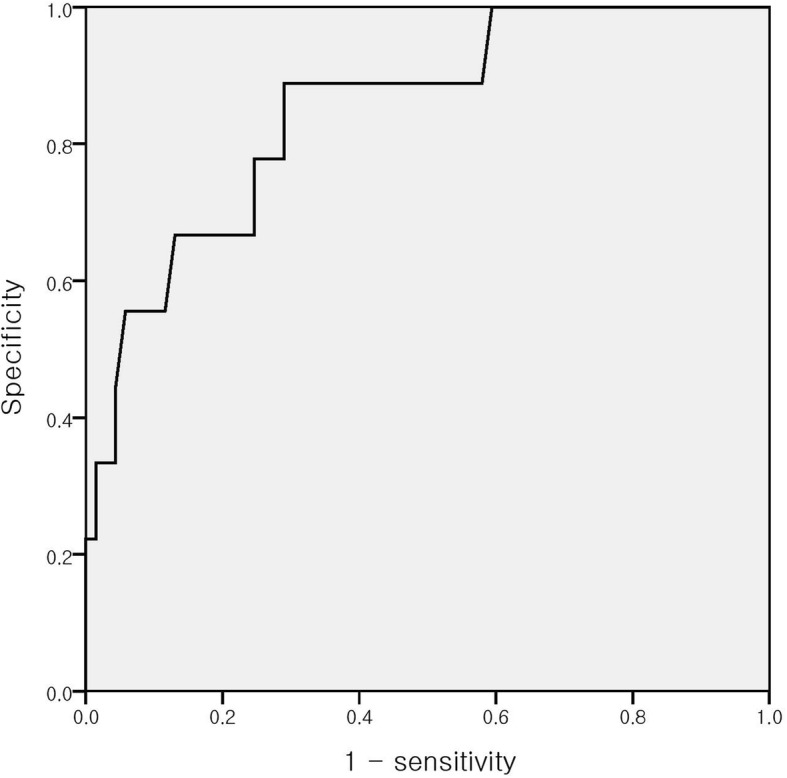
From the 80 infants (40 males, 40 females) enrolled in this study, 51 were preterm. Nine (11.3%) were diagnosed with PCH. Compared with transient cases, those with PCH were on higher levothyroxine dose at discontinuation (4.3 vs 2.9 μg/kg, P < 0.001). There was no difference in the proportion of permanent cases between preterm and full-term groups. In preterm group,infants with PCH required higher levothyroxine dose at discontinuation than those with transient CH (3.8 vs 2.5 μg/kg, P = 0.018). Levothyroxine discontinuation at a dose of 2.86 μg/kg could suggest PCH (sensitivity, 88.9%; specificity, 71.0%). Among the 9 patients who underwent a trial of early discontinuation, 8 successfully discontinued levothyroxine.
The majority of CH patients discontinued levothyroxine successfully, including those who underwent a trial of early discontinuation. Higher levothyroxine dose at the time of discontinuation was found to be a predictive factor for PCH.
先天性甲状腺功能减退症(CH)是儿童期最常见的内分泌疾病之一。相当一部分 CH 病例是一过性的,但永久性 CH(PCH)的危险因素尚未明确。目前的指南建议使用左甲状腺素治疗至 3 岁,但一些研究表明可能更早停药。然而,很少有研究(如果有的话)对早期停药的结果进行随访。本研究旨在确定 CH 婴儿中一过性 CH 的预测因素。我们还研究了进行早期停药试验的患者的结果。
我们通过回顾性病历审查收集了 2005 年 7 月至 2015 年 7 月期间诊断为 CH 的婴儿的数据。在甲状腺超声或扫描显示腺体发育不良、发育不全或异位的患者被排除在外。其中,早期停药亚组定义为在 30 个月龄之前停用左甲状腺素的患者。
本研究纳入了 80 名婴儿(男 40 名,女 40 名),其中 51 名为早产儿。9 名(11.3%)被诊断为 PCH。与一过性病例相比,PCH 患者停药时左甲状腺素剂量更高(4.3 比 2.9μg/kg,P<0.001)。早产儿和足月儿永久性病例的比例无差异。在早产儿组中,PCH 患者停药时需要更高的左甲状腺素剂量(3.8 比 2.5μg/kg,P=0.018)。停药时左甲状腺素剂量为 2.86μg/kg 可提示 PCH(敏感性 88.9%,特异性 71.0%)。在 9 名进行早期停药试验的患者中,8 名成功停用了左甲状腺素。
大多数 CH 患者成功停用了左甲状腺素,包括进行早期停药试验的患者。停药时左甲状腺素剂量较高是 PCH 的预测因素。