Department of Gastrosurgical Research and Education, Institute of Clinical Sciences, Sahlgrenska Academy, Sahlgrenska University Hospital/Sahlgrenska, University of Gothenburg, Gothenburg, Sweden
Department of Surgery, Institute of Clinical Sciences, Sahlgrenska Academy, Sahlgrenska University Hospital/Östra, University of Gothenburg, Gothenburg, Sweden.
Gut. 2020 Aug;69(8):1423-1431. doi: 10.1136/gutjnl-2019-319372. Epub 2019 Nov 21.
Food intake normally stimulates release of satiety and insulin-stimulating intestinal hormones, such as glucagon-like peptide (GLP)-1. This response is blunted in obese insulin resistant subjects, but is rapidly restored following Roux-en-Y gastric bypass (RYGB) surgery. We hypothesised this to be a result of the metabolic changes taking place in the small intestinal mucosa following the anatomical rearrangement after RYGB surgery, and aimed at identifying such mechanisms.
Jejunal mucosa biopsies from patients undergoing RYGB surgery were retrieved before and after very-low calorie diet, at time of surgery and 6 months postoperatively. Samples were analysed by global protein expression analysis and Western blotting. Biological functionality of these findings was explored in mice and enteroendocrine cells (EECs) primary mouse jejunal cell cultures.
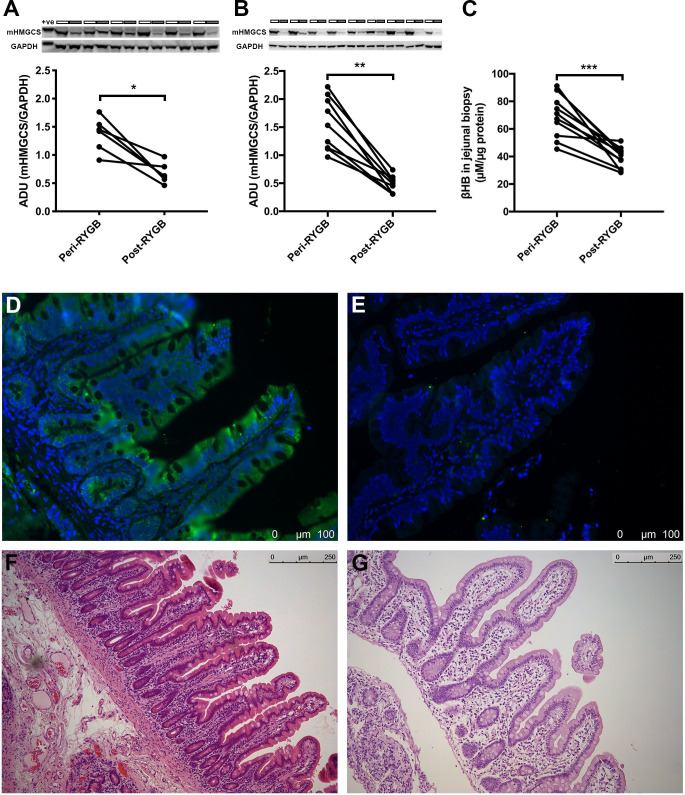
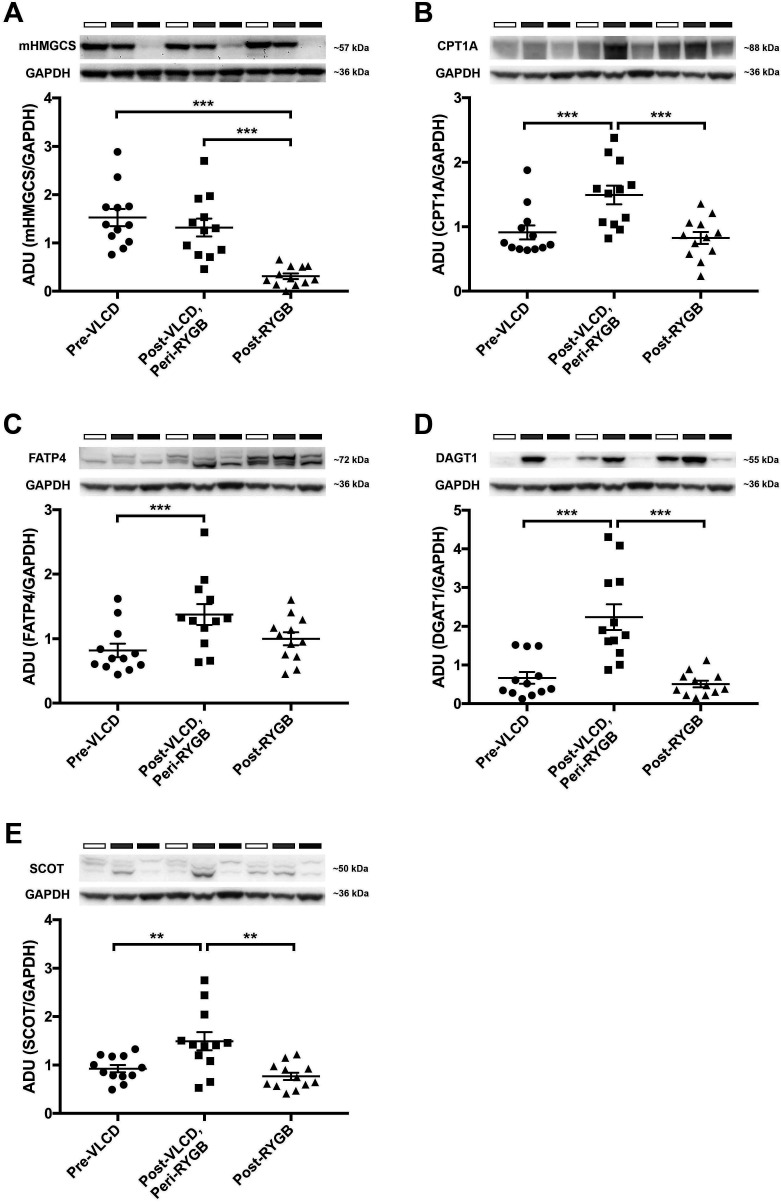
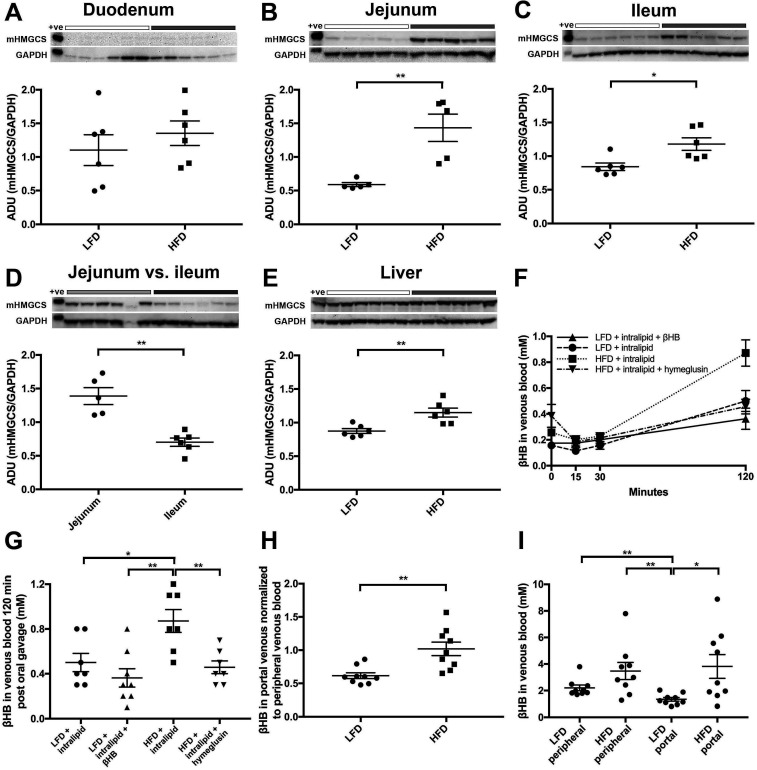
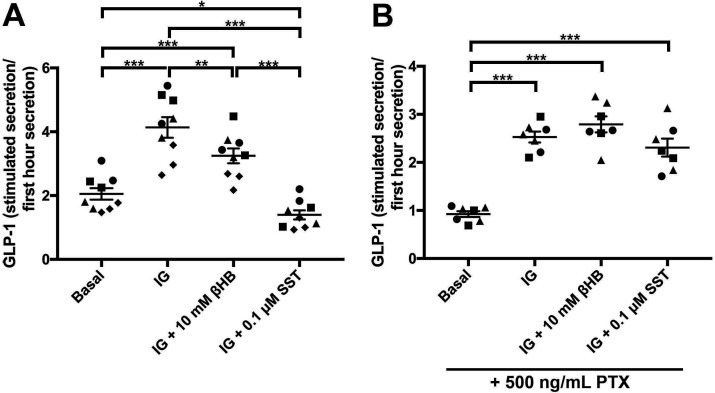
The most prominent change found after RYGB was decreased jejunal expression of the rate-limiting ketogenic enzyme mitochondrial 3-hydroxy-3-methylglutaryl-CoA synthase (mHMGCS), corroborated by decreased ketone body levels. In mice, prolonged high-fat feeding induced the expression of mHMGCS and functional ketogenesis in jejunum. The effect of ketone bodies on gut peptide secretion in EECs showed a ∼40% inhibition of GLP-1 release compared with baseline.
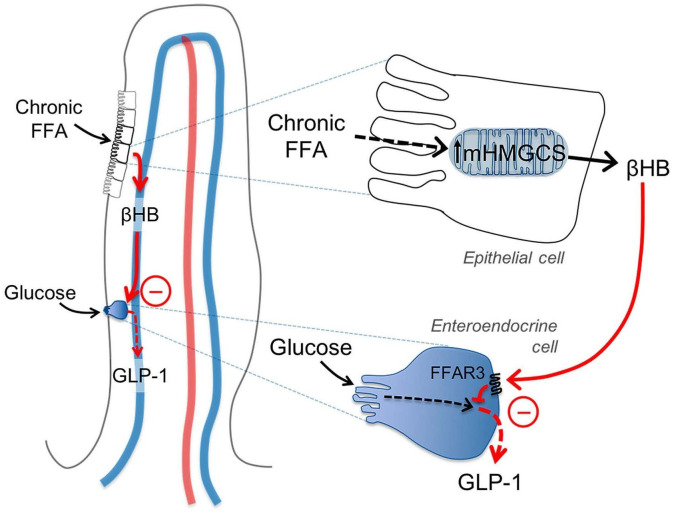
Intestinal ketogenesis is induced by high-fat diet and inhibited by RYGB surgery. In cell culture, ketone bodies inhibited GLP-1 release from EECs. Thus, we suggest that this may be a mechanism by which RYGB can remove the inhibitory effect of ketone bodies on EECs, thereby restituting the responsiveness of EECs resulting in increased meal-stimulated levels of GLP-1 after surgery.
食物摄入通常会刺激饱腹感和胰岛素刺激的肠道激素的释放,例如胰高血糖素样肽 (GLP)-1。这种反应在肥胖和胰岛素抵抗的受试者中减弱,但在 Roux-en-Y 胃旁路 (RYGB) 手术后迅速恢复。我们假设这是 RYGB 手术后小肠黏膜发生代谢变化的结果,并旨在确定这种机制。
从接受 RYGB 手术的患者中获取 RYGB 手术前和极低卡路里饮食后、手术时和手术后 6 个月的空肠黏膜活检。通过全蛋白表达分析和 Western blot 分析对样本进行分析。在小鼠和肠内分泌细胞 (EEC) 原代小鼠空肠细胞培养物中探索这些发现的生物学功能。
RYGB 后发现的最显著变化是空肠中限速酮生成酶线粒体 3-羟-3-甲基戊二酰辅酶 A 合酶 (mHMGCS) 的表达减少,酮体水平也相应降低。在小鼠中,长期高脂肪喂养诱导 mHMGCS 的表达,并使空肠产生功能性酮体生成。与基线相比,酮体对 EEC 肠道肽分泌的影响使 GLP-1 释放抑制约 40%。
高脂肪饮食诱导肠道酮体生成,RYGB 手术抑制其生成。在细胞培养中,酮体抑制 EEC 中 GLP-1 的释放。因此,我们认为这可能是 RYGB 可以去除酮体对 EEC 的抑制作用的一种机制,从而恢复 EEC 的反应性,导致手术后进餐刺激的 GLP-1 水平增加。