Department of Bioengineering, Harbin Institute of Technology, Weihai, 264209, Shandong, China.
Department of Bioengineering, Harbin Institute of Technology, Weihai, 264209, Shandong, China.
Redox Biol. 2020 Jan;28:101381. doi: 10.1016/j.redox.2019.101381. Epub 2019 Nov 11.
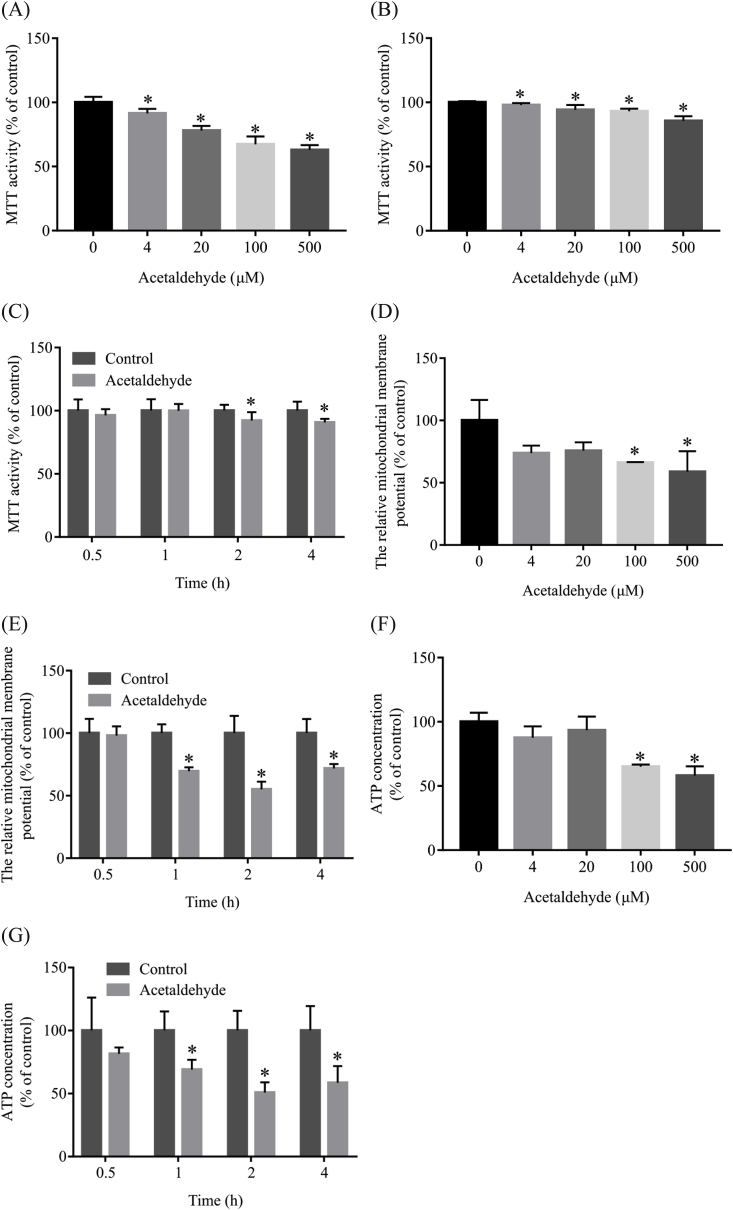
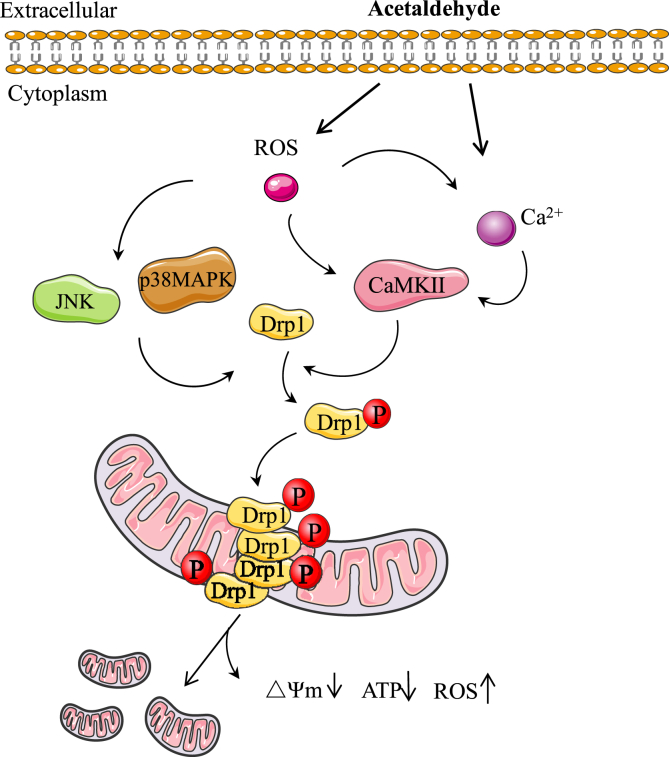
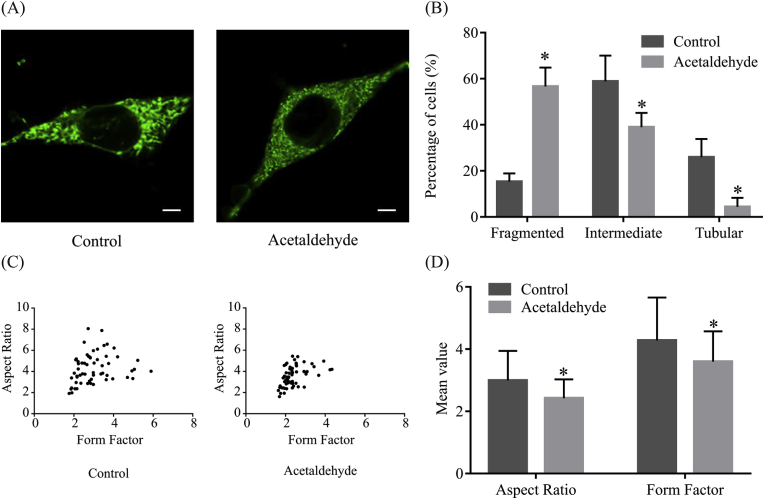
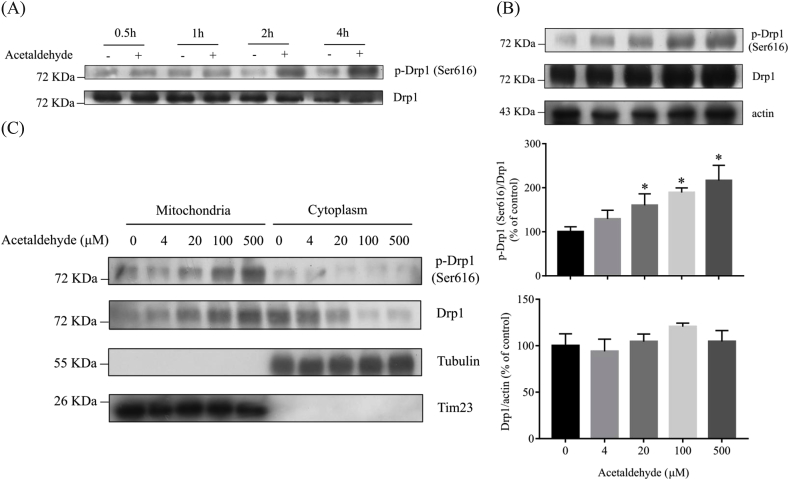
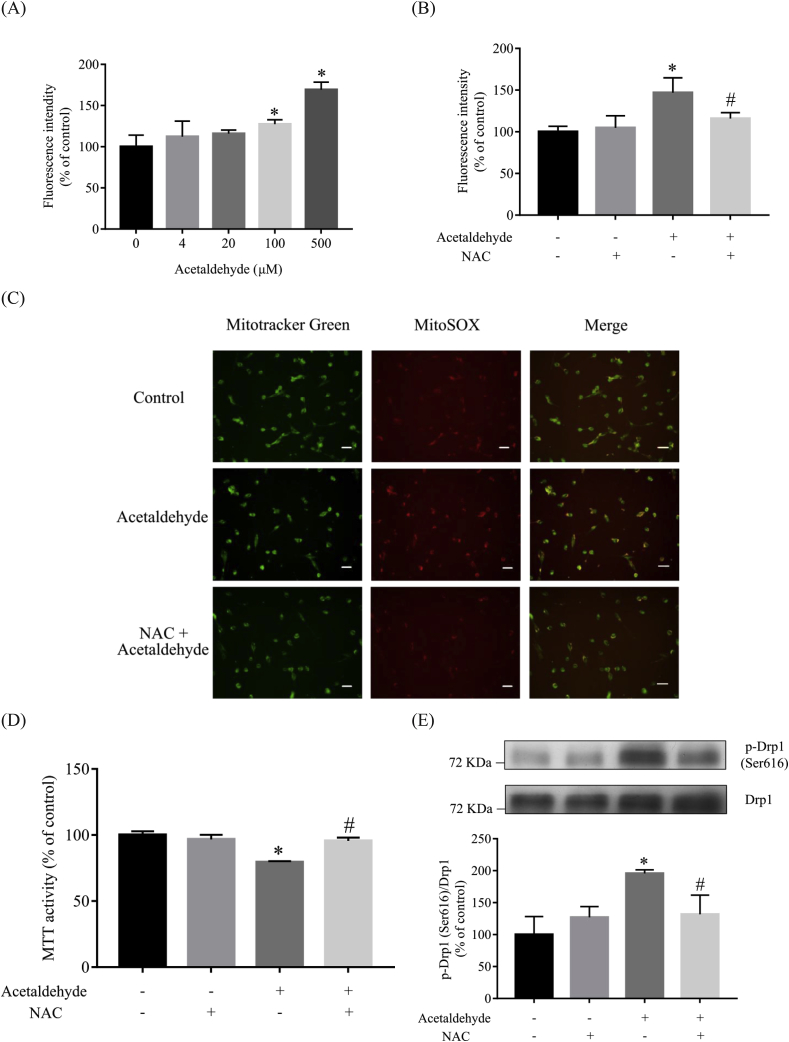
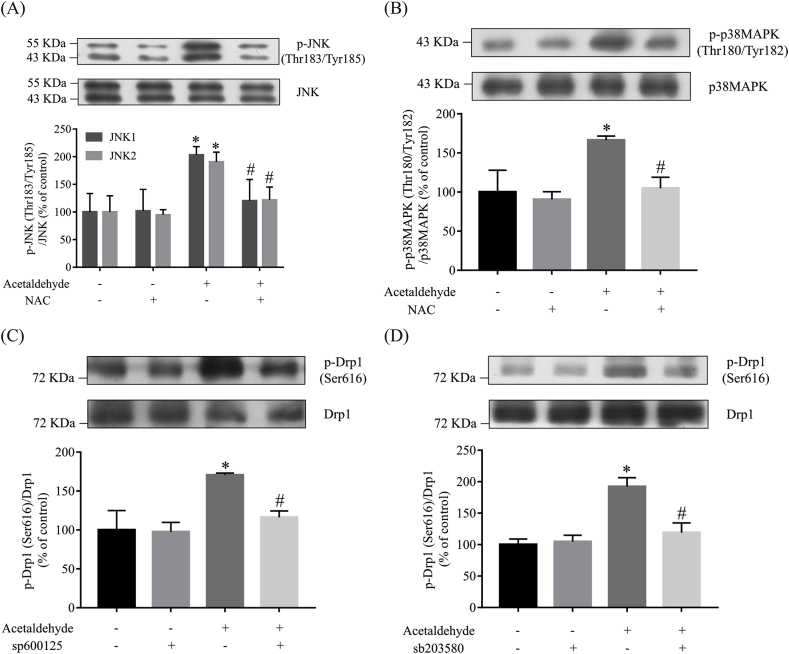
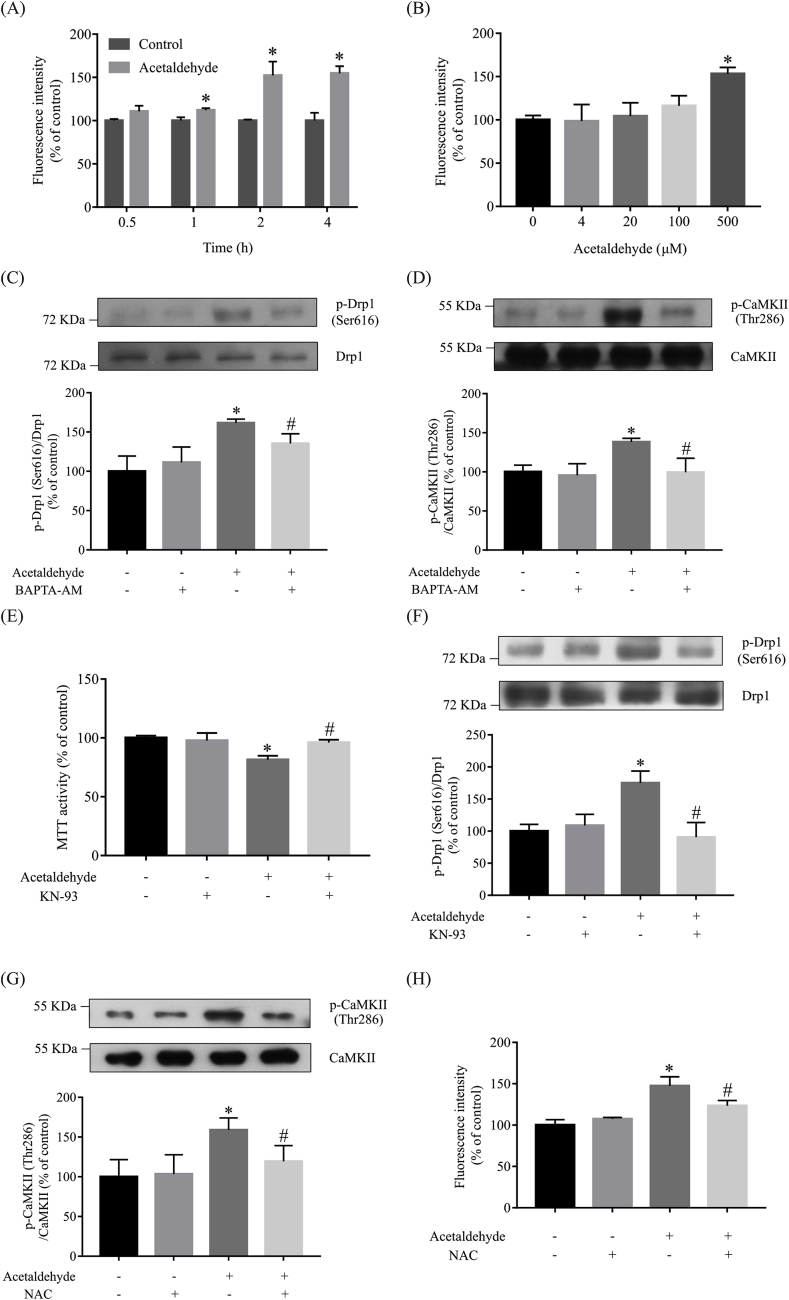
Excessive alcohol consumption impairs brain function and has been associated with an earlier onset of neurodegenerative diseases such as Alzheimer's disease (AD) and Parkinson's disease (PD). Acetaldehyde, the most toxic metabolite of alcohol, has been speculated to mediate the neurotoxicity induced by alcohol abuse. However, the precise mechanisms by which acetaldehyde induces neurotoxicity remain elusive. In this study, it was found that acetaldehyde treatment induced excessive mitochondrial fragmentation, impaired mitochondrial function and caused cytotoxicity in cortical neurons and SH-SY5Y cells. Further analyses showed that acetaldehyde induced the phosphorylation of mitochondrial fission related protein dynamin-related protein 1 (Drp1) at Ser616 and promoted its translocation to mitochondria. The elevation of Drp1 phosphorylation was partly dependent on the reactive oxygen species (ROS)-mediated activation of c-Jun-N-terminal kinase (JNK) and p38 mitogen-activated protein kinase (MAPK), as N-acetyl-l-cysteine (NAC) pretreatment inhibited the activation of JNK and p38 MAPK while attenuating Drp1 phosphorylation in acetaldehyde-treated cells. In addition, acetaldehyde treatment elevated intracellular Ca level and activated Ca/calmodulin-dependent protein kinase II (CaMKII). Pretreatment of CaMKII inhibitor prevented Drp1 phosphorylation in acetaldehyde-treated cells and ameliorated acetaldehyde-induced cytotoxicity, suggesting that CaMKII was a key effector mediating acetaldehyde-induced Drp1 phosphorylation and mitochondrial dysfunction. Taken together, acetaldehyde induced cytotoxicity by promoting excessive Drp1 phosphorylation and mitochondrial fragmentation. Both ROS and Ca-mediated signaling pathways played important roles in acetaldehyde-induced Drp1 phosphorylation. The results also suggested that prevention of oxidative stress by antioxidants might be beneficial for preventing neurotoxicity associated with acetaldehyde and alcohol abuse.
过量饮酒会损害大脑功能,并与神经退行性疾病(如阿尔茨海默病(AD)和帕金森病(PD))的发病年龄提前有关。乙醛是酒精的最有毒代谢物,据推测它介导了酒精滥用引起的神经毒性。然而,乙醛诱导神经毒性的确切机制仍不清楚。在这项研究中,发现乙醛处理诱导皮质神经元和 SH-SY5Y 细胞中线粒体过度碎片化,损害线粒体功能并导致细胞毒性。进一步的分析表明,乙醛诱导线粒体分裂相关蛋白动力相关蛋白 1(Drp1)在 Ser616 处的磷酸化,并促进其向线粒体易位。Drp1 磷酸化的升高部分依赖于活性氧(ROS)介导的 c-Jun-N-末端激酶(JNK)和 p38 丝裂原激活蛋白激酶(MAPK)的激活,因为 N-乙酰-L-半胱氨酸(NAC)预处理抑制了 JNK 和 p38 MAPK 的激活,同时减弱了乙醛处理细胞中 Drp1 的磷酸化。此外,乙醛处理会升高细胞内 Ca 水平并激活 Ca/钙调蛋白依赖性蛋白激酶 II(CaMKII)。CaMKII 抑制剂预处理可防止乙醛处理细胞中 Drp1 的磷酸化,并改善乙醛诱导的细胞毒性,表明 CaMKII 是介导乙醛诱导的 Drp1 磷酸化和线粒体功能障碍的关键效应物。总之,乙醛通过促进 Drp1 过度磷酸化和线粒体碎片化引起细胞毒性。ROS 和 Ca 介导的信号通路在乙醛诱导的 Drp1 磷酸化中起重要作用。结果还表明,抗氧化剂预防氧化应激可能有益于预防与乙醛和酒精滥用相关的神经毒性。