
抗PD-1治疗诱导的免疫相关性全血细胞减少——中断还是继续治疗——免疫组织化学检查的作用
Immune-Related Pancytopenia Induced by Anti-PD-1 Therapy - Interrupt or Continue Treatment - The Role of Immunohistochemical Examination.
作者信息
Cybulska-Stopa Bożena, Gruchała Andrzej, Niemiec Maciej
机构信息
Maria Skłodowska-Curie Institute, Oncology Center, Krakow Branch, Cracow, Poland.
Krakowski Szpital Specjalistyczny im. Jana Pawła II, Cracow, Poland.
出版信息
Case Rep Oncol. 2019 Oct 29;12(3):820-828. doi: 10.1159/000504130. eCollection 2019 Sep-Dec.
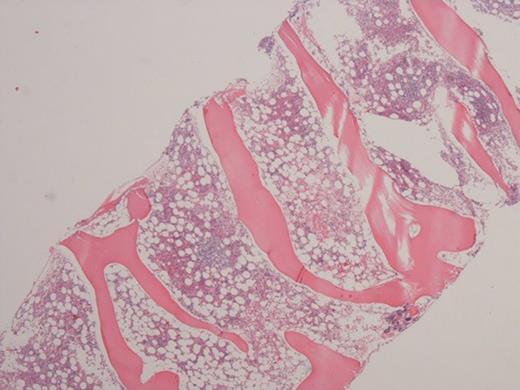
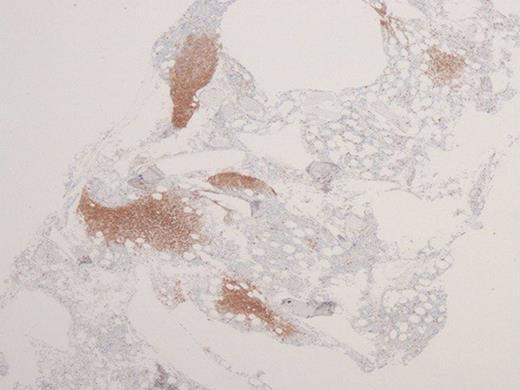
Immune checkpoint inhibitors (ICIs), including anti-cytotoxic T-lymphocyte antigen 4 (anti-CTLA-4) and anti-programmed death receptor-1/ligand-1 (anti-PD-1/anti-PD-L1) caused a breakthrough in oncology and significantly improved therapeutic outcomes in cancer patients. ICIs generate a specific reaction in T cells, directed against antigens on cancer cells, leading to their damage and death. Through similar or the same antigens, activated lymphocytes may also have a cytotoxic effect on healthy cells, causing development of specific adverse effects - so-called immune-related adverse events (irAEs). We present the case report of a 56 year old patient with disseminated melanoma. During treatment with immunotherapy (anti PD-1), neutropenic fever and pancytopenia occurred. Trepanobiopsy of the bone marrow was performed to determine the cause of pancytopenia. Histopathological assessment of bone marrow combined with immunophenotype investigations may explain the cause of hematological disorders occurring in the course of treatment with ICIs, and support the choice of an appropriate treatment, directly translated into positive outcomes.
免疫检查点抑制剂(ICIs),包括抗细胞毒性T淋巴细胞抗原4(抗CTLA-4)和抗程序性死亡受体-1/配体-1(抗PD-1/抗PD-L1),在肿瘤学领域带来了突破,并显著改善了癌症患者的治疗效果。ICIs在T细胞中引发针对癌细胞上抗原的特异性反应,导致癌细胞受损和死亡。通过相似或相同的抗原,活化的淋巴细胞也可能对健康细胞产生细胞毒性作用,从而引发特定的不良反应——即所谓的免疫相关不良事件(irAEs)。我们报告了一例56岁播散性黑色素瘤患者的病例。在接受免疫治疗(抗PD-1)期间,出现了中性粒细胞减少性发热和全血细胞减少。进行了骨髓环钻活检以确定全血细胞减少的原因。骨髓组织病理学评估结合免疫表型研究,可能解释ICIs治疗过程中发生血液系统疾病的原因,并支持选择合适的治疗方法,直接转化为积极的治疗结果。



 Zotero 插件