Department of Biological Sciences; The RNA Institute, and the Center for Neuroscience Research; University at Albany, State University of New York, Albany, New York 12222, and.
Harvard Reproductive Sciences Center and The Reproductive Endocrine Unit of the Department of Medicine, Massachusetts General Hospital, Boston, Massachusetts 02114.
J Neurosci. 2020 Jan 8;40(2):311-326. doi: 10.1523/JNEUROSCI.1977-19.2019. Epub 2019 Nov 25.
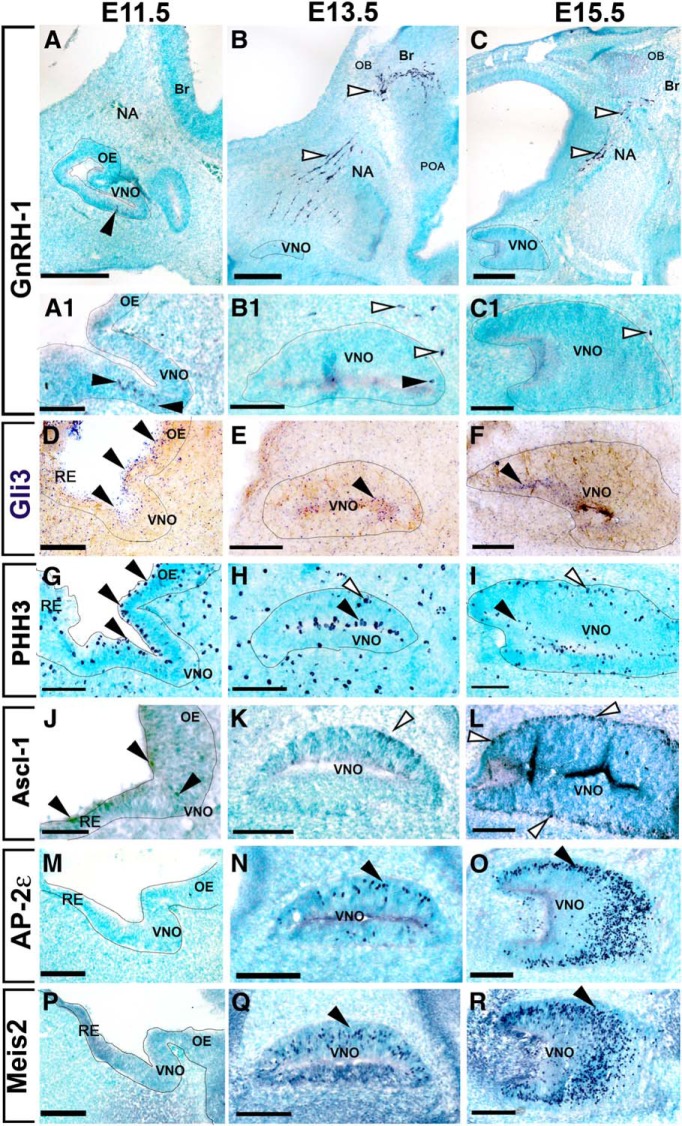
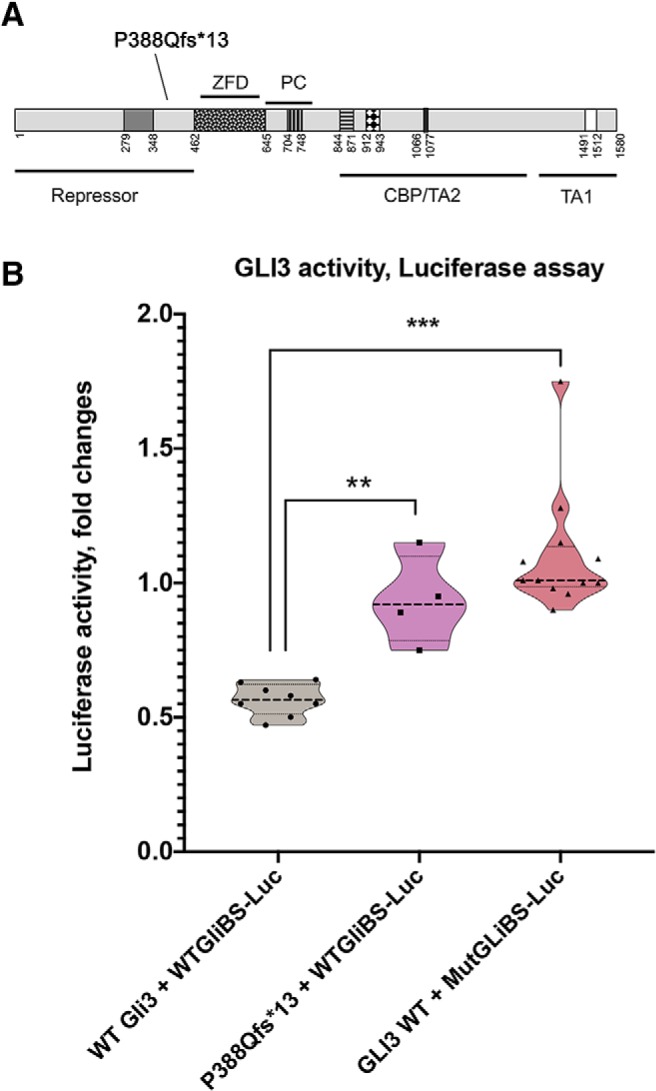
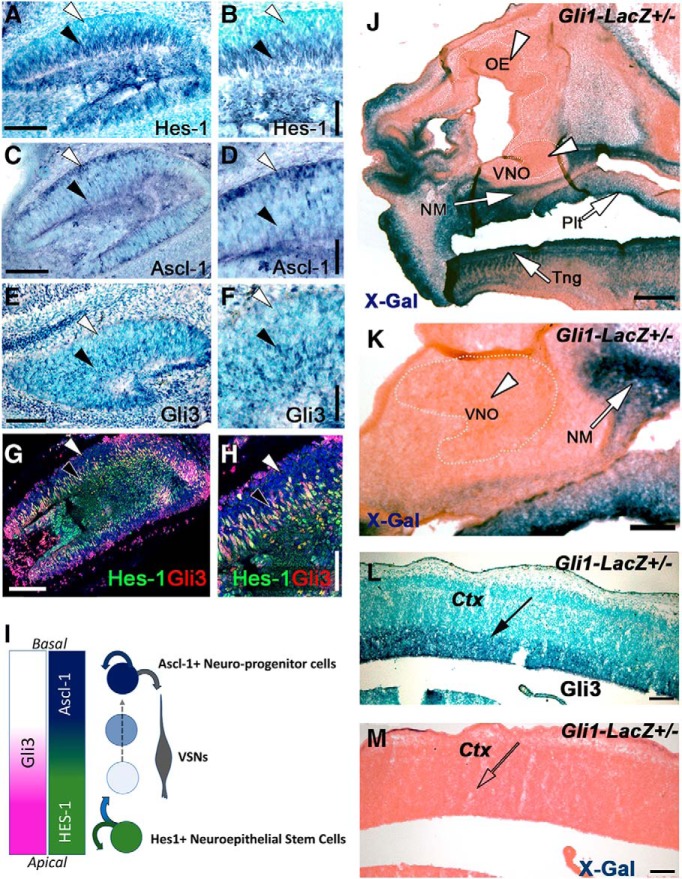
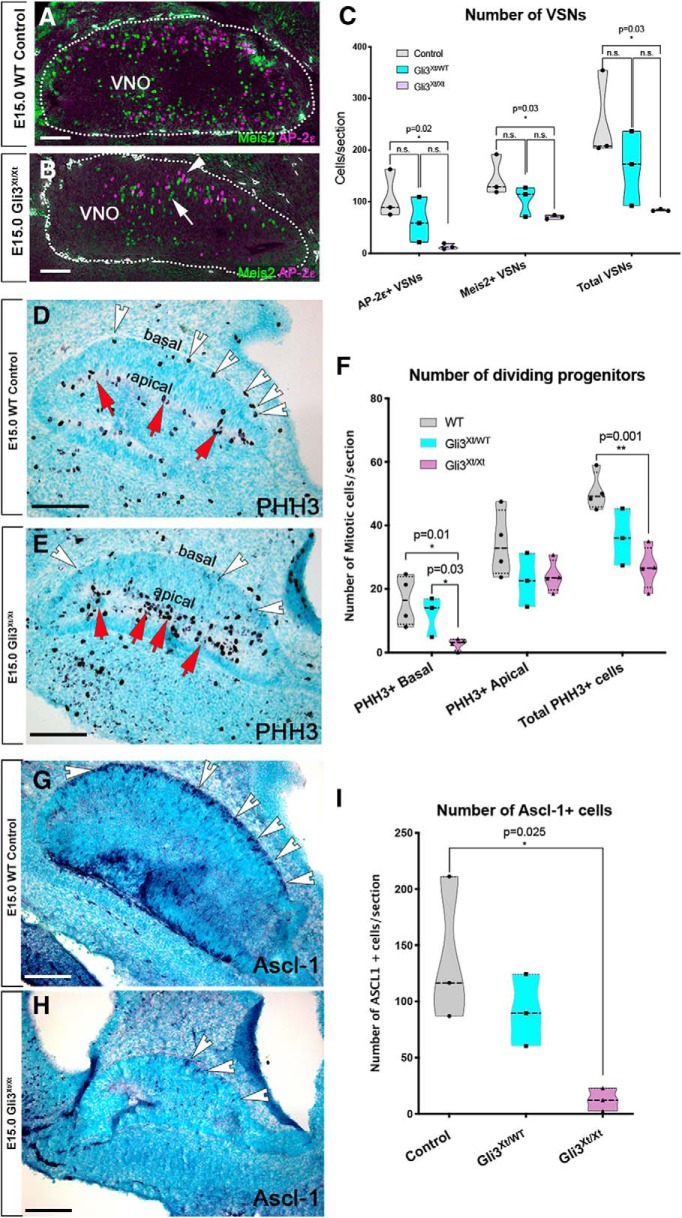
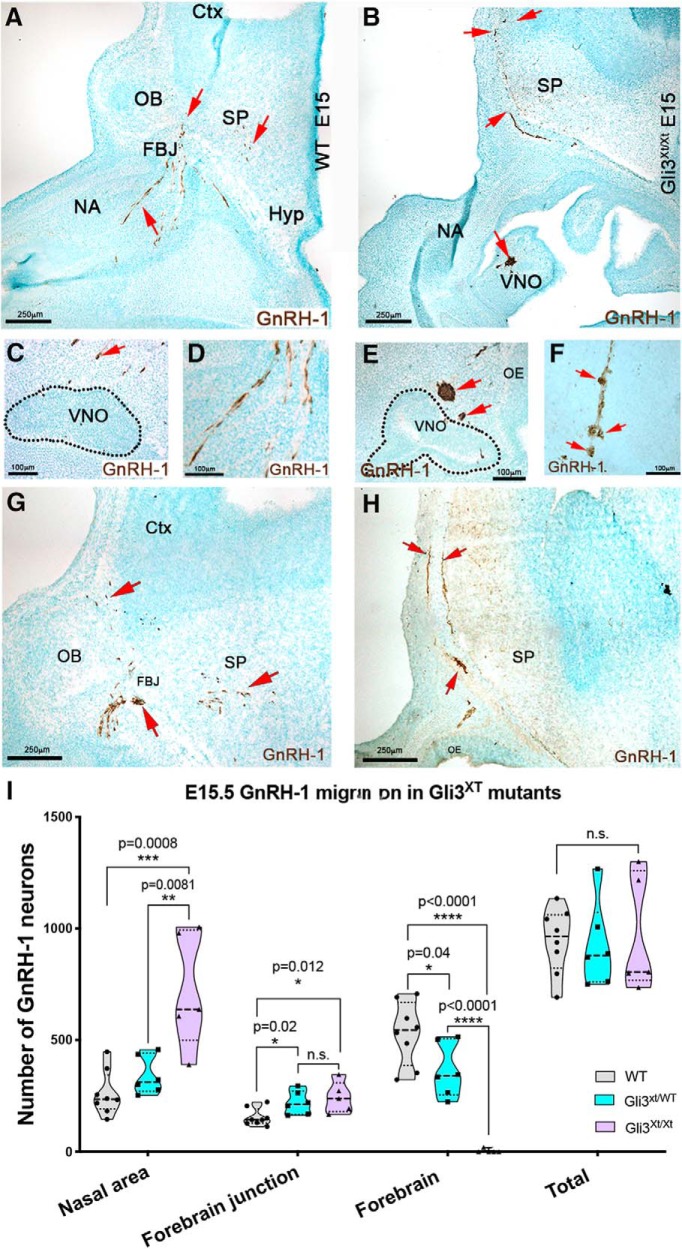
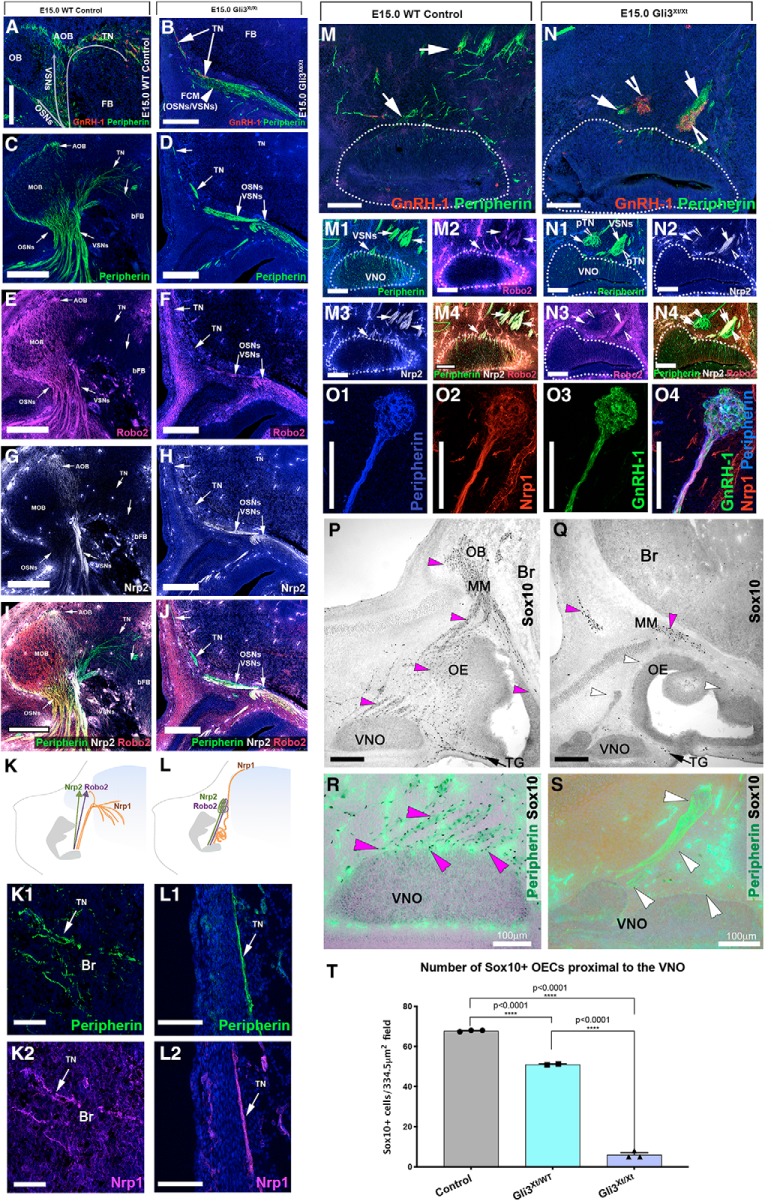
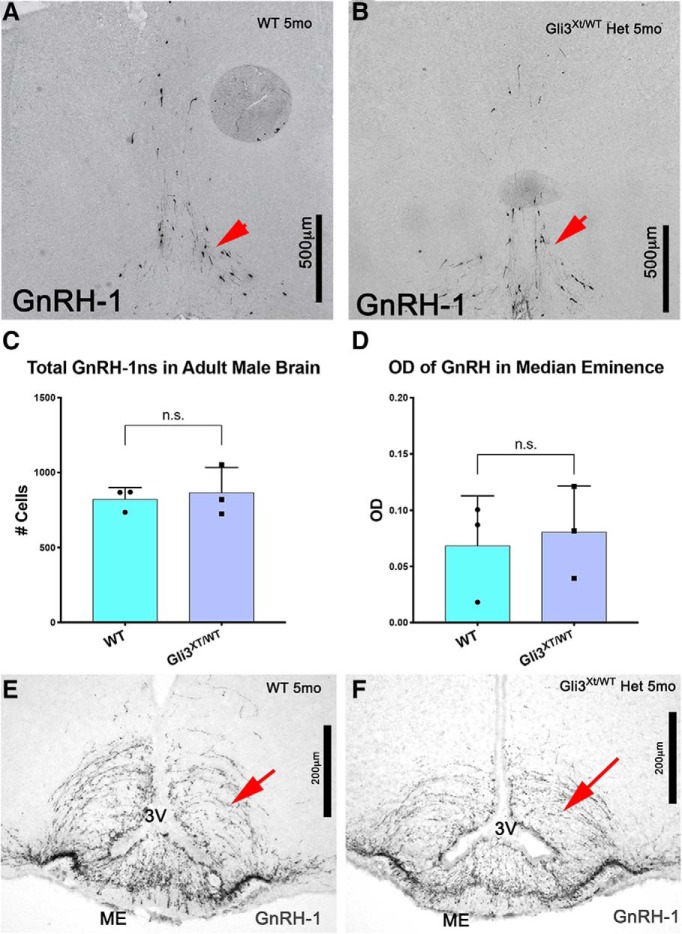
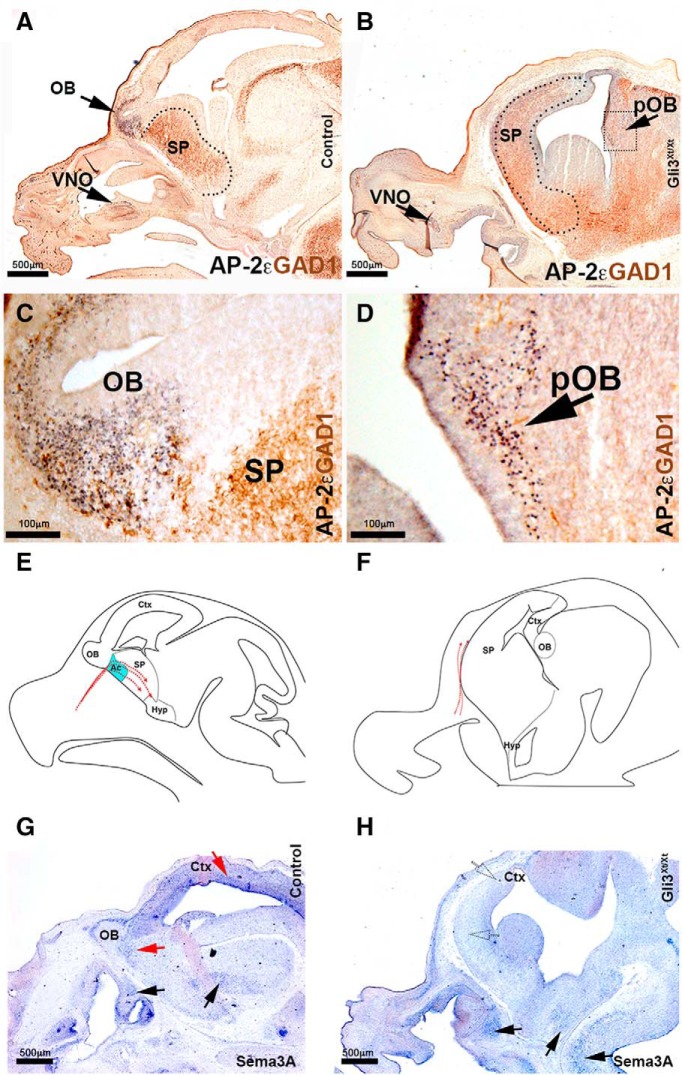
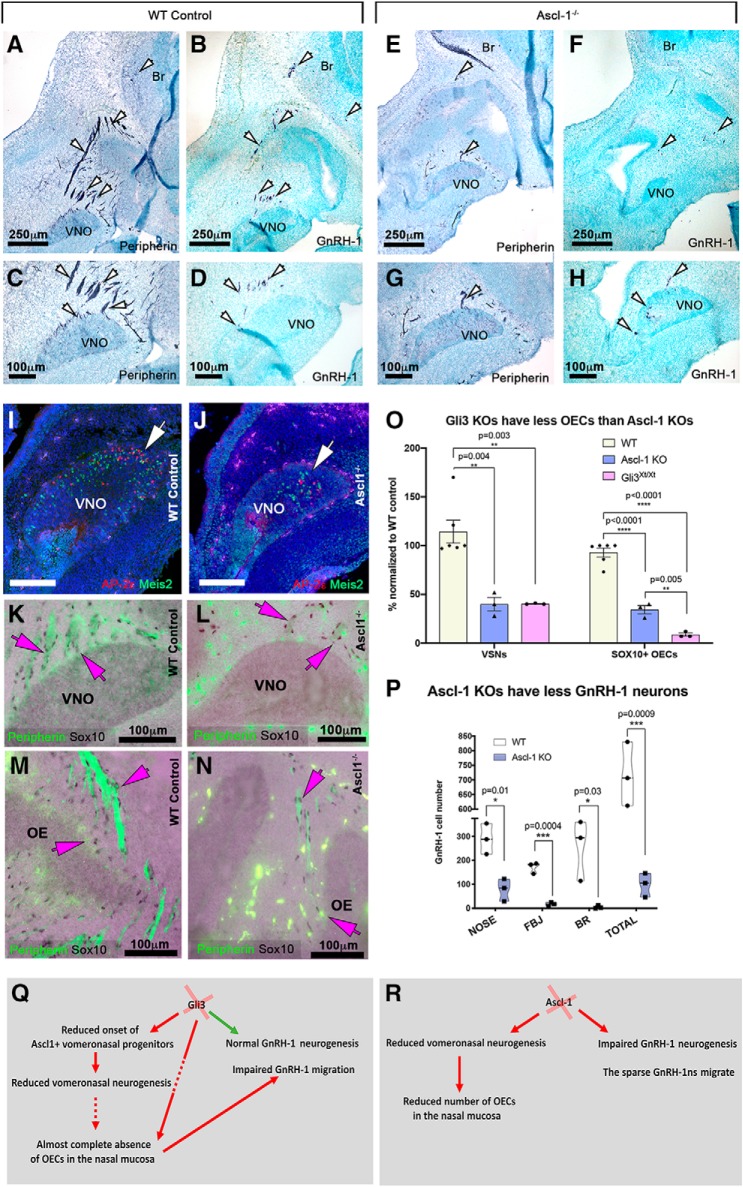
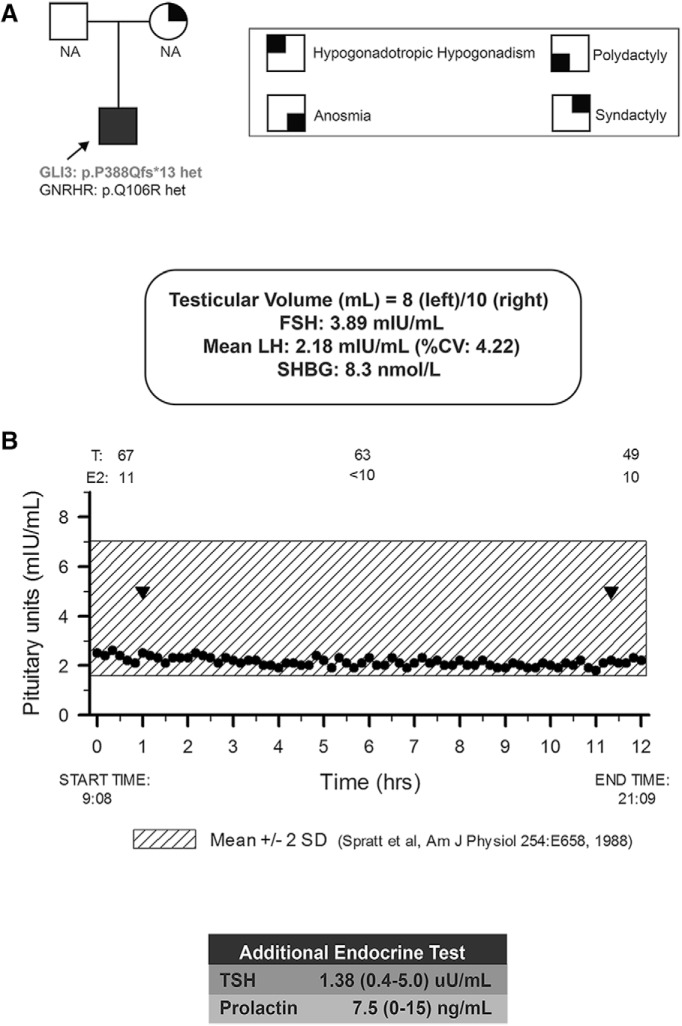
During mammalian development, gonadotropin-releasing-hormone-1 neurons (GnRH-1ns) migrate from the developing vomeronasal organ (VNO) into the brain asserting control of pubertal onset and fertility. Recent data suggest that correct development of the olfactory ensheathing cells (OEC) is imperative for normal GnRH-1 neuronal migration. However, the full ensemble of molecular pathways that regulate OEC development remains to be fully deciphered. Loss-of-function of the transcription factor Gli3 is known to disrupt olfactory development, however, if Gli3 plays a role in GnRH-1 neuronal development is unclear. By analyzing Gli3 extra-toe mutants (Gli3), we found that Gli3 loss-of-function compromises the onset of achaete-scute family bHLH transcription factor 1 (Ascl-1) vomeronasal progenitors and the formation of OEC in the nasal mucosa. Surprisingly, GnRH-1 neurogenesis was intact in Gli3 mice but they displayed significant defects in GnRH-1 neuronal migration. In contrast, Ascl-1 mutants showed reduced neurogenesis for both vomeronasal and GnRH-1ns but less severe defects in OEC development. These observations suggest that Gli3 is critical for OEC development in the nasal mucosa and subsequent GnRH-1 neuronal migration. However, the nonoverlapping phenotypes between Ascl-1 and Gli3 mutants indicate that Ascl-1, while crucial for GnRH-1 neurogenesis, is not required for normal OEC development. Because Kallmann syndrome (KS) is characterized by abnormal GnRH-1ns migration, we examined whole-exome sequencing data from KS subjects. We identified and validated a loss-of-function variant in a KS individual. These findings provide new insights into GnRH-1 and OECs development and demonstrate that human mutations contribute to KS etiology. The transcription factor Gli3 is necessary for correct development of the olfactory system. However, if Gli3 plays a role in controlling GnRH-1 neuronal development has not been addressed. We found that Gli3 loss-of-function compromises the onset of Ascl-1 vomeronasal progenitors, formation of olfactory ensheathing cells in the nasal mucosa, and impairs GnRH-1 neuronal migration to the brain. By analyzing Ascl-1 mutants we dissociated the neurogenic defects observed in Gli3 mutants from lack of olfactory ensheathing cells in the nasal mucosa, moreover, we discovered that Ascl-1 is necessary for GnRH-1 ontogeny. Analyzing human whole-exome sequencing data, we identified a loss-of-function variant in a KS individual. Our data suggest that is a candidate gene contributing to KS etiology.
在哺乳动物的发育过程中,促性腺激素释放激素-1 神经元(GnRH-1ns)从发育中的鼻前神经器官(VNO)迁移到大脑,控制青春期的开始和生育能力。最近的数据表明,正确发育嗅鞘细胞(OEC)对于正常 GnRH-1 神经元迁移至关重要。然而,调节 OEC 发育的全套分子途径仍有待完全破译。转录因子 Gli3 的功能丧失已知会破坏嗅觉发育,但是 Gli3 是否在 GnRH-1 神经元发育中起作用尚不清楚。通过分析 Gli3 额外脚趾突变体(Gli3),我们发现 Gli3 功能丧失会损害 Achaete-scute 家族 bHLH 转录因子 1(Ascl-1)鼻前神经祖细胞的起始和鼻黏膜中 OEC 的形成。令人惊讶的是,GnRH-1 神经发生在 Gli3 小鼠中是完整的,但它们在 GnRH-1 神经元迁移中表现出明显的缺陷。相比之下,Ascl-1 突变体显示出嗅前和 GnRH-1ns 的神经发生减少,但 OEC 发育缺陷较小。这些观察结果表明,Gli3 对于鼻黏膜中的 OEC 发育和随后的 GnRH-1 神经元迁移至关重要。然而,Ascl-1 和 Gli3 突变体之间的非重叠表型表明,Ascl-1 虽然对 GnRH-1 神经发生至关重要,但对于正常的 OEC 发育并非必需。由于 Kallmann 综合征(KS)的特征是 GnRH-1ns 迁移异常,我们检查了 KS 患者的外显子组测序数据。我们在一个 KS 个体中鉴定并验证了一个功能丧失的变体。这些发现为 GnRH-1 和 OECs 的发育提供了新的见解,并证明人类突变导致 KS 的发病机制。转录因子 Gli3 对于嗅觉系统的正确发育是必要的。然而,Gli3 是否在控制 GnRH-1 神经元发育中起作用尚未得到解决。我们发现 Gli3 功能丧失会损害 Ascl-1 嗅前神经祖细胞的起始、鼻黏膜中嗅鞘细胞的形成,并损害 GnRH-1 神经元向大脑的迁移。通过分析 Ascl-1 突变体,我们将 Gli3 突变体中观察到的神经发生缺陷与鼻黏膜中缺乏嗅鞘细胞区分开来,此外,我们发现 Ascl-1 对于 GnRH-1 的发生是必要的。分析人类外显子组测序数据,我们在一个 KS 个体中鉴定了一个功能丧失的变体。我们的数据表明 是导致 KS 发病机制的候选基因。