McDonald S A, Coban S B, Sottos N R, Withers P J
Henry Royce Institute for Advanced Materials, Department of Materials, University of Manchester, Manchester, M13 9PL, UK.
Centrum Wiskunde & Informatica, Computational Imaging Group, Science Park 123, 1098XG, Amsterdam, The Netherlands.
Sci Rep. 2019 Nov 28;9(1):17773. doi: 10.1038/s41598-019-54242-7.
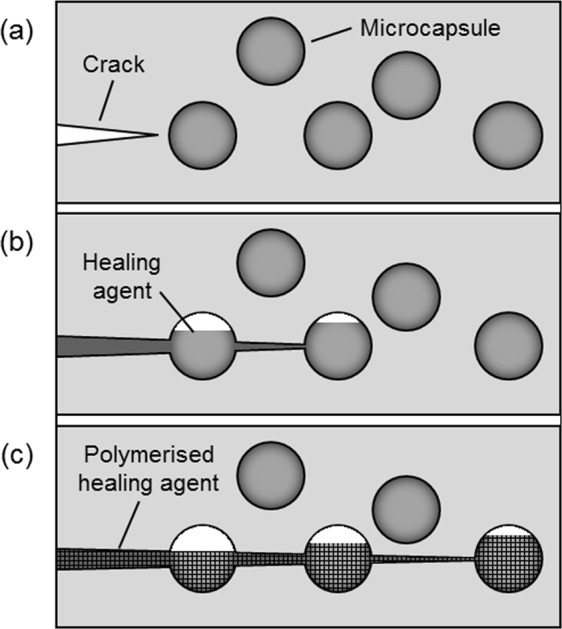
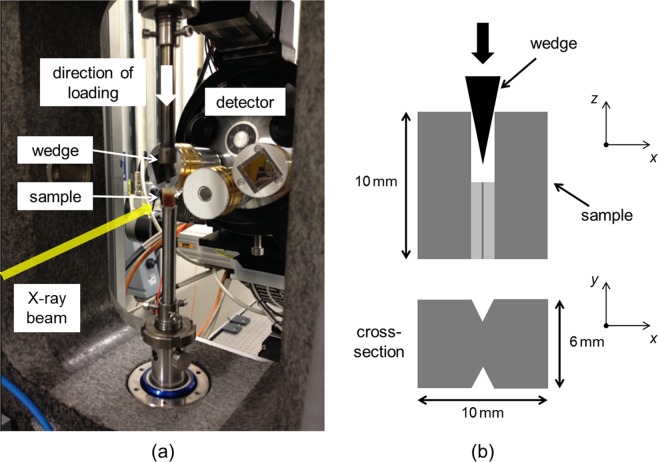
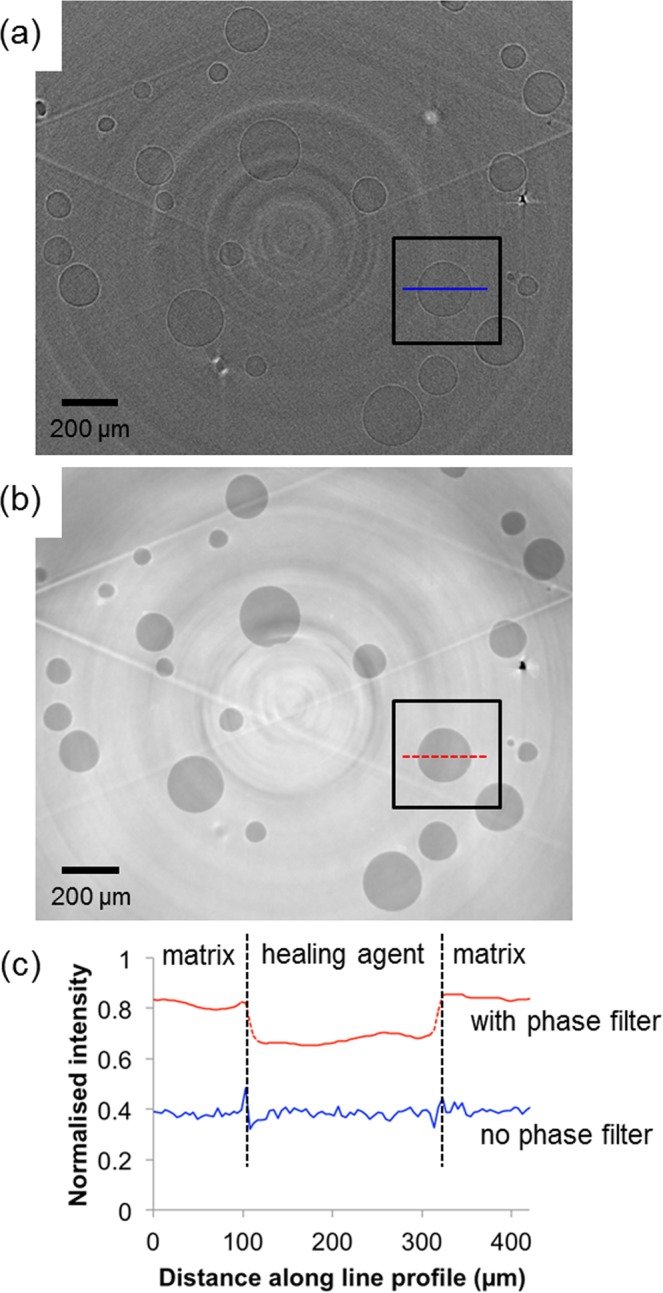
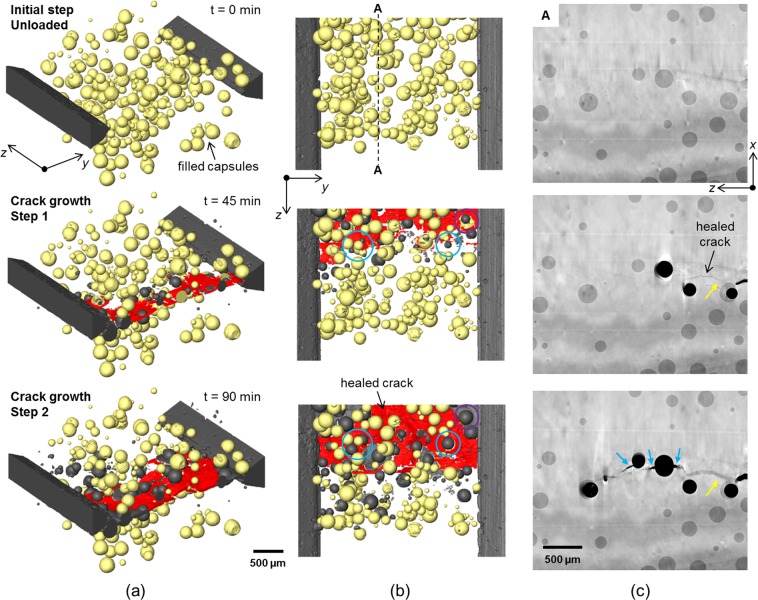
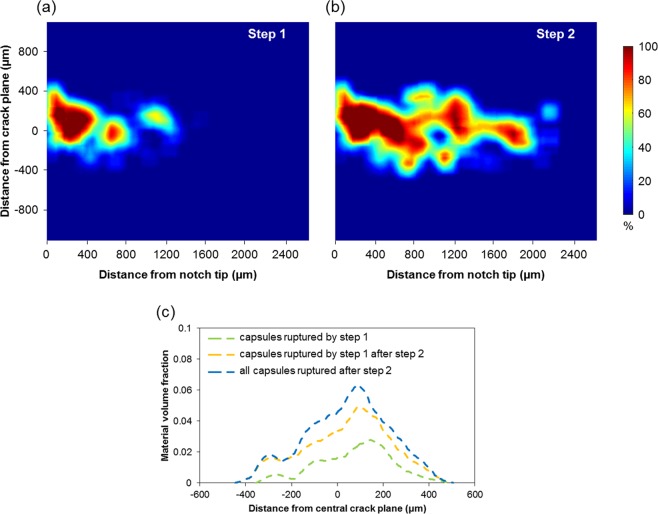
Structural polymeric materials incorporating a microencapsulated liquid healing agent demonstrate the ability to autonomously heal cracks. Understanding how an advancing crack interacts with the microcapsules is critical to optimizing performance through tailoring the size, distribution and density of these capsules. For the first time, time-lapse synchrotron X-ray phase contrast computed tomography (CT) has been used to observe in three-dimensions (3D) the dynamic process of crack growth, microcapsule rupture and progressive release of solvent into a crack as it propagates and widens, providing unique insights into the activation and repair process. In this epoxy self-healing material, 150 µm diameter microcapsules within 400 µm of the crack plane are found to rupture and contribute to the healing process, their discharge quantified as a function of crack propagation and distance from the crack plane. Significantly, continued release of solvent takes place to repair the crack as it grows and progressively widens.
包含微胶囊化液体修复剂的结构聚合物材料展现出自动修复裂缝的能力。了解扩展中的裂缝如何与微胶囊相互作用,对于通过调整这些胶囊的尺寸、分布和密度来优化性能至关重要。首次使用延时同步加速器X射线相衬计算机断层扫描(CT)在三维空间(3D)中观察裂缝扩展、微胶囊破裂以及溶剂在裂缝扩展和变宽时逐渐释放到裂缝中的动态过程,为激活和修复过程提供了独特的见解。在这种环氧自修复材料中,发现裂缝平面400微米范围内直径为150微米的微胶囊会破裂并对修复过程有贡献,其排出量作为裂缝扩展和距裂缝平面距离的函数进行量化。值得注意的是,随着裂缝的生长和逐渐变宽,溶剂会持续释放以修复裂缝。