Division of Ocular Injuries, Department of Ophthalmology, The Third Affiliated Hospital of Hebei Medical University, Shijiazhuang, 050051, Hebei, China.
Hebei OPO Eye Bank, The Third Affiliated Hospital of Hebei Medical University, Shijiazhuang, 050051, Hebei, China.
Eye (Lond). 2020 Sep;34(9):1600-1607. doi: 10.1038/s41433-019-0717-3. Epub 2019 Nov 29.
BACKGROUND/OBJECTIVES: To evaluate the clinical efficacy of topical tacrolimus 0.1% and cyclosporine 1% on high-risk penetrating keratoplasty (PKP) patients.
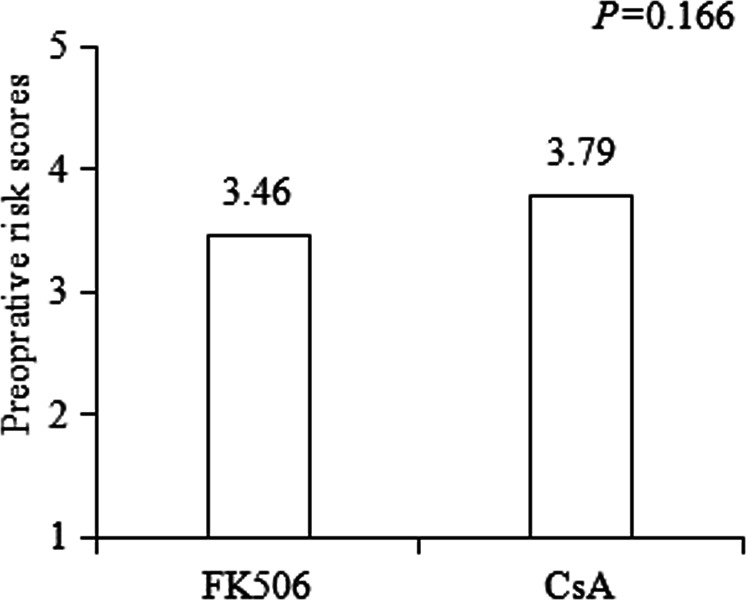
SUBJECTS/METHODS: A series of 49 high-risk PKP patients (49 eyes), 20 males, 29 females from the age of 4 months to 74 years of age with the mean of 32.5 from 2012 to 2017 were recruited in this study. The patients were randomly divided into two groups by receiving either topical tacrolimus 0.1% or cyclosporine 1% respectively. Twenty five patients were treated with topical tacrolimus 0.1% and 24 patients with topical cyclosporine 1%. The traditional baseline management on these two groups were Tobramycin and Dexamethasone eye drops in the first 3 weeks and then tapered off. Clinical procedures and postoperative follow-up were documented.
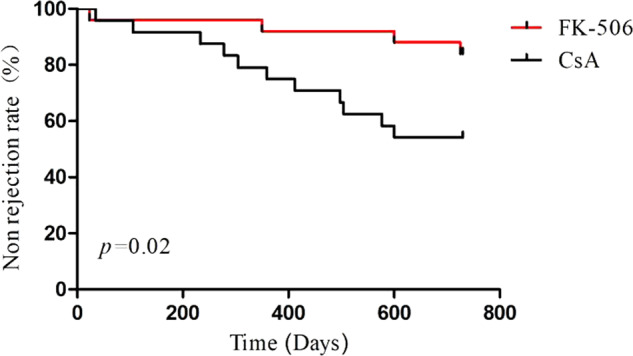
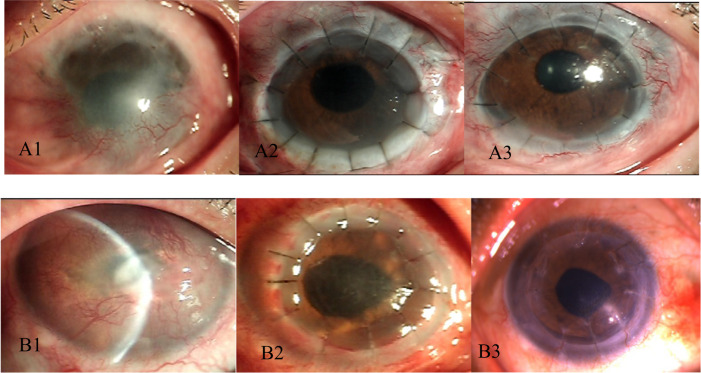
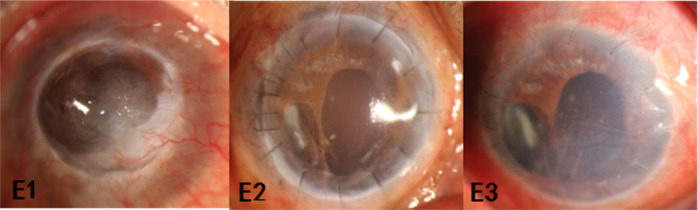
After 6-54 months follow-up, with the average of 24 months, 11 of 24 high-risk patients (11 eyes) had graft rejection, the rejection rate was 45.8% in topical cyclosporine 1% group. The rejections occurred from 35 days to 20 months after PKP. Three patients had irreversible rejection. On topical tacrolimus 0.1% group, the rejection occurred in four patients (four eyes) with rejection rate of 16%, and no irreversible rejection was observed. The graft rejection episodes were documented between 23 days and 24 months. As compared with the topical cyclosporine 1%, topical tacrolimus 0.1%, a key immunosuppressant, significantly decreased corneal graft rejection rate (p = 0.02).
Topical tacrolimus 01% on high-risk PKP patients significantly prevented corneal graft rejection, and it had less adverse effects and was very safe to high-risk patients as to topical cyclosporine 1%. Further case controlled randomized clinical trial studies are needed to establish the best management option for these high-risk patients.
背景/目的:评估 0.1%他克莫司和 1%环孢素局部用药对高危穿透性角膜移植(PKP)患者的临床疗效。
受试者/方法:本研究纳入了 2012 年至 2017 年期间的 49 例高危 PKP 患者(49 只眼),男 20 例,女 29 例,年龄 4 个月至 74 岁,平均 32.5 岁。这些患者通过接受 0.1%他克莫司或 1%环孢素局部用药分为两组。25 例患者接受 0.1%他克莫司治疗,24 例患者接受 1%环孢素治疗。两组患者在前 3 周均接受妥布霉素和地塞米松滴眼液治疗,然后逐渐减少剂量。记录临床操作和术后随访情况。
49 例患者平均随访 24 个月(6-54 个月),其中高危患者 24 例(24 只眼)出现 11 例(11 只眼)移植物排斥反应,环孢素 1%组排斥反应率为 45.8%。排斥反应发生在 PKP 后 35 天至 20 个月。3 例患者出现不可逆排斥反应。0.1%他克莫司组有 4 例(4 只眼)患者出现排斥反应,排斥反应率为 16%,未观察到不可逆排斥反应。排斥反应发作时间为 23 天至 24 个月。与环孢素 1%相比,关键免疫抑制剂 0.1%他克莫司显著降低角膜移植物排斥反应率(p=0.02)。
0.1%他克莫司局部用药可显著预防高危 PKP 患者的角膜移植物排斥反应,且与环孢素 1%相比,不良反应更少,对高危患者非常安全。需要进一步开展病例对照随机临床试验研究,以确定这些高危患者的最佳治疗选择。