From the Graduate Institute of Physiology, College of Medicine, National Taiwan University, Taipei (C.-F.C.).
Department of Neurology, Yale University School of Medicine, New Haven, CT (C.-F.C., J.M., A.O., L.H.S.).
Stroke. 2020 Feb;51(2):612-618. doi: 10.1161/STROKEAHA.119.027037. Epub 2019 Dec 12.
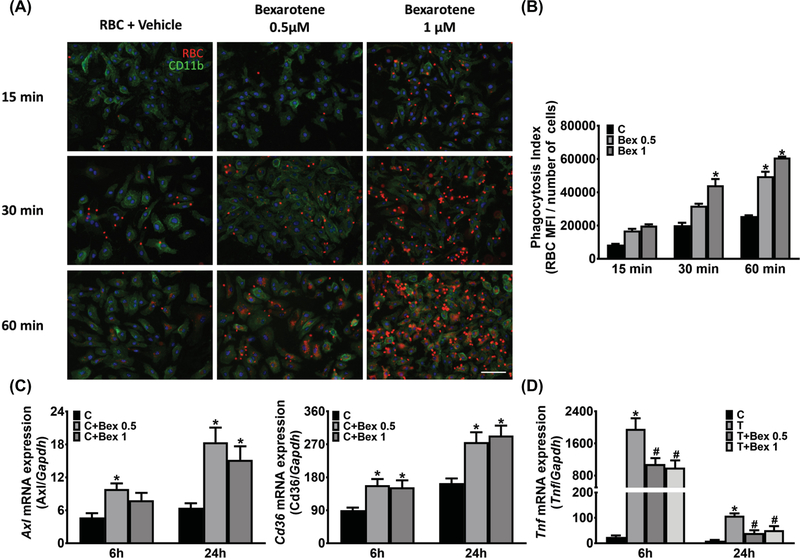
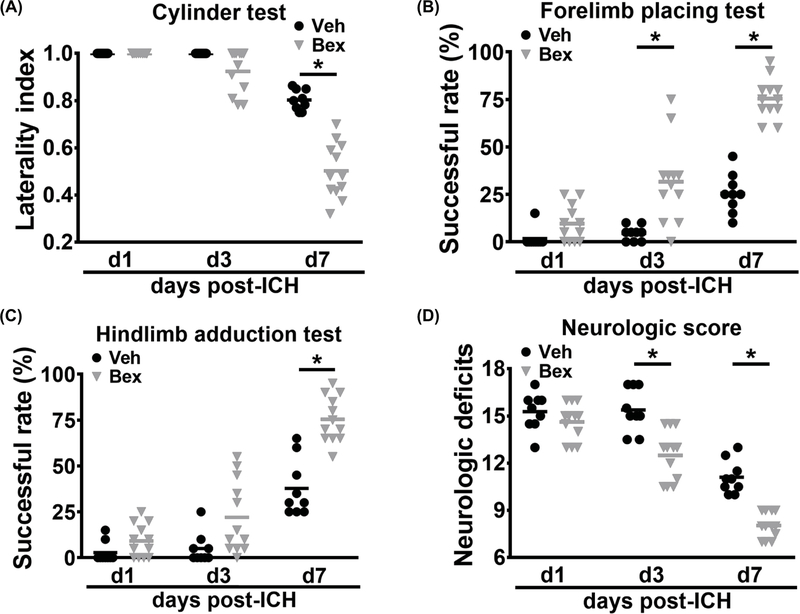
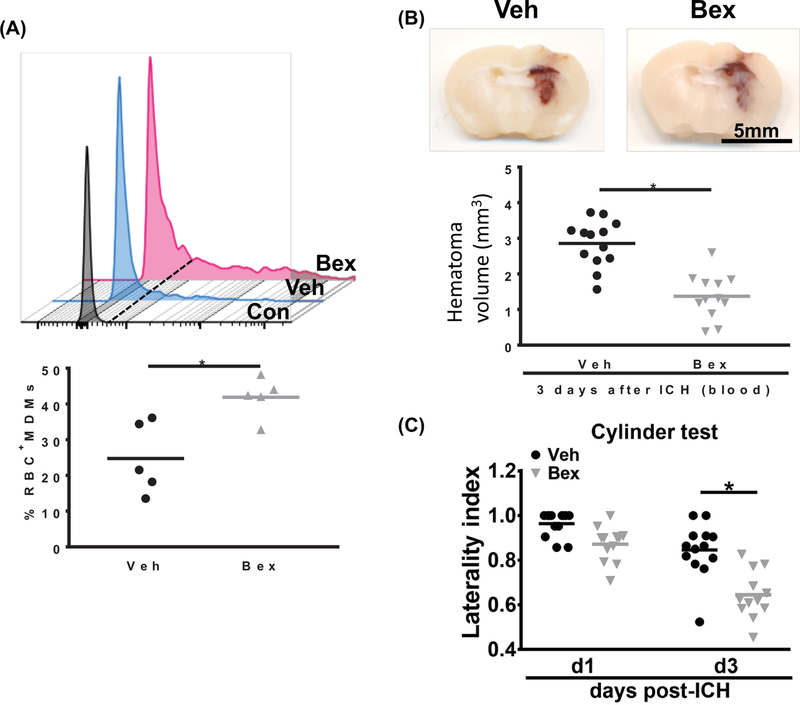
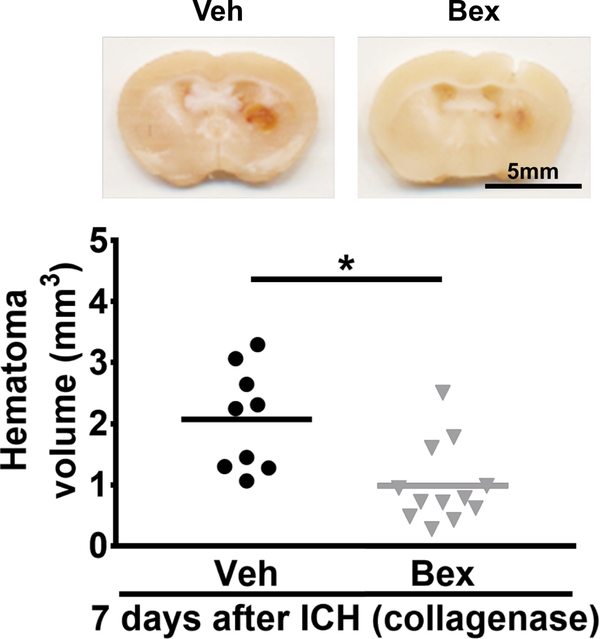
Background and Purpose- Enhancement of erythrophagocytosis by macrophages in a timely manner can limit the toxic effects of erythrocyte metabolites and promote brain recovery after intracerebral hemorrhage (ICH). In the current study, we investigated the therapeutic effect of retinoid X receptor agonist, bexarotene, in facilitating erythrophagocytosis and neurobehavioral recovery in 2 mouse models of ICH. Methods- Bone marrow-derived macrophages and fluorescently labeled erythrocytes were used to study erythrophagocytosis in vitro with phenotypic changes quantified by gene expression. ICH was modeled in vivo using intrastriatal autologous blood and collagenase injection in mice with and without bexarotene treatment beginning 3 hours after ICH. In vivo phagocytosis, ability and hematoma clearance were evaluated by erythrophagocytosis assays, flow cytometry, and histological analysis. Neurological deficits and functional recovery were also quantified. Results- Bexarotene increased macrophage expression of phagocytosis receptors and erythrophagocytosis and reduced macrophage TNF (tumor necrosis factor) production in vitro. In vivo, bexarotene treatment enhanced erythrophagocytosis, reduced hematoma volume, and ultimately improved neurological recovery after ICH in 2 distinct models of ICH. Conclusions- Bexarotene administration is beneficial for recovery after ICH by enhancing hemorrhage phagocytosis, modulating macrophage phenotype, and improving functional recovery.
背景与目的- 及时增强巨噬细胞对红细胞的吞噬作用可以限制红细胞代谢物的毒性作用,并促进脑出血(ICH)后的脑恢复。在本研究中,我们研究了视黄醇 X 受体激动剂贝沙罗汀在促进脑出血后两种小鼠模型的红细胞吞噬作用和神经行为恢复方面的治疗效果。方法- 使用体外骨髓来源的巨噬细胞和荧光标记的红细胞,通过基因表达定量研究红细胞吞噬作用的表型变化。使用纹状体内同源血液和胶原酶注射在脑出血后 3 小时开始用和不用贝沙罗汀治疗的小鼠中建立体内 ICH 模型。通过红细胞吞噬作用测定、流式细胞术和组织学分析评估体内吞噬作用能力和血肿清除率。还量化了神经功能缺损和功能恢复。结果- 贝沙罗汀增加了体外巨噬细胞吞噬作用受体的表达和红细胞吞噬作用,并减少了巨噬细胞肿瘤坏死因子(TNF)的产生。在体内,贝沙罗汀治疗增强了红细胞吞噬作用,减少了血肿体积,最终改善了两种不同 ICH 模型中的脑出血后神经恢复。结论- 贝沙罗汀通过增强出血吞噬作用、调节巨噬细胞表型和改善功能恢复,对脑出血后的恢复有益。