Department of Renewable Resources, University of Alberta, 751 General Services Building, Edmonton, AB, T6G 2H1, Canada.
Northern Forestry Centre, Canadian Forest Service, Natural Resources Canada, 5320-122nd St. NW, Edmonton, AB, T6H 3S5, Canada.
Sci Rep. 2019 Dec 11;9(1):18796. doi: 10.1038/s41598-019-55036-7.
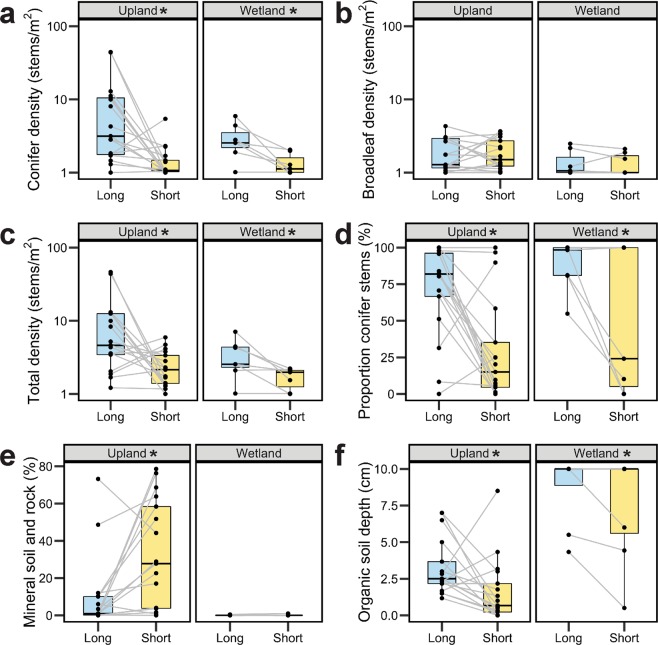
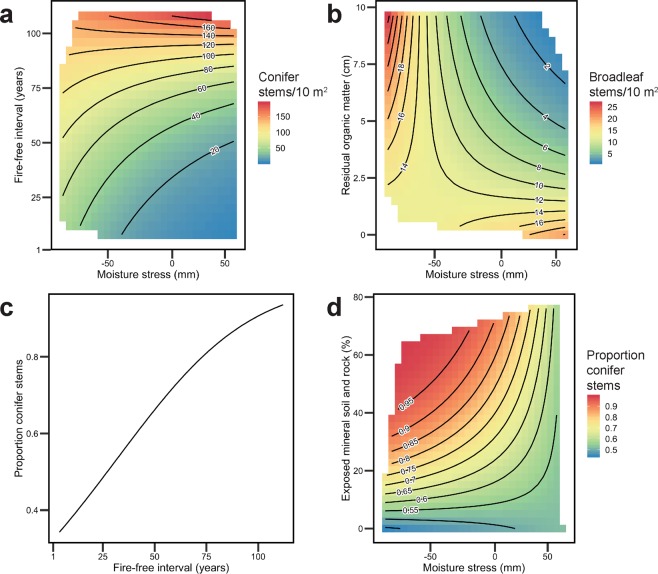
The size and frequency of large wildfires in western North America have increased in recent years, a trend climate change is likely to exacerbate. Due to fuel limitations, recently burned forests resist burning for upwards of 30 years; however, extreme fire-conducive weather enables reburning at shorter fire-free intervals than expected. This research quantifies the outcomes of short-interval reburns in upland and wetland environments of northwestern Canadian boreal forests and identifies an interactive effect of post-fire drought. Despite adaptations to wildfire amongst boreal plants, post-fire forests at paired short- and long-interval sites were significantly different, with short-interval sites having lower stem densities of trees due to reduced conifer recruitment, a higher proportion of broadleaf trees, less residual organic material, and reduced herbaceous vegetation cover. Drought reinforced changes in proportions of tree species and decreases in tree recruitment, reinforcing non-resilient responses to short-interval reburning. Drier and warmer weather will increase the incidence of short-interval reburning and amplify the ecological changes such events cause, as wildfire activity and post-fire drought increase synergistically. These interacting disturbances will accelerate climate-driven changes in boreal forest structure and composition. Our findings identify processes of ongoing and future change in a climate-sensitive biome.
近年来,北美西部大型野火的规模和频率有所增加,气候变化可能会使这一趋势恶化。由于燃料限制,最近燃烧过的森林在长达 30 年的时间里都不易燃烧;然而,极端有利于火灾的天气使森林在比预期更短的无火灾间隔内重新燃烧。本研究量化了加拿大西北部北方森林旱地和湿地环境中短间隔再燃烧的结果,并确定了火灾后干旱的交互作用。尽管北方森林植物已经适应了野火,但在短间隔和长间隔地点的火灾后森林有显著差异,短间隔地点的树木密度较低,因为针叶树的繁殖减少,阔叶树的比例较高,残留的有机物质较少,草本植被的覆盖面积减少。干旱加剧了树种比例的变化和树木繁殖的减少,加强了对短间隔再燃烧的非弹性反应。更干燥和温暖的天气将增加短间隔再燃烧的发生率,并放大此类事件造成的生态变化,因为野火活动和火灾后干旱会协同增加。这些相互作用的干扰将加速北方森林结构和组成的气候驱动变化。我们的研究结果确定了在气候敏感生物群落中正在发生和未来的变化过程。