Institute of Cancer Sciences, College of Medical Veterinary and Life Sciences, University of Glasgow, University Avenue, Glasgow, G12 8QQ, UK.
Department of Basic Medical Sciences, Faculty of Applied Medical Sciences, Albaha University, Albaha-Alaqiq, Saudi Arabia.
Epigenetics Chromatin. 2019 Dec 12;12(1):73. doi: 10.1186/s13072-019-0320-7.
Members of the HMGN protein family modulate chromatin structure and influence epigenetic modifications. HMGN1 and HMGN2 are highly expressed during early development and in the neural stem/progenitor cells of the developing and adult brain. Here, we investigate whether HMGN proteins contribute to the chromatin plasticity and epigenetic regulation that is essential for maintaining pluripotency in stem cells.
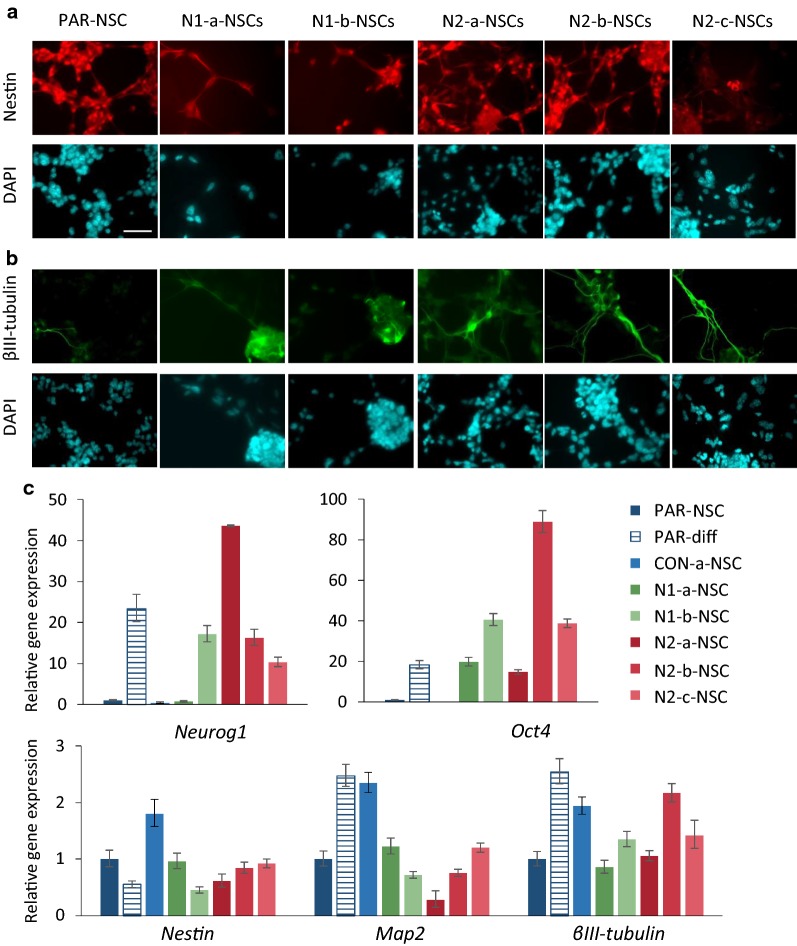
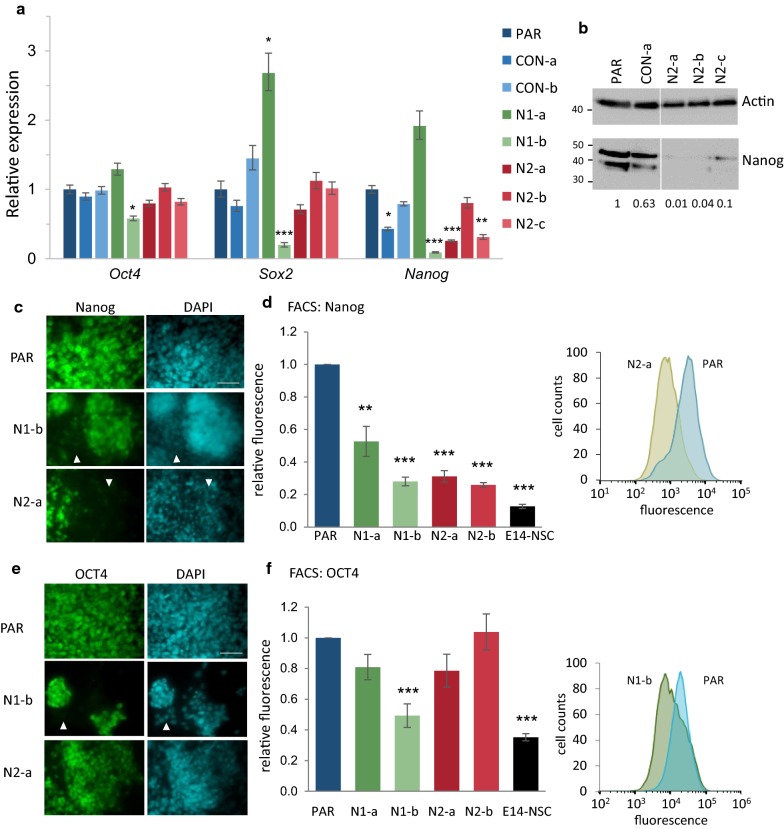
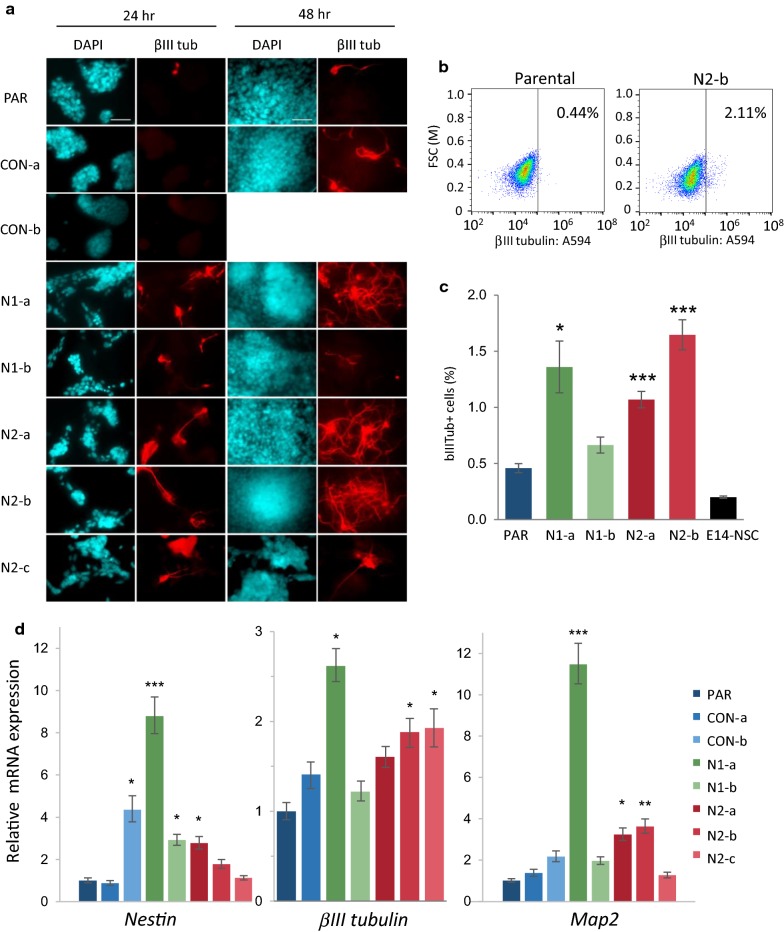
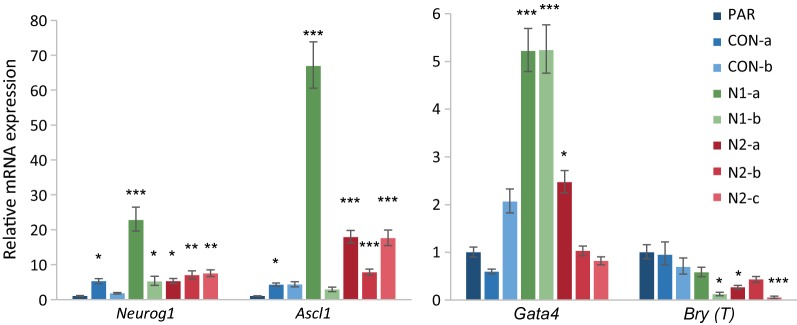
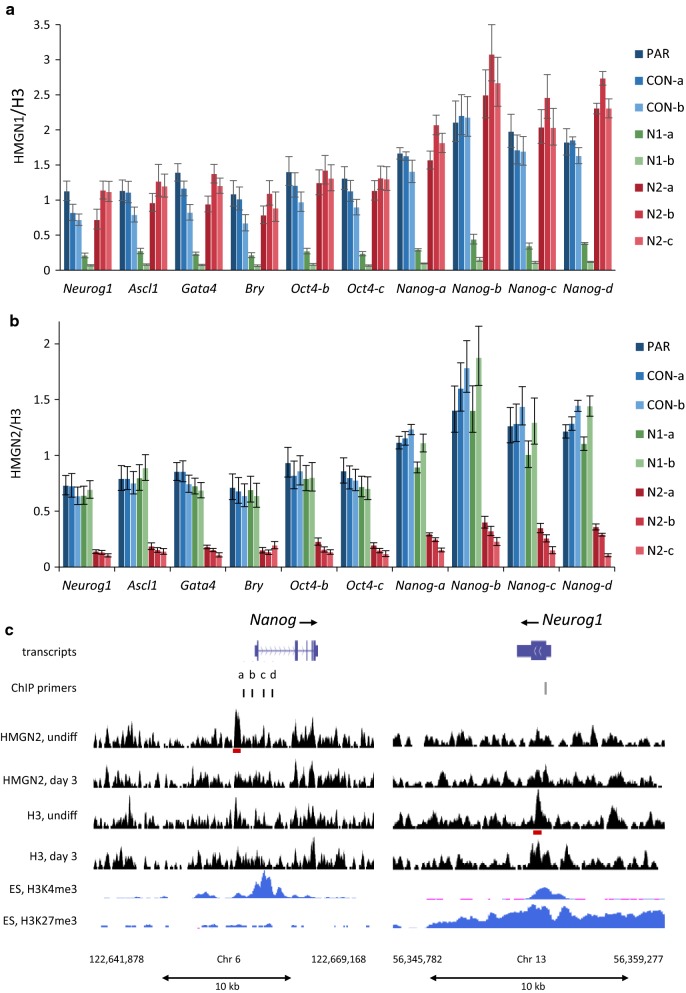
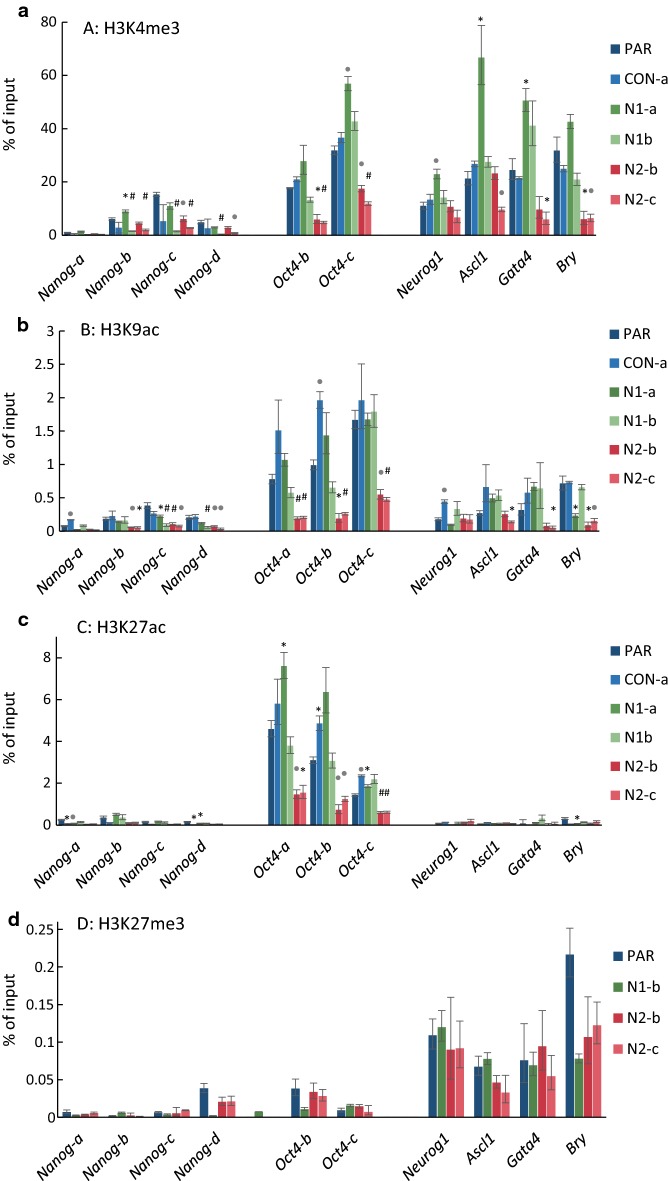
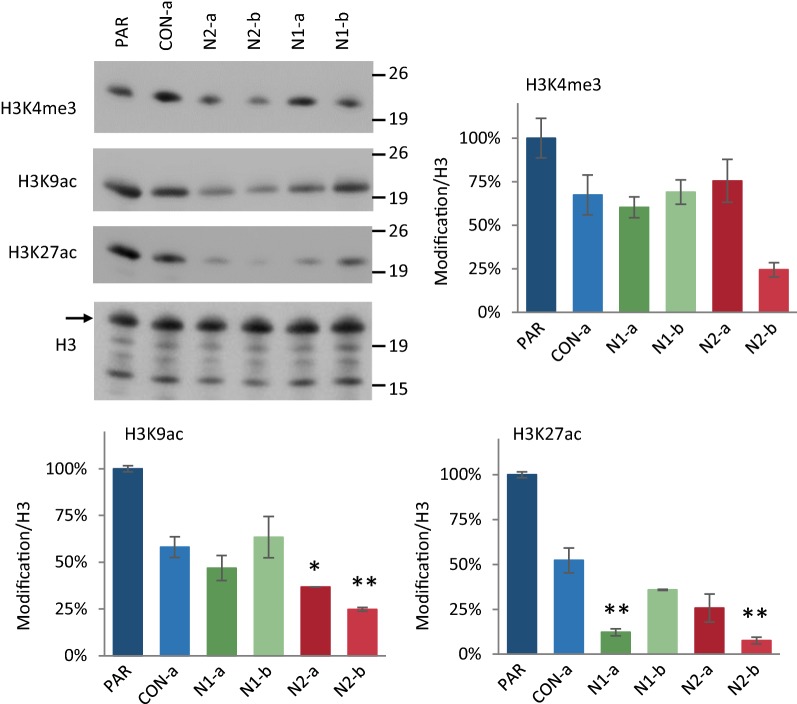
We show that loss of Hmgn1 or Hmgn2 in pluripotent embryonal carcinoma cells leads to increased levels of spontaneous neuronal differentiation. This is accompanied by the loss of pluripotency markers Nanog and Ssea1, and increased expression of the pro-neural transcription factors Neurog1 and Ascl1. Neural stem cells derived from these Hmgn-knockout lines also show increased spontaneous neuronal differentiation and Neurog1 expression. The loss of HMGN2 leads to a global reduction in H3K9 acetylation, and disrupts the profile of H3K4me3, H3K9ac, H3K27ac and H3K122ac at the Nanog and Oct4 loci. At endodermal/mesodermal genes, Hmgn2-knockout cells show a switch from a bivalent to a repressive chromatin configuration. However, at neuronal lineage genes whose expression is increased, no epigenetic changes are observed and their bivalent states are retained following the loss of HMGN2.
We conclude that HMGN1 and HMGN2 maintain the identity of pluripotent embryonal carcinoma cells by optimising the pluripotency transcription factor network and protecting the cells from precocious differentiation. Our evidence suggests that HMGN2 regulates active and bivalent genes by promoting an epigenetic landscape of active histone modifications at promoters and enhancers.
HMGN 蛋白家族成员调节染色质结构并影响表观遗传修饰。HMGN1 和 HMGN2 在早期发育和发育中和成年大脑的神经干细胞/祖细胞中高度表达。在这里,我们研究 HMGN 蛋白是否有助于维持干细胞多能性所必需的染色质可塑性和表观遗传调控。
我们表明,多能性胚胎癌细胞中 Hmgn1 或 Hmgn2 的缺失会导致自发神经元分化水平升高。这伴随着多能性标志物 Nanog 和 Ssea1 的丧失,以及神经前转录因子 Neurog1 和 Ascl1 的表达增加。这些 Hmgn 敲除系衍生的神经干细胞也显示出自发神经元分化和 Neurog1 表达增加。HMGN2 的缺失导致 H3K9 乙酰化水平全面降低,并破坏 Nanog 和 Oct4 基因座处的 H3K4me3、H3K9ac、H3K27ac 和 H3K122ac 谱。在内胚层/中胚层基因中,Hmgn2 敲除细胞显示从双价到抑制性染色质构型的转变。然而,在表达增加的神经元谱系基因中,没有观察到表观遗传变化,并且在失去 HMGN2 后,它们的双价状态得以保留。
我们得出结论,HMGN1 和 HMGN2 通过优化多能性转录因子网络并防止细胞过早分化来维持多能性胚胎癌细胞的特性。我们的证据表明,HMGN2 通过促进启动子和增强子处活跃组蛋白修饰的表观遗传景观来调节活性和双价基因。