Ferrari Carolina, Corbella Marta, Gaiarsa Stefano, Comandatore Francesco, Scaltriti Erika, Bandi Claudio, Cambieri Patrizia, Marone Piero, Sassera Davide
Microbiology and Virology Unit, Fondazione IRCCS Policlinico San Matteo, Pavia, Italy.
Biometric and Medical Statistics Unit, Fondazione IRCCS Policlinico San Matteo, Pavia, Italy.
Front Microbiol. 2019 Nov 29;10:2767. doi: 10.3389/fmicb.2019.02767. eCollection 2019.
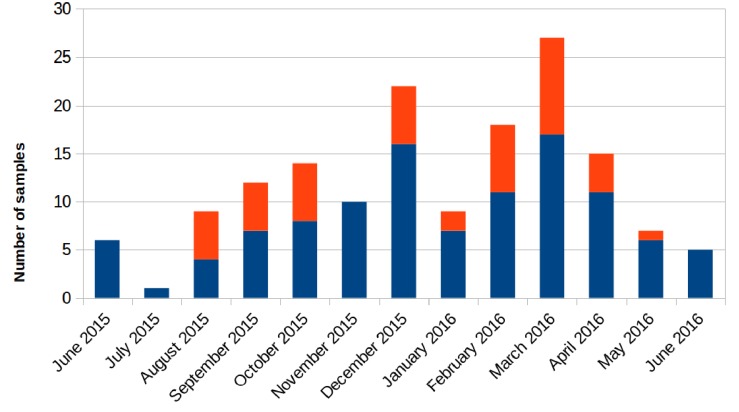
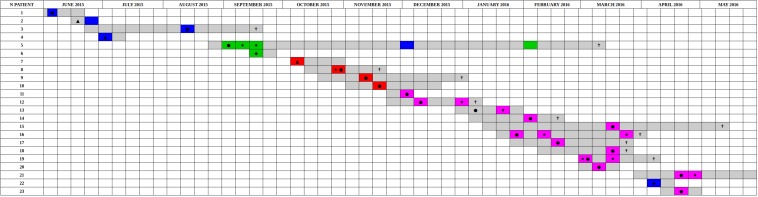
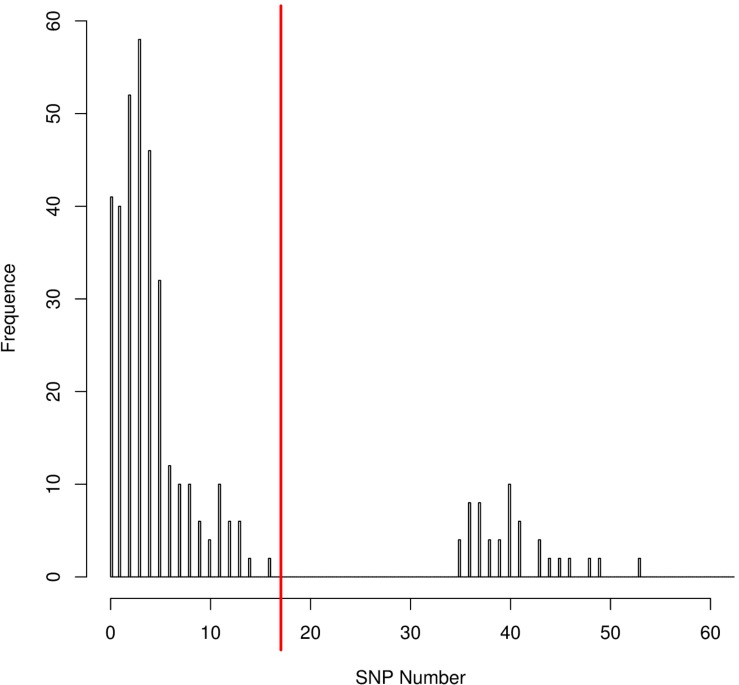
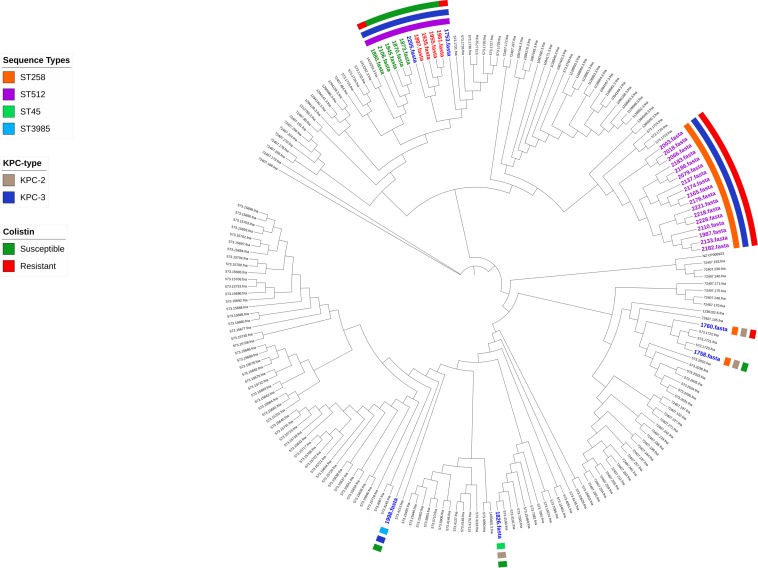
The circulation of carbapenem-resistant (CRKP) is a significant problem worldwide. In this work we characterize the isolates and reconstruct the spread of a multi-clone epidemic event that occurred in an Intensive Care Unit in a hospital in Northern Italy. The event took place from August 2015 to May 2016 and involved 23 patients. Twelve of these patients were colonized by CRKP at the gastrointestinal level, while the other 11 were infected in various body districts. We retrospectively collected data on the inpatients and characterized a subset of the CRKP isolates using antibiotic resistance profiling and whole genome sequencing. A SNP-based phylogenetic approach was used to depict the evolutionary context of the obtained genomes, showing that 26 of the 32 isolates belong to three genome clusters, while the remaining six were classified as sporadic. The first genome cluster was composed of multi-resistant isolates of sequence type (ST) 512. Among those, two were resistant to colistin, one of which indicating the insurgence of resistance during an infection. One patient hospitalized in this period was colonized by two strains of CRKP, both carrying the gene (variant KPC-3). The analysis of the genome contig containing the KPC locus indicates that the gene was not transmitted between the two isolates. The second infection cluster comprised four other genomes of ST512, while the third one (ST258) colonized 12 patients, causing five clinical infections and resulting in seven deaths. This cluster presented the highest level of antibiotic resistance, including colistin resistance in all 17 analyzed isolates. The three outbreaking clones did not present more virulence genes than the sporadic isolates and had different patterns of antibiotic resistance, however, were clearly distinct from the sporadic ones in terms of infection status, being the only ones causing overt infections.
耐碳青霉烯类肺炎克雷伯菌(CRKP)的传播是一个全球性的重大问题。在这项研究中,我们对分离菌株进行了特征分析,并重建了在意大利北部一家医院的重症监护病房发生的多克隆流行事件的传播情况。该事件发生于2015年8月至2016年5月,涉及23名患者。其中12名患者在胃肠道被CRKP定植,另外11名患者在身体不同部位受到感染。我们回顾性收集了住院患者的数据,并通过抗生素耐药性分析和全基因组测序对CRKP分离菌株的一个子集进行了特征分析。基于单核苷酸多态性(SNP)的系统发育方法被用于描绘所获得基因组的进化背景,结果显示32株分离菌株中的26株属于三个基因组簇,其余6株被归类为散发病例。第一个基因组簇由序列型(ST)512的多重耐药分离菌株组成。其中,两株对黏菌素耐药,其中一株表明在感染期间出现了耐药性。在此期间住院的一名患者被两株CRKP菌株定植,两株均携带该基因(变体KPC-3)。对包含KPC基因座的基因组重叠群的分析表明,该基因并非在两株分离菌株之间传播。第二个感染簇包括另外四个ST512基因组,而第三个簇(ST258)定植了12名患者,导致5例临床感染并造成7人死亡。该簇呈现出最高水平的抗生素耐药性,在所有17株分析的分离菌株中均包括对黏菌素的耐药性。这三个爆发克隆株与散发病例相比,并未表现出更多的毒力基因,且具有不同的抗生素耐药模式,然而,在感染状态方面与散发病例明显不同,是仅有的导致明显感染的菌株。