Zhang Yi-Le, Wang Fu-Zhen, Huang Kai, Hu Lin-Li, Bu Zhi-Qin, Sun Jing, Su Ying-Chun, Guo Yi-Hong
Reproductive Medical Center of the First Hospital of Zhengzhou University, Zhengzhou, China.
Medicine (Baltimore). 2019 Dec;98(50):e18246. doi: 10.1097/MD.0000000000018246.
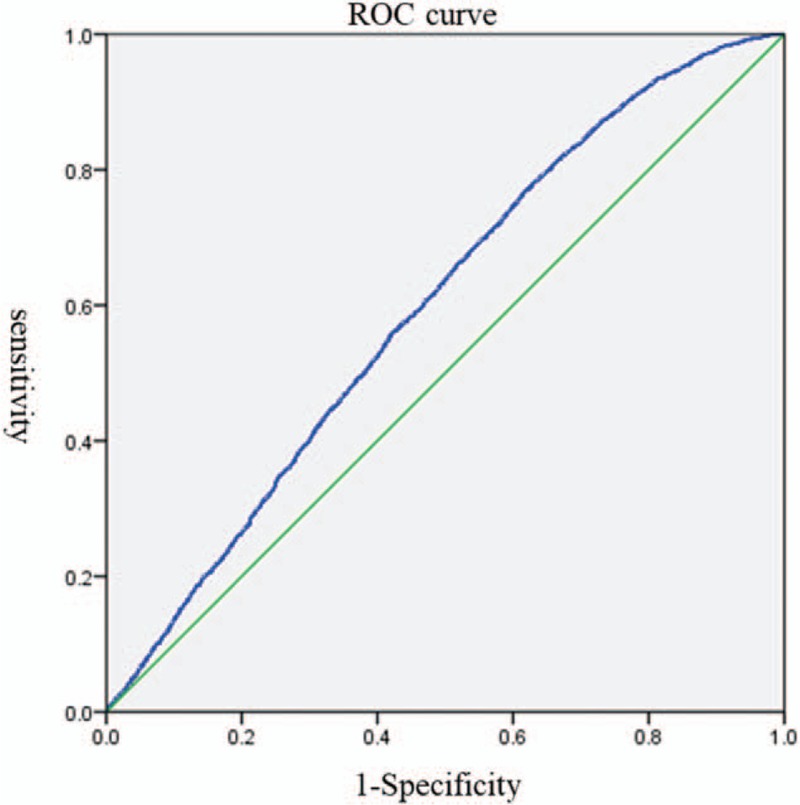
The aim of this study was to investigate the factors predicting clinical pregnancy rate of in vitro fertilization-embryo transfer (IVF-ET).The data of 9960 patients receiving IVF-ET fresh cycle at our Reproductive Center from January 2009 to December 2017 were first divided into pregnant group and non-pregnant group to find the clinical pregnancy rate-related factors. According to the serum HCG levels at 36 hours and 12 hours after HCG trigger, all patients were divided into 4 groups including <50 mIU/ml, ≥50 and <100 mIU/ml, ≥100 and <200 mIU/ml, and ≥200 mIU/ml groups to know whether the HCG levels at 36 hours and 12 hours affect the pregnancy rate. According to the serum HCG ratio at 36 hours to 12 hours (36 h/12 h) after HCG trigger, all patients were divided into three groups including <0.88, 0.88-1.06 and >1.06 groups to observe whether the serum HCG ratio (36 h/12 h) affects the clinical pregnancy rate. According to different assisted pregnancy modes, all patients were divided into 3 groups including IVF, ICSI, and IVF/ICSI groups to observe whether the assisted pregnancy mode affects the clinical pregnancy rate. The correlation of the clinical pregnancy rate with pregnancy rate-related factors obtained above was analyzed using logistic regression analysis model.The clinical pregnancy rate significantly increased (P < .01) in the HCG ratio (36 h/12 h) >1.06 group as compared with the HCG ratio (36 h/12 h) < 0.88 and 0.88-1.06 groups. The serum estrogen (E2) level at 36 hours was significantly lower and the number of retrieved oocytes was significantly higher in the HCG ratio (36 h/12 h) >1.06 group than in the HCG ratio (36 h/12 h) <0.88 and 0.88-1.06 groups (P = .000).The serum HCG ratio (36 h/12 h) may be used as a predictor of IVF-ET clinical pregnancy rate. High clinical pregnancy rate is probably associated with E2 down-regulation in the HCG ratio (36 h/12 h) >1.06 group.
本研究旨在探讨预测体外受精-胚胎移植(IVF-ET)临床妊娠率的因素。收集了2009年1月至2017年12月在我院生殖中心接受IVF-ET新鲜周期治疗的9960例患者的数据,首先将其分为妊娠组和非妊娠组,以寻找与临床妊娠率相关的因素。根据HCG注射后36小时和12小时的血清HCG水平,将所有患者分为<50 mIU/ml、≥50且<100 mIU/ml、≥100且<200 mIU/ml和≥200 mIU/ml四组,以了解36小时和12小时的HCG水平是否影响妊娠率。根据HCG注射后36小时与12小时的血清HCG比值(36 h/12 h),将所有患者分为<0.88、0.88-1.06和>1.06三组,观察血清HCG比值(36 h/12 h)是否影响临床妊娠率。根据不同的辅助妊娠方式,将所有患者分为IVF、ICSI和IVF/ICSI三组,观察辅助妊娠方式是否影响临床妊娠率。采用logistic回归分析模型分析上述获得的临床妊娠率与妊娠率相关因素的相关性。与HCG比值(36 h/12 h)<0.88和0.88-1.06组相比,HCG比值(36 h/12 h)>1.06组的临床妊娠率显著升高(P<0.01)。与HCG比值(36 h/12 h)<0.88和0.88-1.06组相比,HCG比值(36 h/12 h)>1.06组36小时的血清雌激素(E2)水平显著降低,获卵数显著增加(P = 0.000)。血清HCG比值(36 h/12 h)可作为IVF-ET临床妊娠率的预测指标之一。HCG比值(36 h/12 h)>1.06组的高临床妊娠率可能与E2下调有关。