Medical College of Acupuncture-Moxibustion and Rehabilitation, Guangzhou University of Chinese Medicine, Guangzhou, China.
Mr. and Mrs. Ko Chi Ming Centre for Parkinson's Disease Research, School of Chinese Medicine, Hong Kong Baptist University, Hong Kong SAR, China.
Aging Cell. 2020 Feb;19(2):e13069. doi: 10.1111/acel.13069. Epub 2019 Dec 19.
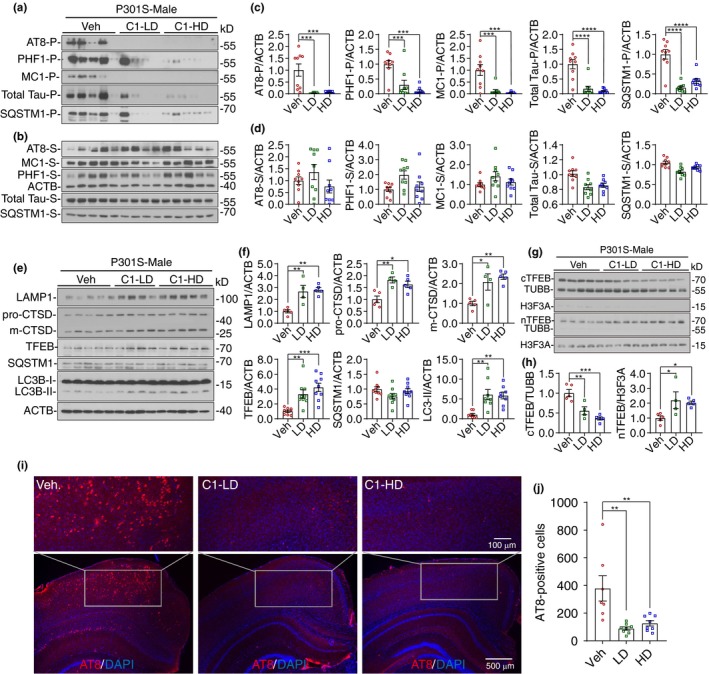
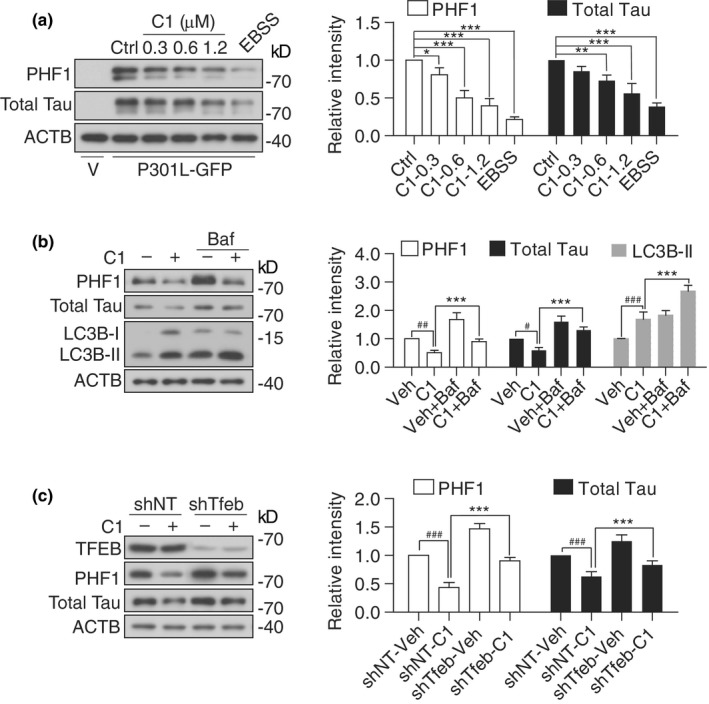
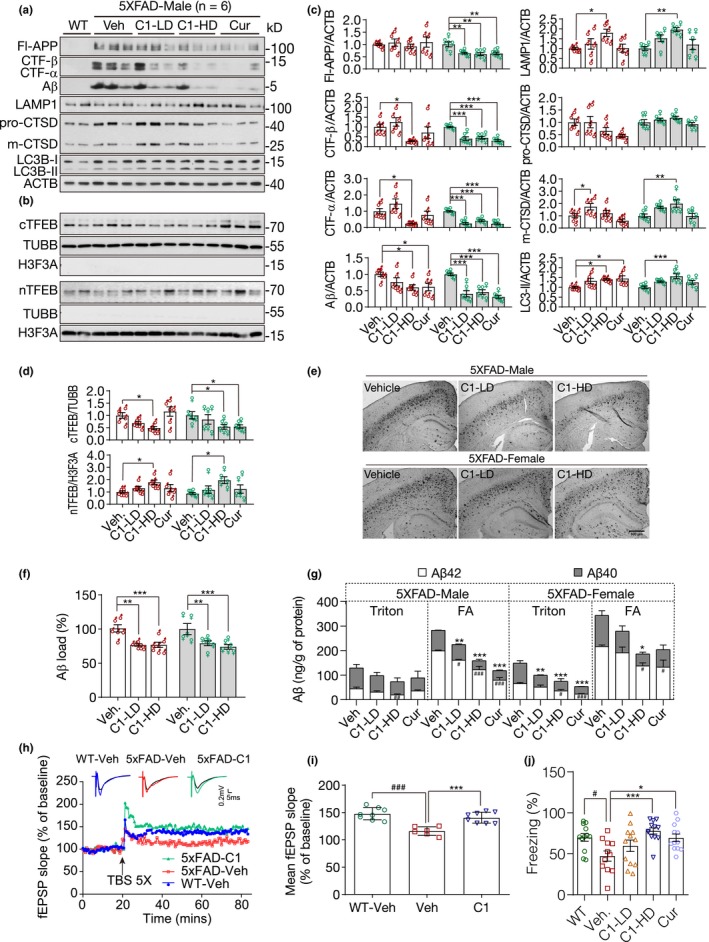
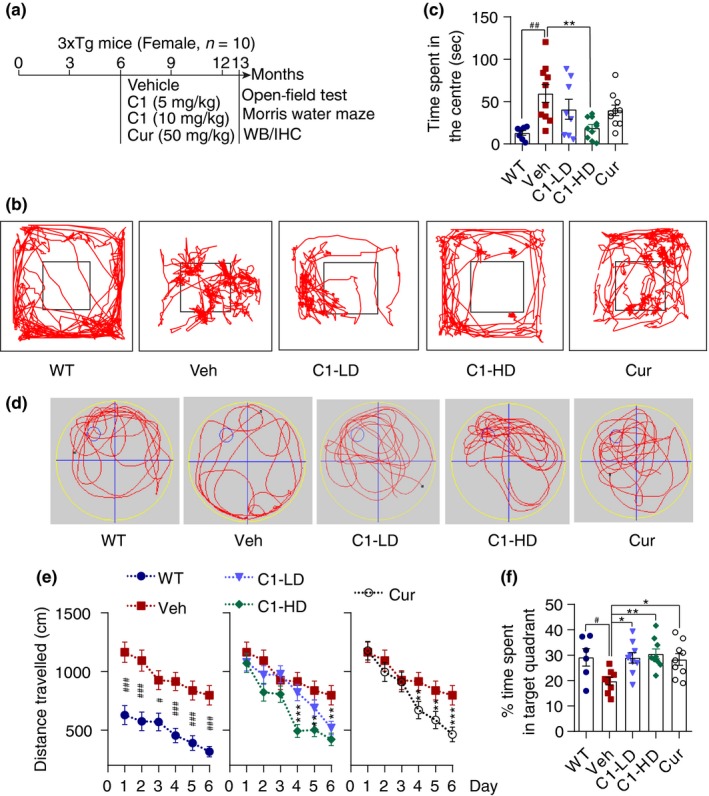
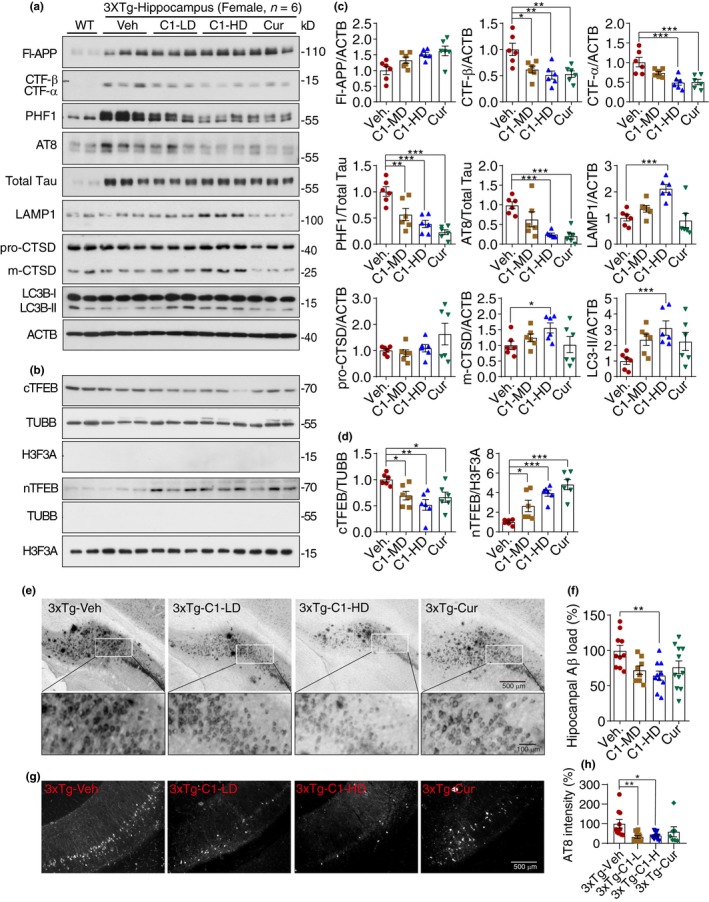
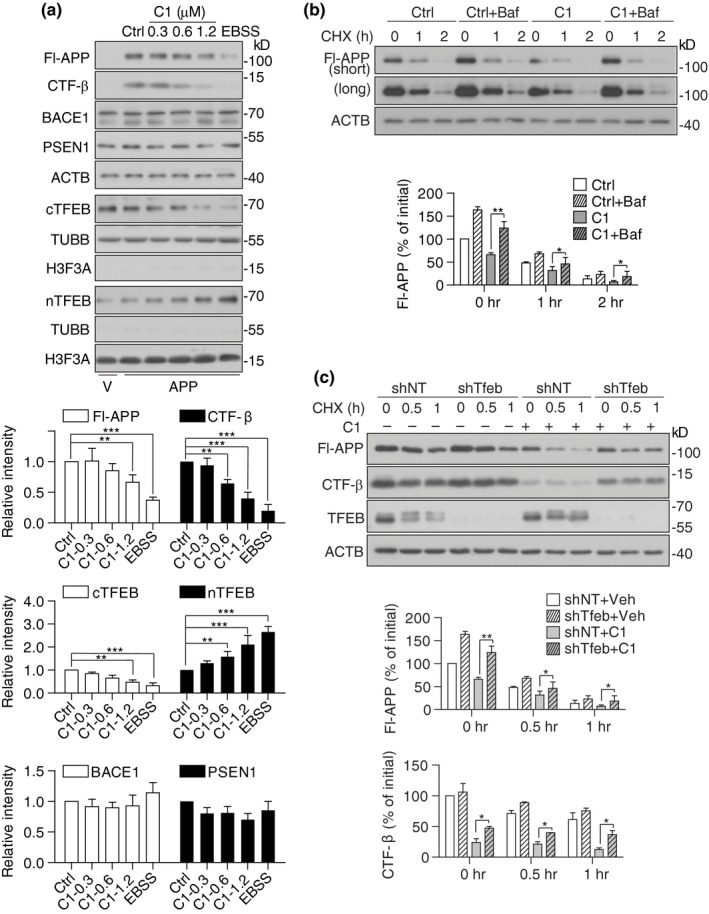
Accumulating studies have suggested that targeting transcription factor EB (TFEB), an essential regulator of autophagy-lysosomal pathway (ALP), is promising for the treatment of neurodegenerative disorders, including Alzheimer's disease (AD). However, potent and specific small molecule TFEB activators are not available at present. Previously, we identified a novel TFEB activator named curcumin analog C1 which directly binds to and activates TFEB. In this study, we systematically investigated the efficacy of curcumin analog C1 in three AD animal models that represent beta-amyloid precursor protein (APP) pathology (5xFAD mice), tauopathy (P301S mice) and the APP/Tau combined pathology (3xTg-AD mice). We found that C1 efficiently activated TFEB, enhanced autophagy and lysosomal activity, and reduced APP, APP C-terminal fragments (CTF-β/α), β-amyloid peptides and Tau aggregates in these models accompanied by improved synaptic and cognitive function. Knockdown of TFEB and inhibition of lysosomal activity significantly inhibited the effects of C1 on APP and Tau degradation in vitro. In summary, curcumin analog C1 is a potent TFEB activator with promise for the prevention or treatment of AD.
越来越多的研究表明,靶向转录因子 EB(TFEB),一种自噬溶酶体途径(ALP)的必要调节剂,对于治疗神经退行性疾病,包括阿尔茨海默病(AD)具有广阔的前景。然而,目前还没有有效的、特异性的小分子 TFEB 激活剂。先前,我们鉴定了一种名为姜黄素类似物 C1 的新型 TFEB 激活剂,它可以直接与 TFEB 结合并激活 TFEB。在这项研究中,我们系统地研究了姜黄素类似物 C1 在三种 AD 动物模型中的疗效,这三种模型分别代表β-淀粉样前体蛋白(APP)病理(5xFAD 小鼠)、tau 病理(P301S 小鼠)和 APP/Tau 联合病理(3xTg-AD 小鼠)。我们发现 C1 能够有效地激活 TFEB,增强自噬和溶酶体活性,减少这些模型中的 APP、APP C 端片段(CTF-β/α)、β-淀粉样肽和 Tau 聚集体,同时改善突触和认知功能。TFEB 的敲低和溶酶体活性的抑制显著抑制了 C1 对 APP 和 Tau 体外降解的作用。总之,姜黄素类似物 C1 是一种有效的 TFEB 激活剂,有望预防或治疗 AD。