Research Unit of Translational Neurogastroenterology, Division of Pharmacology, Otto Loewi Research Centre for Vascular Biology, Immunology and Inflammation, Medical University of Graz, Graz, Austria.
Microbiology and Immunology Department, Faculty of Pharmacy-Girls, Al-Azar University, Cairo, Egypt.
Sci Rep. 2019 Dec 27;9(1):20217. doi: 10.1038/s41598-019-56859-0.
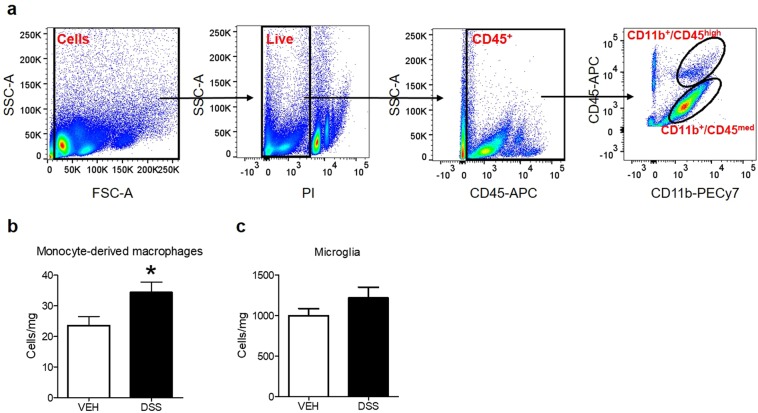
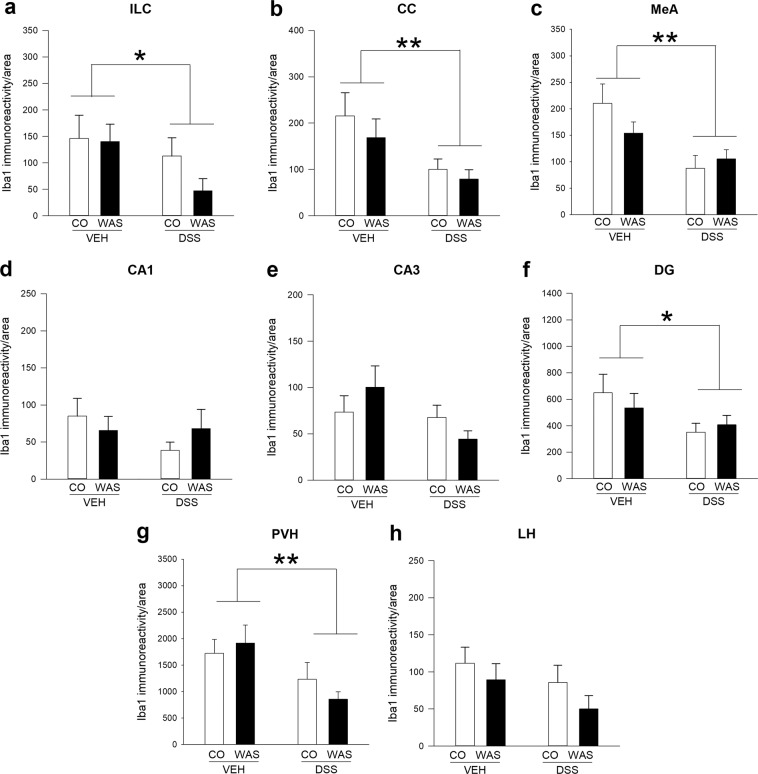
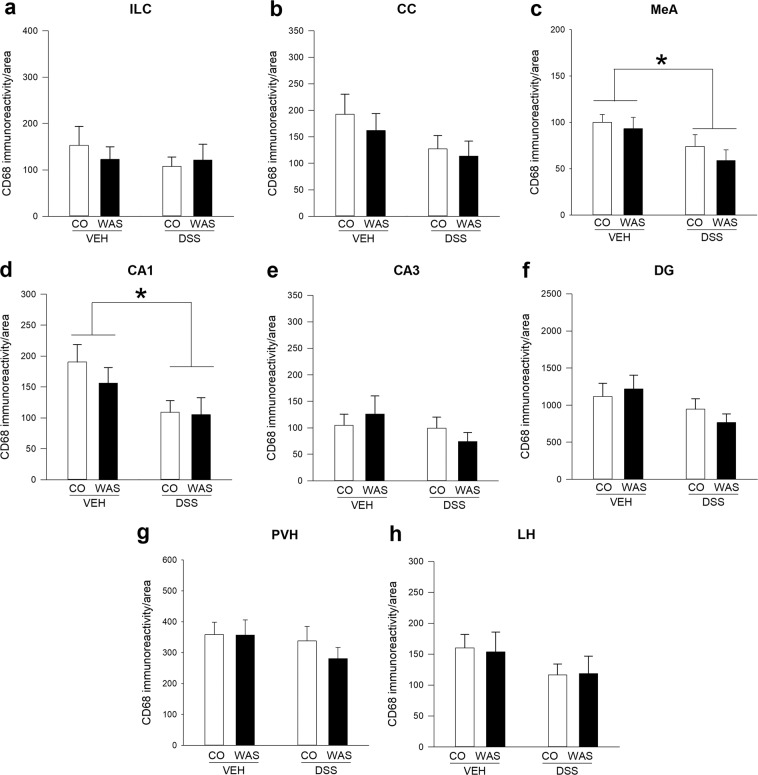
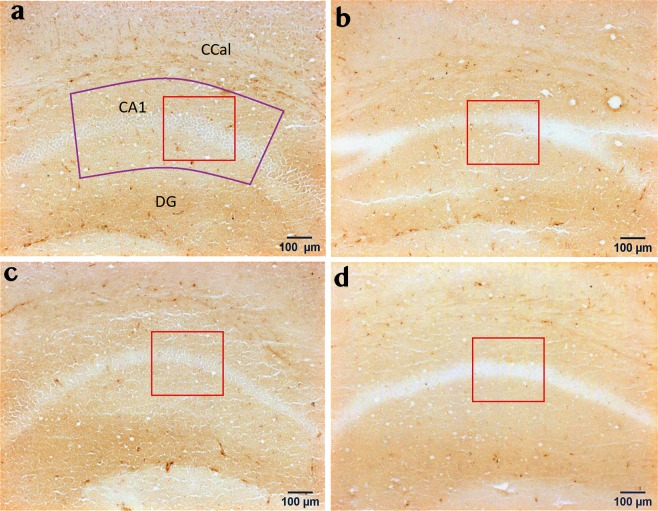
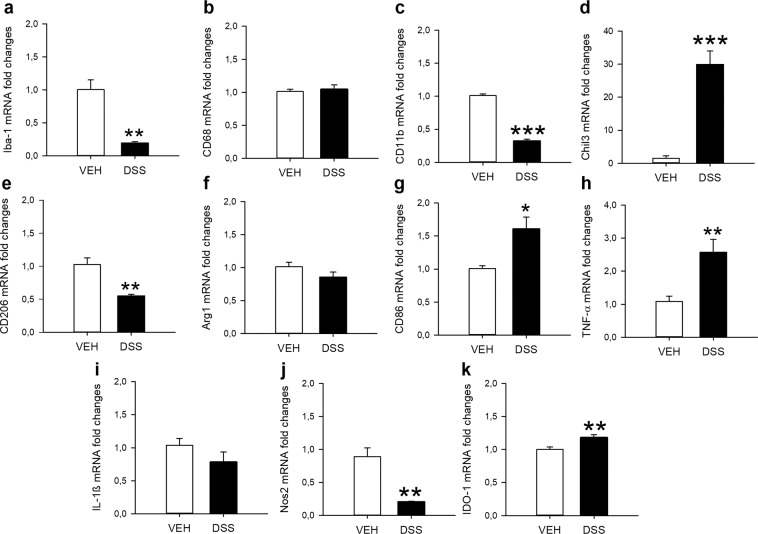
Inflammatory bowel disease (IBD) patients frequently suffer from anxiety disorders and depression, indicating that altered gut-brain axis signalling during gastrointestinal inflammation is a risk factor for psychiatric disease. Microglia, immune cells of the brain, is thought to be involved in a number of mental disorders, but their role in IBD is largely unknown. In the current work, we investigated whether colitis induced by dextran sulphate sodium (DSS), a murine model of IBD, alters microglial phenotypes in the brain. We found that colitis caused a reduction of Iba-1 and CD68 immunoreactivity, microglial activation markers, in specific brain regions of the limbic system such as the medial prefrontal cortex (mPFC), while other areas remained unaffected. Flow cytometry showed an increase of monocyte-derived macrophages during colitis and gene expression analysis in the mPFC showed pronounced changes of microglial markers including cluster of differentiation 86 (CD86), tumour necrosis factor-α, nitric oxide synthase 2, CD206 and chitinase-like protein 3 consistent with both M1 and M2 activation. Taken together, these findings suggest that experimental colitis-induced inflammation is propagated to the brain altering microglial function.
炎症性肠病(IBD)患者经常患有焦虑症和抑郁症,这表明胃肠道炎症期间肠道-大脑轴信号的改变是精神疾病的一个风险因素。小胶质细胞是大脑的免疫细胞,被认为与许多精神疾病有关,但它们在 IBD 中的作用在很大程度上是未知的。在目前的工作中,我们研究了葡聚糖硫酸钠(DSS)诱导的结肠炎,一种 IBD 的小鼠模型,是否会改变大脑中的小胶质细胞表型。我们发现结肠炎导致大脑边缘系统(如内侧前额叶皮质(mPFC))特定区域的 Iba-1 和 CD68 免疫反应性,即小胶质细胞激活标志物减少,而其他区域不受影响。流式细胞术显示在结肠炎期间单核细胞衍生的巨噬细胞增加,mPFC 中的基因表达分析显示小胶质细胞标志物的明显变化,包括分化抗原 86(CD86)、肿瘤坏死因子-α、一氧化氮合酶 2、CD206 和几丁质酶样蛋白 3,这与 M1 和 M2 的激活一致。总之,这些发现表明实验性结肠炎诱导的炎症会传播到大脑,改变小胶质细胞的功能。