Department of Physiology and Pathophysiology, School of Basic Medical Sciences, Xi'an Jiaotong University Health Science Center, Xi'an, PR China.
Key Laboratory of Environment and Genes Related to Diseases, Xi'an Jiaotong University, Ministry of Education, Beijing, PR China.
Mol Pain. 2020 Jan-Dec;16:1744806919900814. doi: 10.1177/1744806919900814.
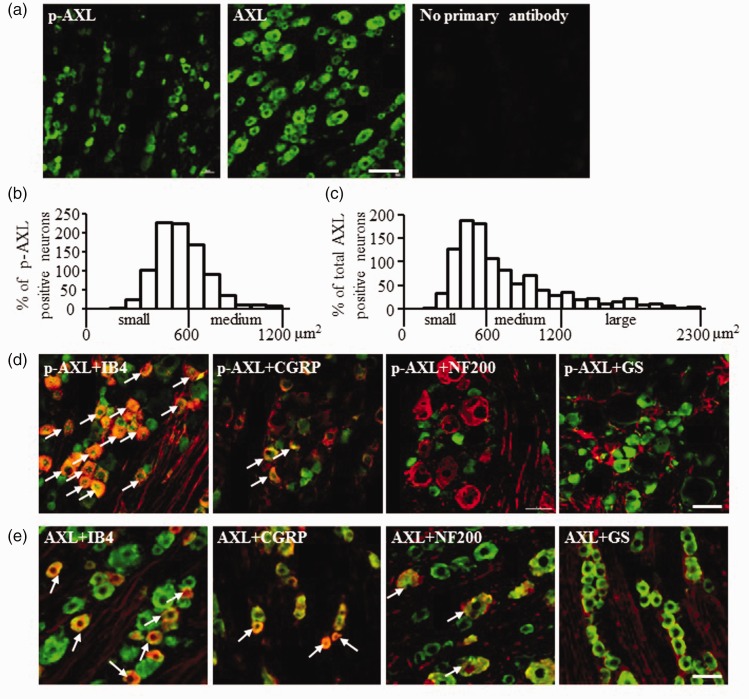
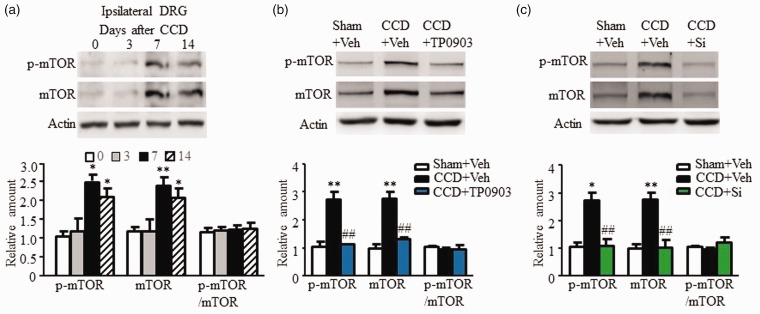
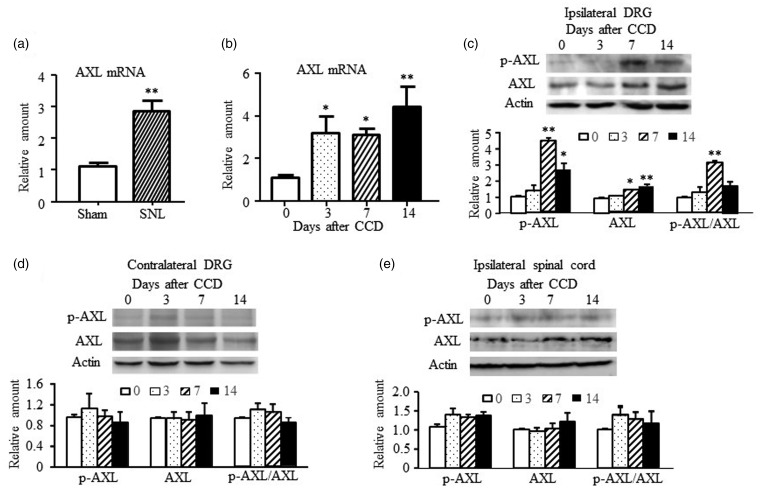
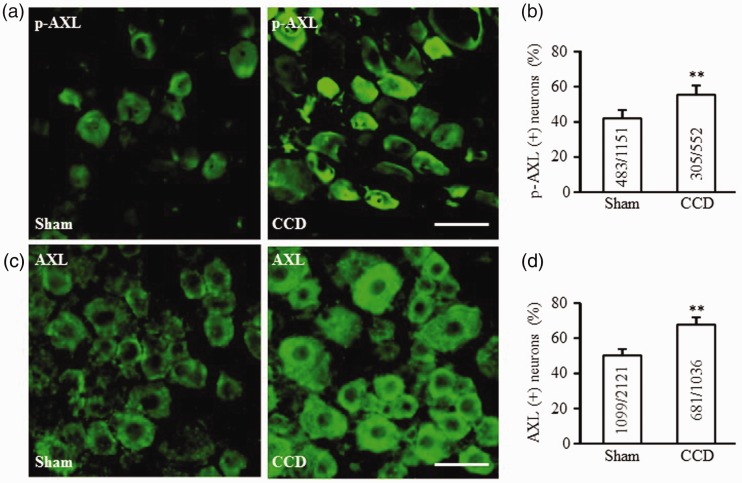
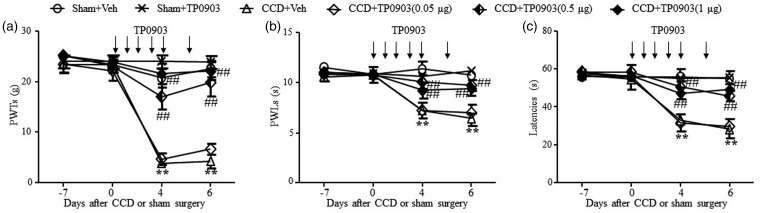
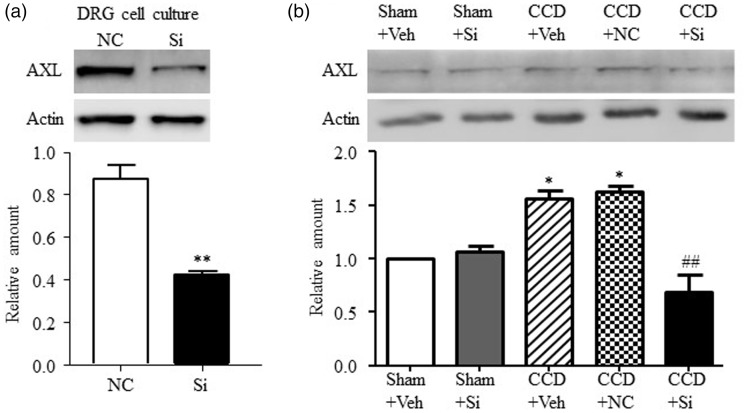
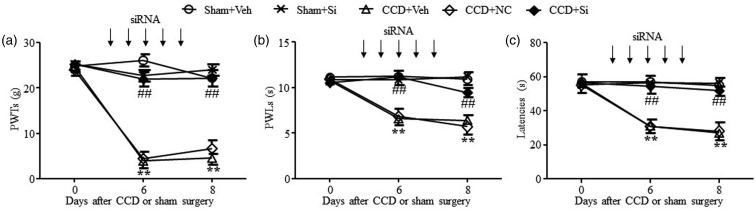
Low back pain is a chronic, highly prevalent, and hard-to-treat condition in the elderly. Clinical studies indicate that AXL, which belongs to the tyrosine kinase receptor subfamily, mediates pathological pain. However, it is not clear exactly how AXL regulates pain behaviors. In this study, we used a model of chronic compression of dorsal root ganglion-induced neuropathic pain to recreate clinical intervertebral foramen stenosis and related lumbocrural pain to explore whether AXL in primary sensory neurons contributes to this neuropathic pain in rats. Using double-labeling immunofluorescence, we observed that both phosphorylated AXL and AXL were localized primarily on isolectin B4-positive and calcitonin gene-related peptide-positive neurons, while AXL was also localized in neurofilament-200-positive neurons. Chronic compression of dorsal root ganglion-induced pain was associated with the upregulation of AXL mRNA and protein in injured dorsal root ganglia. Repeated intrathecal administration of the AXL inhibitor, TP0903, or the AXL small interfering RNA effectively alleviated chronic compression of dorsal root ganglion-induced pain hypersensitivities. Moreover, repeated intrathecal administration of either TP0903 or AXL small interfering RNA reduced the expression of mammalian target of rapamycin in injured dorsal root ganglia, suggesting that mammalian target of rapamycin may mediate AXL’s actions. These results indicate that the upregulation of dorsal root ganglion AXL may be part of a peripheral mechanism of neuropathic pain via an intracellular mammalian target of rapamycin-signaling pathway. Thus, while AXL inhibitors have so far primarily shown clinical efficacy in tumor treatment, AXL intervention could also serve as a potential target for the treatment of neuropathic pain.
下背痛是老年人中一种慢性、高发性且难以治疗的疾病。临床研究表明,属于酪氨酸激酶受体亚家族的 AXL 通过介导病理性疼痛。然而,AXL 如何调节疼痛行为尚不清楚。在这项研究中,我们使用背根神经节慢性压迫诱导的神经病理性疼痛模型来模拟临床椎间孔狭窄和相关的腰腿痛,以探讨初级感觉神经元中的 AXL 是否有助于大鼠的这种神经病理性疼痛。通过双重标记免疫荧光,我们观察到磷酸化 AXL 和 AXL 主要定位于异硫氰酸荧光素 B4 阳性和降钙素基因相关肽阳性神经元,而 AXL 也定位于神经丝蛋白-200 阳性神经元。背根神经节慢性压迫引起的疼痛与损伤背根神经节中 AXL mRNA 和蛋白的上调有关。AXL 抑制剂 TP0903 或 AXL 小干扰 RNA 的重复鞘内给药有效地缓解了慢性压迫背根神经节引起的痛觉过敏。此外,重复鞘内给予 TP0903 或 AXL 小干扰 RNA 均可降低损伤背根神经节中哺乳动物雷帕霉素靶蛋白的表达,提示哺乳动物雷帕霉素靶蛋白可能介导 AXL 的作用。这些结果表明,背根神经节 AXL 的上调可能是神经病理性疼痛的外周机制的一部分,通过细胞内哺乳动物雷帕霉素信号通路。因此,尽管 AXL 抑制剂迄今为止主要在肿瘤治疗中显示出临床疗效,但 AXL 干预也可能成为治疗神经病理性疼痛的潜在靶点。